Keeping a 100-gallon pond from freezing requires reliability and appropriate wattage. The following picks cover a range of wattages and configurations—from floating and submersible deicers to thermostatic pond heaters—so you can choose a model that matches your pond setup, climate, and fish or turtle needs. Below are five top options, each with spec highlights to help you compare performance and safety features at a glance.
| Product | Wattage | Format | Notes |
|---|---|---|---|
| K&H Pet Products Stock Tank & Pond Heater | 750W | Floating / Submersible | Full cage; energy-efficient; 2-year warranty |
| HITOP Outdoor Pond Heater (600W) | 600W | Floating / Outdoor | Intelligent temp control; keeps hole open |
| Laguna PowerHeat 315W | 315W | Floating | LED indicator; thermostat-controlled |
| HKLWAEE Aquarium Heater 500W | 500W | Submersible | External temp control; LED display |
| Zoo Med TurtleTherm 300W | 300W | Submersible | Automatic shut-off when removed; up to 100 gallons |
K&H Ultimate Stock Tank Deicer
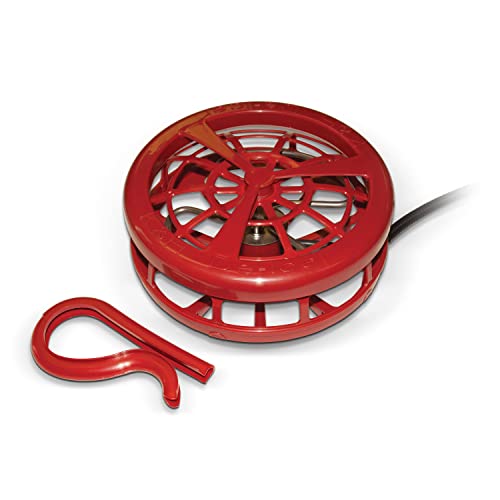
The K&H Pet Products Stock Tank & Pond Heater offers a thermostatically controlled 750W deicer suitable for stock tanks used as ponds. It can function as either a floating unit or a submersible heater and includes a full cage and cord clip for safety. The device is designed to prevent complete freezing in larger, livestock-friendly tanks and backs its performance with a 2-year warranty. It is compatible with a variety of stock tanks and is considered safe for use without additional cages or accessories.
HKLWAEE 500W Aquarium Heater

The HKLWAEE aquarium heater provides a 500W submersible solution with an external temperature controller and a digital LED display. It supports a wide range of temperatures (59°F to 93°F) and features an intuitive adjustment interface. The unit is suitable for mid-to-large tanks and can be used in freshwater or saltwater environments, making it a flexible option for 100-gallon pond applications where a submersible heater is preferred.
HITOP Outdoor Pond Heater 600W

The HITOP 600W outdoor pond heater is designed to heat surrounding water and prevent complete freezing by melting an ice hole, which helps fish or turtles access atmospheric oxygen. It floats on the water and maintains a steady temperature range around the heater, typically 68–72°F, while automatically turning on or off based on pond conditions. It is best used in outdoor, non-plastic ponds, where localized heating is sufficient to keep life-safe breathing holes open.
Laguna PowerHeat 315-Watt

The Laguna PowerHeat 315-Watt floating pond heater is designed for outdoor ponds and is a straightforward thermostat-controlled de-icer. It includes a highly visible LED indicator so you can confirm operation at a glance. The unit is suitable for ponds that drop below freezing, and its integrated thermostat helps prevent overheating by automatically cycling the heater on and off as the water temperature changes. It is safe for use in many plastic or liner ponds with the appropriate installation.
Zoo Med TURTLETHERM Automatic Heater

The Zoo Med TURTLETHERM heater is designed specifically for turtle habitats and up to 100 gallons. It provides safe, automatic heating with a digital thermometer display and a submersible design. An automatic shut-off feature adds safety when the unit is removed from water. While tailored for turtle environments, its compact design and reliable temperature control can be advantageous for small-to-medium pond sections within a larger system, ensuring a stable temperature without overheating.
Buying Guide: Key Purchase Considerations for 100 Gallon Ponds
- Wattage needs and pond size: For a 100-gallon pond, consider heaters in the 300–750W range if you need to maintain a specific winter temperature or prevent the entire body from freezing. Smaller wattage units may work for beginner setups or milder climates, particularly if you’re relying on ambient heat or partial temperature control.
- Heating method: Floating/deicer units melt a hole in the ice and preserve oxygen exchange, while submersible heaters warm water more broadly. Choose based on whether you want targeted ice-breaking or consistent overall temperature control.
- Submersion and enclosure: Submersible heaters require proper installation to avoid overheating and must be fully submerged as specified. Floating units should include a safe cage and cord management to prevent tangling or damage.
- Control features: Thermostats, digital displays, and external temperature controllers help maintain precise temperatures. Look for models with clear indicators (LEDs) and automatic shut-off to prevent overheating or electrical issues.
- Durability and safety: Weatherproofing, IP ratings, and proper protection against water exposure are essential for outdoor installations. Warranties (like 2-year coverage) can be a useful indicator of confidence in durability.
- Materials and safety for inhabitants: If you keep fish, turtles, or livestock, ensure the heater is compatible with your tank or pond liner and won’t pose harm to wildlife during operation or maintenance.
- Installation constraints: Consider pond depth, proximity to electrical outlets, and the presence of plastic liners or stock tanks. Some devices are not recommended for plastic ponds, so verify suitability for your setup.
- Energy efficiency: Energy use matters over winter months. Compare models offering energy-saving operating modes or efficient thermostats to reduce running costs without compromising safety.
- Maintenance and accessibility: Choose heaters with accessible components for routine checks and easy cleaning. A visible indicator and simple replacement parts minimize downtime during cold snaps.