Hydronic baseboard heaters use heated water or a liquid-filled element to produce steady, even warmth with minimal noise. This guide highlights five top options that balance performance, reliability, and ease of installation for American homes and light commercial spaces. Below is a quick summary table of the chosen products, followed by in-depth sections for each model and a buying guide to help you compare features and suitability.
| Product | Brand | Voltage | Amps | BTU |
|---|---|---|---|---|
| Dayton Hydronic Electric Baseboard Heater (Model: 1706/1280) | Dayton | 208/240V | 2.1 / 1.8 | 1706 / 1280 |
| Qmark HBB2004 Liquid Filled Baseboard Heater | Marley | 240V | — | — |
| Cadet F Series 72″ Electric Baseboard Heater (6F1500W) | Cadet | 240/208V | — | 5120/3840 BTU |
| Dayton Hydronic Electric Baseboard Heater (Model: 2560/1918) | Dayton | 208/240V | 3.1 / 2.7 | 2560 / 1918 |
| KING 4K1210BW K Series Baseboard Heater | KING | 120V | — | — |
Dayton Hydronic Electric Baseboard Heater, 1706/1280 BTU

Designed for commercial environments, this Dayton unit uses a hydronic electric setup to deliver consistent warmth with a traditional baseboard profile. It supports 208/240V operation and offers two amperage options (2.1A or 1.8A) to fit different space heating needs. The housing is conventional, ensuring straightforward installation in existing baseboard channels or new runs. This model is well-suited for spaces that require steady heat without the noise of fans.
Dayton Hydronic Electric Baseboard Heater, 2560/1918 BTU
This higher-output Dayton model provides 2560/1918 BTU across 208/240V supplies, making it suitable for larger rooms or spaces with higher heat requirements. The unit maintains a conventional housing style for easy installation into standard baseboard channels. It is designed for commercial applications where steady, reliable heat output is important, with a focus on long-term durability and simpler maintenance.
Qmark HBB2004 Liquid Filled Electric Hydronic Baseboard Heater

Qmark’s liquid-filled design minimizes temperature swings, delivering steady warmth even after the unit cycles off. The heater runs fanless, relying on natural convection to distribute heat evenly. It includes safety features like a thermal cutoff to prevent overheating, making it a solid choice for floors, tile, or carpeting where noise and risk of overheating must be minimized. The unit is labeled as a liquid-immersed element heater, aligning with hydronic concepts.
Cadet F Series 72″ Electric Baseboard Heater (6F1500W)

Cadet’s 72″ baseboard unit features a robust 5120/3840 BTU rating at 240/208V, with a 1500W/1125W dual-watt capability. Its all-metal construction, 25-gauge steel, and powder-coated finish support durable use in commercial or residential spaces. Pre-punched knockouts and universal wiring simplify installation, while a high-temperature safety cutout adds an important layer of protection for occupied spaces.
Cadet F Series 30″ Electric Baseboard Heater (2F500W)
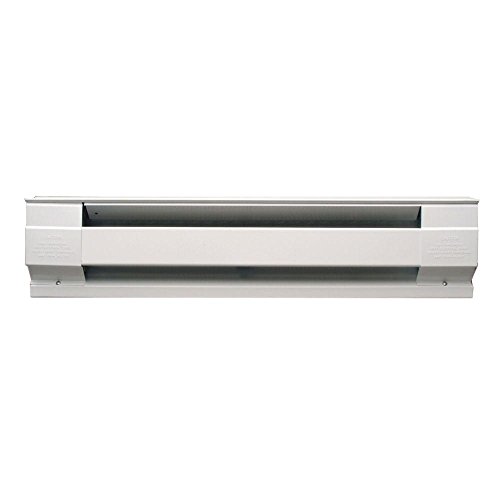
Cadet’s 30″ model offers 500/375W at 240/208V, delivering strong warmth for compact spaces or supplementing larger rooms. The design emphasizes easy installation through universal wiring and pre-punched knockouts, enabling flexible mounting options. Its convection-based heat distribution helps maintain a comfortable temperature across the room, and a built-in safety shutoff reduces risk in occupied areas.
Buying Guide: Hydronic Baseboard Heaters — Key Considerations
- Heating capacity and space size: Match BTU ratings to room square footage and insulation. Larger spaces may require multi-unit setups or higher BTU models.
- Voltage and electrical load: Check available electrical service (208/240V in many homes and light commercial spaces) and ensure the circuit can handle the unit and any connected devices.
- Hydronic vs. electric baseboard: Some models use liquid-filled elements for steady output and reduced temperature swings; others are traditional electric heaters without liquid cooling. Consider noise, heat consistency, and installation requirements.
- Installation and wiring: Look for universal wiring options, pre-punched knockouts, and compatible mounting configurations for walls or floors. Proper clearances from combustibles are essential.
- Safety features: Thermal cutoffs and high-temperature shutoffs protect occupants, especially in homes with children or pets. Verify compliance with local codes and standards.
- Durability and maintenance: All-metal housings and durable finishes contribute to long-term reliability. Liquid-filled units may require specific service considerations.
- Noise level: Hydronic systems are typically quiet; check for fanless designs if you prefer a completely silent operation in bedrooms or offices.
- Energy efficiency: While baseboard heaters provide steady heat, consider thermostats and zoning options to optimize energy use and reduce heating costs.
Choosing the right hydronic baseboard heater depends on room size, existing electrical capacity, and desired heat distribution. The models above cover a range of outputs, from compact 30″ units to higher-output 72″ installations, with options for both residential and commercial settings. When evaluating products, prioritize compatibility with your existing thermostat and any zoning plans to maximize efficiency and comfort.