Finding an efficient space heater that suits both energy concerns and indoor comfort can be challenging. This guide highlights five versatile heaters, including a solar-powered option, to help you choose the best fit for offices, bedrooms, or sunlit living areas. Each product is evaluated on heat performance, safety features, smart controls, and energy efficiency to support informed decisions for American households.
| Product | Brand | Key Benefit |
|---|---|---|
| Dreo Space Heater, Portable Electric Heaters | Dreo | Fast heat with smart thermostat and multiple safety features |
| Solar Heater for Greenhouse, Chicken Coop Heater Solar Powered | Generic | Solar-powered heating ideal for outdoor/greenhouse and pet spaces |
| Comfort Glow Oscillating Parabolic Space Heater | Comfort Glow Portable Electrics | Radiant, energy-efficient heat with wide coverage |
| FLANUR Space Heaters for Indoor Use | FLANUR | Smart control, eco modes, 70° oscillation |
| GiveBest Portable Electric Space Heater | GiveBest | Two heat levels with safety shutoff and kid-friendly design |
Choosing a heater involves balancing immediate warmth, safety, and ongoing energy costs. The products below cover a range of needs—from compact personal heating to versatile outdoor-ready units—with attention to safety features, ease of use, and energy-saving modes.
Dreo 1500W Portable Electric Heater

The Dreo Space Heater combines a Hyperamics 1500W PTC heating system with a heat funnel design to deliver warmth quickly and extend heat reach. It features a tilt-detection safety sensor and flame-retardant materials for enhanced tip-over and overall safety. An advanced NTC chipset supports precise thermostat control, enabling a temperature range from 41 to 95°F in 1°F increments, helping manage energy use while maintaining comfort. The unit includes a digital display, 12-hour timer, and multiple heat modes for flexible use in offices, bedrooms, or living spaces.
Solar Heater For Greenhouse And Pets
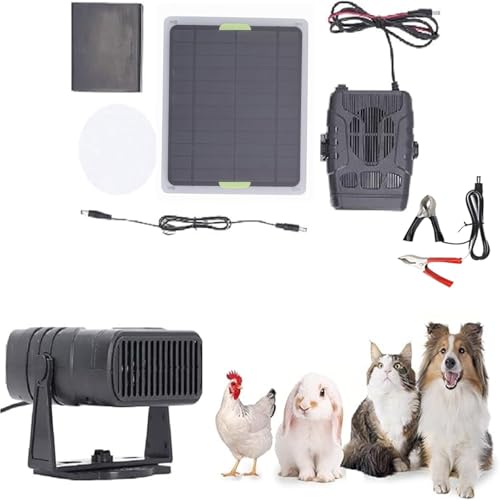
This solar-powered heater is designed for outdoor and semi-outdoor use, ideal for greenhouses, chicken coops, or pet shelters. It includes a solar panel and battery compartment with dual USB outputs for charging 5V devices. The kit’s monocrystalline silicon PET construction supports durability in challenging weather. It provides a practical approach to staying warm in parts of your property that receive ample sunlight, reducing dependence on grid electricity for intermittent heating needs.
Comfort Glow Parabolic Space Heater

This 1000W radiant parabolic heater provides targeted warmth with a simple, energy-conscious design. Its parabolic dish focuses heat efficiently, delivering faster warmth than conventional heaters. The model emphasizes energy efficiency and quick heat delivery, making it suitable for small to medium spaces where focused heat is preferred. Built-in safety features add reliability for indoor use, including protection against overheating.
FLANUR Smart Space Heater

FLANUR’s smart electric heater offers 1500W PTC ceramic heating with four modes and a 12-hour timer. It can be controlled via an app and is compatible with Alexa and Google Home for voice operation. The LED display shows current temperature for easy monitoring, while ECO mode helps conserve energy. A 70° oscillation distributes warmth across a room, and safety features include multiple protections and a child lock for households with children.
GiveBest Portable Electric Space Heater

GiveBest offers a compact, two-heat-level (1500W/750W) electric heater with a built-in thermostat and a fan-only option. The thermostat maintains a comfortable set temperature by cycling heat on and off, with a range from 41°F to 95°F. Safety features include overheat protection and a tip-over shutoff. Its portable design and carry handle make it suitable for desks, offices, or small rooms without heating the entire home.
Buying Guide: Key Purchase Considerations
To select the best solar space heater, consider how you plan to use it and the environment where it will operate. The following perspectives provide a balanced view of core factors and trade-offs.
- Heat source and target area: For quick, localized warmth, parabolic and 1500W ceramic heaters perform well in small-to-medium spaces. If you’re aiming to reduce grid dependence in sunlit areas, solar-powered options can supplement indoor use, typically best for sheltered outdoor spaces or greenhouse applications.
- Energy efficiency and smart features: Look for ECO modes, thermostats with fine increments, and timers to minimize energy usage. Smart controls, app connectivity, and voice integration can simplify ongoing management of comfort and energy bills.
- Safety features: Prioritize tip-over and overheat protection, flame-retardant materials, and certified electronics (ETL, UL-listed). A robust safety design reduces risk in homes with children or pets.
- Coverage area and warmth distribution: Oscillating models and heat-dunneling designs can extend warmth across a room. Consider the room size and ceiling height to ensure the heater’s reach aligns with your space.
- Durability and weather suitability: Outdoor or garage heaters should feature weather resistance (IP ratings) and durable casings. Indoor models focus on quiet operation and compact form factors.
- Noise level and comfort: Quiet operation matters in bedrooms and offices. Radiant and ceramic technologies offer different noise and comfort profiles—consider which suits your daily routine.
- Maintenance and longevity: Check for filter-free designs and materials that withstand regular use. Regular checks for cord integrity and stability help maintain safety over time.
- Budget and total cost of ownership: While initial price matters, consider long-term energy costs and potential savings from energy-efficient ECO modes and smart scheduling.
Users should weigh the convenience of smart, app-enabled thermostats against the reliability of simple, manually controlled units. The solar-powered option offers unique advantages in sunlit spaces, but may require supplementary electric heating for consistent indoor warmth in colder climates.