Winter can challenge greenhouse plants, seeds, and equipment. A compact heater with smart controls can maintain consistent temperatures, protect delicate crops, and save energy. This article reviews five compact greenhouse heaters that combine fast heating, safety features, and versatile mounting options. Each product is evaluated on power, safety protections, thermostat capability, and ease of use to help you choose the right option for your space.
| Product | Brand | Power | Thermostat | Mounting |
|---|---|---|---|---|
| Dr Infrared Heater DR-268 Smart Greenhouse Heater | DR. INFRARED HEATER | 2680W (3.5k BTU) | Digital display with corded sensor | Wall, ceiling, or hanging |
| VEVOR Greenhouse Heater | VEVOR | 1500W | Digital/auto mode | Wall or floor placement |
| Buyplus Greenhouse Heater | Buyplus | 1500W | Digital thermostat | Portable or mounted |
| TRUSTECH Greenhouse Heater | TRUSTECH | 1500W | Thermostat control | Portable with tilt feature |
| SwSun 1500W Greenhouse Heater | SwSun | 1500W | Smart app remote (OTA) | Portable |
Dr Infrared Heater DR-268 Smart Greenhouse Heater

The DR-268 model combines infrared warmth with built‑in temperature control for greenhouse spaces. It supports IPX5 water resistance, enabling indoor or outdoor use in damp environments. A digital display and a corded temperature probe provide precise ambient temperature readings, while selectable Auto or Manual modes support hands‑off or manual adjustments. Multiple mounting options—wall, ceiling, or hanging via a chain—offer versatile placement to direct heat where plants need it most. Expect fast, odorless heating suitable for small grow tents, sheds, and greenhouses forming a warm baseline for plant care.
VEVOR Greenhouse Heater, 1500W

The VEVOR heater emphasizes fast heating with a PTC element delivering rapid warmth in 3 seconds, aided by a compact design that reduces energy waste. It includes overheat protection and ETL certification for safety in humid spaces. The unit’s IP20 protection makes it robust enough for damp environments like grow tents or plant rooms, while its small footprint supports flexible placement. It’s suitable for multi-scene use—from chick brooding to greenhouse insulation—making it a practical option for hobbyists and small commercial setups seeking quick warm‑up cycles.
Buyplus Greenhouse Heater with Digital Thermostat
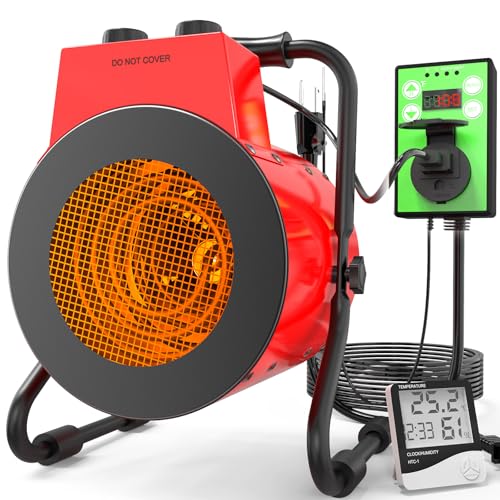
Buyplus packages a 1500W heater with a digital thermostat designed to maintain precise ambient temperatures. The unit is marketed for outdoor and greenhouse use, with a quick 3‑second heat response to rapidly reduce cold air in plant spaces. The thermostat reads ambient temperature via a waterproof probe and supports a comfortable range of 40℉–108℉ (5℃–42℃). Overheat protection ensures safe operation in damp environments, and the design supports outdoor patios, garages, grow tents, or flower rooms where predictable warmth matters for plant health.
TRUSTECH Greenhouse Heater with Thermostat
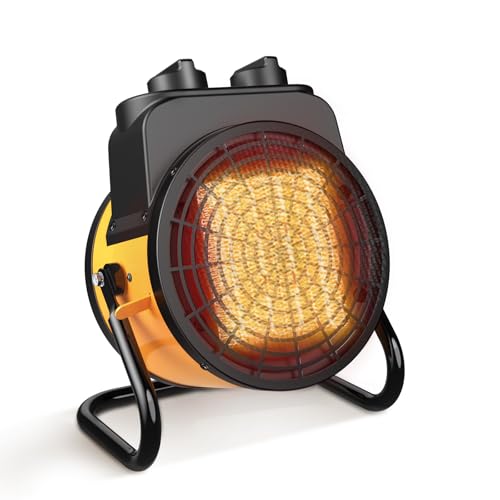
TRUSTECH offers a 1500W heater with a built‑in thermostat and three heat modes for flexible operation. Its 90° tilt capability directs heat precisely where it’s needed, minimizing heat loss and maximizing plant warmth. The product emphasizes quick warm‑up time, safety certifications (ETL), and a portable, compact footprint suited for grow tents, small greenhouses, and workspaces. The blend of rapid heat, tilt control, and steady thermostat regulation makes it a practical option for maintaining stable microclimates during cold spells.
SwSun 1500W Greenhouse Heater

The SwSun model emphasizes smart control with remote operation through a Wi‑Fi app. This enables temperature adjustments and real‑time monitoring from anywhere, ideal for plant rooms, grow tents, or greenhouses where setpoints must be maintained even when you’re away. The 1500W heater supports a broad temperature range and features real‑time alerts for abnormal conditions, helping safeguard delicate crops. The app connectivity adds convenience for tech‑savvy gardeners who want to manage environment settings remotely.
Buying Guide: Key Purchase Considerations
Power needs vary with space size, insulation, and plant density. For small greenhouses under 120 square feet, 1500W units can usually provide reliable warmth, while larger spaces may require higher output or multiple units. Safety features such as overheat protection, tip‑over shutoffs, and ETL or IP ratings help reduce risk in damp environments common to greenhouses.
Thermostat functionality matters. Digital thermostats with waterproof probes enable precise ambient control, reducing energy waste and preventing temperature swings that stress plants. Some models also offer auto/ manual modes, giving you hands‑off control or manual warmth when needed. In humidity-prone spaces, consider units with moisture resistance or design features that minimize electrical risk.
Ease of installation influences daily use. Look for flexible mounting options—wall, ceiling, or hanging—to place the heater where it directs heat most efficiently toward crops. Portable designs are convenient for shifting heat between different zones or seasons. If you use a smart home setup, Wi‑Fi enabled heaters with app control can simplify remote monitoring and alerts.
Longevity and build quality matter for frequent use. Heaters built with durable materials and reliable safety certifications are more likely to withstand continuous operation in greenhouse conditions. Consider models with flame‑retardant components and auto shutoffs that trigger when abnormal temperatures occur or when the unit is tipped.
Cost versus coverage is a practical factor. While premium models may offer faster heat, superior sensors, and smarter controls, many mid‑range options deliver robust performance for small spaces. Assess your space size, environmental conditions, and how important remote monitoring or precise digital control is to your setup.
In summary, the five highlighted heaters provide a mix of rapid warmth, thermostat precision, and flexible mounting to support small greenhouse environments. When choosing, match the heater’s power rating to your space, prioritize accurate temperature control, and consider how you’ll position the unit to maximize heat delivery to your plants.