Choosing a 4-foot baseboard heater involves balancing heat output, electrical setup, and installation practicality. Below is a curated look at five reliable options designed for American homes. Each option emphasizes steady radiant warmth, straightforward installation, and built-in safety features. Use this guide to compare hard-wired and plug-in models, materials, and warranty considerations.
| Product | Brand | Wattage | Voltage |
|---|---|---|---|
| Cadet F Series 48″ Electric Baseboard Heater (4F1000W) | Cadet | 1000/750 | 240/208 |
| KING 4K1210BW K Series Baseboard Heater | KING | 1000 | 120 |
| KING 4K2410A K Series Baseboard Heater | KING | 1000-750 | 240/208 |
| King 4K2410BW 1,000-750-Watt 240/208-Volt | KING | 1000-750 | 240/208 |
| King 4CB2407BW Ceramic Core Baseboard Heater | KING | 750 | 240 |
Cadet F Series 48″ Electric Baseboard Heater
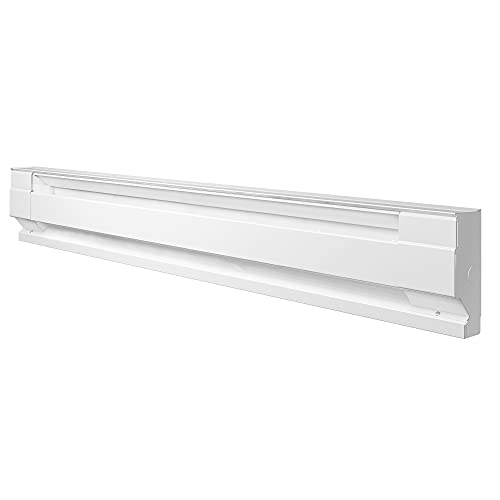
Cadet’s F Series 4F1000W provides robust heating for small to medium rooms with options for 1000W or 750W at 240V or 208V. The unit supports universal wiring and features pre-punched knockouts for flexible floor-or-wall installation, reducing install time and cost. A high-temperature safety shutoff adds a layer of protection, helping to minimize risk in daily use. For reliability and straightforward operation, this Cadet model is a solid choice in 4-foot configurations.
Key Specifications and Considerations
- Power: 1000W/750W; Voltage: 240/208V
- Install: Universal wiring, knockouts every inch
- Safety: High-temperature shutoff
KING 4K1210BW K Series Baseboard Heater

The KING 4K1210BW is a 4-foot, 1000W unit designed for 120V hard-wired installation. Its aluminum ribbon fin element provides efficient heat distribution across the baseboard length, while a full-length safety cutout adds an important layer of protection. This model is suitable for spaces that require a strong, steady heat source with a straightforward wiring approach.
Key Specifications and Considerations
- Power: 1000W at 120V
- Wiring: Hard-wired installation
- Protection: Full-length safety cutout
KING 4K2410A K Series Baseboard Heater

The KING 4K2410A offers 1000W at 240V or 750W at 208V in a 4-foot footprint with hard-wired installation. Aluminum ribbon fin elements promote efficient convection, while a full-length safety cutout protects against overheating. This model is well-suited for homes needing a reliable, high-output 4-foot heat strip with a robust safety profile.
Key Specifications and Considerations
- Power range: 1000W/750W
- Voltage: 240V / 208V
- Construction: Aluminum ribbon fin element
King 4K2410BW 1,000-750-Watt 240/208-Volt 4 Baseboard Heater
This 4-foot baseboard heater from King supports 1000W at 240V or 750W at 208V, making it adaptable for homes with different electrical setups. The unit uses an aluminum ribbon fin element for efficient heat transfer and includes a full-length safety cutout. The combination of high output and safety features makes it a strong option for larger rooms or spaces that demand quick, even warmth along the baseboard.
Key Specifications and Considerations
- Power: 1000W/750W
- Voltage: 240V / 208V
- Protection: Full-length safety cutout
King 4CB2407BW Ceramic Core Baseboard Heater

The 4CB2407BW features a ceramic core designed for natural convection heating at 240V. The ceramic core tends to offer stable, draft-free warmth with efficient heat storage characteristics. This model is suited for rooms that benefit from steady, radiant warmth along the baseboard without a fan or forced air component.
Key Specifications and Considerations
- Core: Ceramic
- Heat type: Natural convection
- Voltage: 240V; 750W
Buying Guide: Key Purchase Considerations
When selecting a 4-foot baseboard heater, consider how each model aligns with space, electrical wiring, and safety needs. This guide outlines important factors and comparisons to help users make an informed decision.
- Heat output and room size: Match wattage to room area. Higher wattage suits larger spaces; consider a model with adjustable wattage if available for flexibility.
- Voltage and installation: 120V hard-wired units are common for single-circuit installations; 208-240V units add flexibility in multi-circuit homes. Decide between plug-in and hard-wired options based on existing wiring and local codes.
- Heating element technology: Aluminum ribbon fin elements deliver quick heat and broad distribution, while ceramic cores offer stable, natural convection with heat storage advantages.
- Safety features: Full-length or high-temperature safety cutouts reduce risk. Look for auto shutoff and thermostat compatibility when available.
- Finish and appearance: Choose finishes (e.g., bright white) that blend with baseboards and trim. Some models integrate more cleanly with room aesthetics.
- Installation ease: Models with selectable knockouts and universal wiring simplify mounting on walls or floors. If replacing an old unit, consider covers or end caps for a tidy appearance.
- Maintenance and longevity: Metal-based fins are durable, while ceramic cores can provide long-term heat stability with different warmth profiles. Check warranty terms and service availability in your region.
- Noise and airflow: Baseboard heaters are typically quiet; however, ceramic-core models may feel warmer to the touch due to convection behavior. Consider whether you need passive or active heat distribution.
- Compatibility with thermostats: Verify thermostat compatibility and the ability to integrate with home heating schedules for energy efficiency.