Smart baseboard heaters bring temperature control, energy savings, and convenient automation to home heating. This guide reviews top 5 options that integrate with Wi-Fi, voice assistants, and mobile apps, helping you pick the right model for 120V–240V electric systems. Each product below is evaluated for compatibility, ease of install, programmable features, and smart home integrations.
| Product | Brand | Key Features |
|---|---|---|
| Mysa Smart Thermostat LITE | Mysa | Line voltage control; 120V–240V; HomeKit, Alexa, Google; free app; energy reports |
| Mysa Smart Thermostat | Mysa | 240V high-voltage support; four-wire requirement; adaptive display; remote control |
| meross Smart Thermostat for Electric Baseboard | meross | 120–240V; Apple HomeKit, Alexa, Google; 4 wires; 1920W/3840W capacity |
| Dreo Smart Wall Heater | Dreo | Smart control via app/voice; 30° oscillation; ECO mode; works with Alexa/Google |
| GiveBest Wall/Baseboard Style Heater | GiveBest | Ultra-quiet operation; 41–95°F range; safety features; 1500W |
Note: This selection emphasizes smart baseboard or high-voltage heaters with integrated Wi-Fi, app control, or smart assistants. Always verify compatibility with your existing wiring and local electrical codes before installation.
Mysa Smart Thermostat LITE For Line Voltage Bases
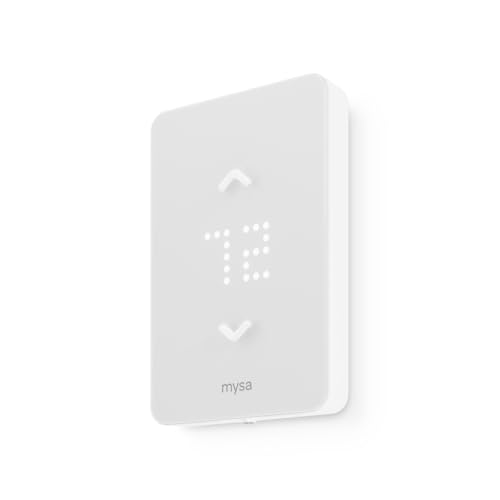
The Mysa Smart Thermostat LITE is designed for 120V–240V electric baseboard heaters, fan-forced heaters, and convectors. It supports single-pole operation and is compatible with HomeKit, Alexa, and Google Assistant. The device provides remote control, scheduling, energy reports, and smart integrations via a free app with no ongoing subscriptions. It is suitable for upgrades to existing line-voltage heating to add smart scheduling and energy awareness.
Mysa Smart Thermostat For 240V Electric Baseboards

This model targets high-voltage systems, supporting up to 3800W at 240V with four-wire installations (including neutral or second live). It offers remote operation, scheduling, and energy reports through the free app, plus HomeKit, Alexa, and Google compatibility. Ensure your baseboard setup is a four-wire system for optimal performance and compatibility with older wiring.
meross Smart Thermostat For Electric Baseboard

The meross thermostat is designed for high-voltage systems (120–240V) and supports up to 1920W at 120V or 3840W at 240V. It requires at least four wires, including a neutral or second live wire. It integrates with Apple HomeKit, Alexa, Google, and SmartThings, enabling voice control and app-based scheduling. This model is a solid option when upgrading older baseboard setups that support four-wire configurations.
Dreo Smart Wall Heater With App Control

The Dreo wall-mounted heater offers 11.5 ft/s airflow with 30° oscillation, enabling targeted warmth. It supports voice control via Alexa and Google Home, plus a dedicated app for scheduling and remote management. Its ECO mode helps optimize energy use, and the unit includes a precise temperature calibration feature within the app. This model is well-suited for spaces where a wall-mounted heater with smart control is preferred over baseboard form factors.
FLANUR Space Heaters With Smart Control

The FLANUR space heater is a compact 1500W PTC ceramic heater with Wi-Fi and voice control, a 12-hour timer, and four operation modes. It supports 2.4 GHz Wi-Fi and integrates with Alexa and Google Assistant. The device incorporates a child lock, overheat protection, anti-tip features, and safe flame-retardant materials. While it’s more of a portable heater than a baseboard model, its smart features make it a flexible option for rooms where wall or floor space is at a premium.
Buying Guide: Key Purchase Considerations
- Voltage and wiring: Confirm your system uses 120V, 208V, or 240V and whether a four-wire setup is required for smart thermostats like meross or Mysa. Some units operate as single-pole devices while others require double-pole configurations.
- Smart home ecosystem: Choose a thermostat that supports your preferred platforms (Apple HomeKit, Amazon Alexa, Google Assistant, SmartThings). Check whether voice control and app scheduling meet your needs without subscriptions.
- Energy features: Look for energy reports, adaptive brightness or display features, ECO or energy-saving modes, and occupancy-based scheduling to maximize efficiency.
- Installation complexity: Some models offer straightforward DIY installs; others require additional wiring or neutral/ground considerations. Ensure compatibility with your existing baseboard or heater type.
- Safety and reliability: For baseboard or wall heaters, verify built-in safety protections (overheat protection, tip-over, flame-retardant materials) and ensure the unit adheres to local electrical codes.
- Physical form factor: Baseboard-compatible thermostats are best when you want integrated control over long heating runs, while wall-mounted heaters with smart control can be ideal for targeted rooms or spaces without baseboards.
- Future scalability: If planning a multi-room or whole-home setup, prioritize devices with consistent firmware updates, robust app support, and clear compatibility pathways with other smart devices.
In selecting a smart baseboard or high-voltage heater, prioritize compatibility with your electrical system, the breadth of smart features, and the level of control you require for daily temperature management. The options listed above provide a range of capabilities from fully integrated baseboard thermostats to flexible wall-mounted heaters with smart features.