Keeping a barn warm and comfortable during cold months is a common farm concern. The right electric barn heater can extend working hours, protect livestock, and maintain equipment efficiency without constant fuel handling. This guide highlights five reliable options with strong safety features, energy efficiency, and adjustable heating to fit varying barn sizes. Each example covers wattage, heating method, and practical use cases to help you compare quickly and choose confidently.
| Product | Brand | Key Benefit |
|---|---|---|
| TEMPWARE Electric Garage Heater | TEMPWARE | High power, ECO mode, timer, adjustable air direction |
| VEVOR Electric Garage Heater | VEVOR | Very high wattage, wide coverage, ETL certified safety |
| DR Infrared Heater DR-238 | DR. INFRARED HEATER | Infrared heat for indoor/outdoor use, portable and instant heat |
| Dr Infrared Heater Portable Space Heater | DR. INFRARED HEATER | Dual heating system, timer, auto energy saving |
| SISUPASSIE Outdoor Heaters for Patio | SISUPASSIE | Outdoor-ready, fast heating, multiple modes, safety features |
Summary notes: These picks balance heat output with safety, ease of installation, and versatility for barn layouts. They cover high-capacity wall or ceiling mounting units, portable infrared options for variable spaces, and outdoor-friendly designs for adjacent barns or work areas. Consider your barn footprint, ceiling height, and whether you need ceiling-m mounted reach or portable coverage when comparing these models.
TEMPWARE Electric Garage Heater
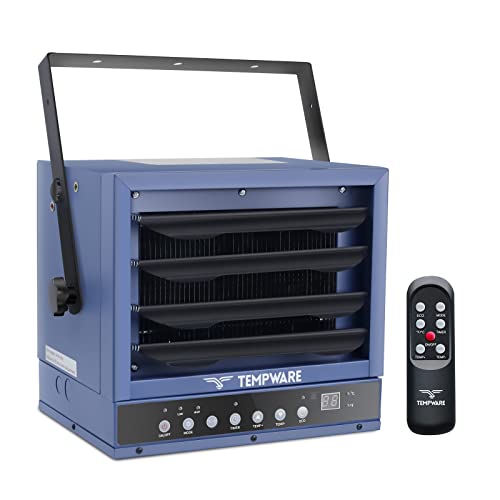
This ceiling‑mounted unit delivers robust warmth with a maximum output of 25,590 BTUs, suitable for barn spaces up to about 1,250 square feet. It provides two heat settings from 6,250 to 7,500 watts and features adjustable louvers to direct airflow precisely where needed. An ECO mode helps conserve energy by automatically adjusting based on ambient temperature, while a 12‑hour timer offers scheduling flexibility. A built-in thermostat operates from 45°F to 95°F, and an overheating sensor adds a crucial safeguard in busy barn environments.
The unit’s design emphasizes flexibility: the ceiling mount and adjustable angle let you target work areas, stalls, or equipment bays. Its remote control supports convenient operation from the doorway or office. For larger barns or multi-zone setups, pairing with a supplemental heater or zoning strategy can optimize comfort and energy use.
VEVOR Electric Garage Heater

VEVOR’s 10,000-watt high‑power heater is designed for substantial barn spaces, with a broad coverage area and quick convection. The unit is hardwired and offers a two-stage power setting to adapt to weather changes. Its sturdy SPCC steel shell provides structural durability, and overheat automatic power-off protection helps prevent hazards in busy barns. ETL certification adds a further layer of safety. Wide airflow ensures effective distribution across stalls, equipment bays, and walkways, while a 9‑hour timer supports scheduled heating and energy savings.
Safety and reliability are emphasized in this model, which is well-suited for larger barns or workshop areas that require consistent warmth. Proper installation and clearances are essential to maximize efficiency and maintain safe operation in a moist or dusty barn environment.
DR Infrared Heater DR-238
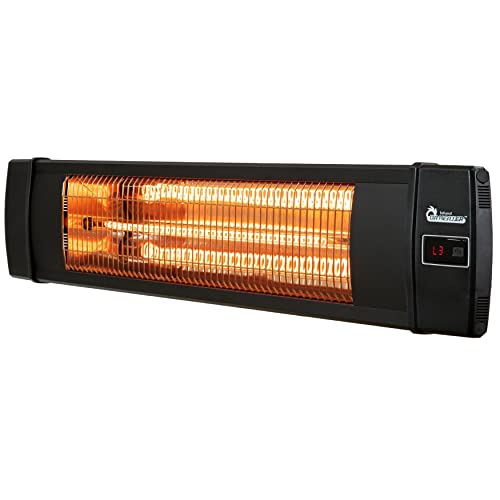
This infrared heater is rated for indoor and outdoor use with IP55 protection, making it adaptable to barns with open areas or covered exteriors. It provides clean, instant heat with three power settings (900W, 1200W, 1500W) using a standard 120V supply. The unit is remote-controlled for convenience and can be deployed to heat work zones, feed rooms, or entryways without emitting odors or fumes typical of combustion heaters. Infrared warmth is efficient for warming people and objects directly rather than heating all surrounding air, which can be advantageous in drafty barns.
For barns that require quick, focused warmth near workstations or animal stalls, DR-238 offers reliable performance with straightforward operation. Its outdoor-capable design helps when you need warmth near doors or loading areas without running extended ductwork or gas lines.
Dr Infrared Heater Portable Space Heater
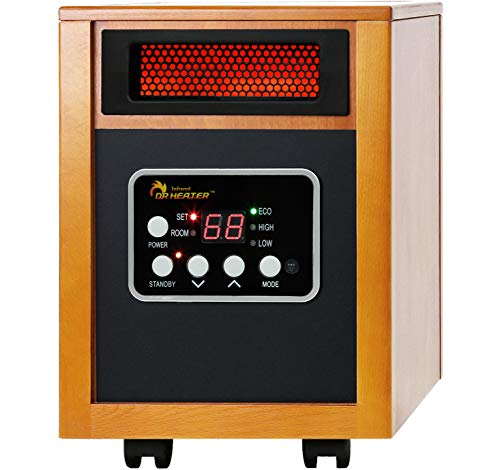
This portable infrared heater combines infrared quartz tube and PTC elements to deliver efficient warmth with a claimed 60% more heat than some rivals. It includes a dual heating system, an auto energy-saving mode, and a 12‑hour timer. Safety features include tip‑over and overheat protection and a compact profile that makes it easy to move between barn zones, feed rooms, or tack areas. The included remote control adds convenience for adjusting heat from a distance, which is useful in larger barns or with animals in other areas.
Portable options like this are ideal when you need temporary or moveable warmth rather than fixed, room‑sized installations. It can supplement other heating solutions or target drafts near entry doors or work benches, though continuous large-space heating may require higher-capacity solutions in bigger barns.
SISUPASSIE Outdoor Heaters for Patio

This outdoor-friendly heater provides rapid warmth for patios, garages, or greenhouse access areas adjacent to barns. It offers 1500W of heating with a three-mode selector and rapid warm-up, delivering heat to outdoor seating or work areas in minutes. An automatic safeguard feature helps prevent overheating, and the unit is built to handle outdoor humidity and dust. Its portability and weather-resistant design make it a practical choice for spaces that require warmth only in certain zones or during particular tasks outside the main barn.
For farms with covered outdoor workspaces or feed alleys, an outdoor heater can complement indoor heating and help manage drafts at entry points. It’s important to position outdoor units to avoid direct exposure to heavy precipitation while still benefiting from quick heating in outdoor zones.
Buying Guide
Key considerations for selecting an electric barn heater include heat output, space size, and installation type. Larger barns typically require high-wattage wall or ceiling units (like 7,500–10,000 watts) that can heat wide areas or multiple zones. For smaller stalls or tool rooms, 1,500–3,000 watt options may suffice, especially when paired with good insulation. Ceiling-mounted or wall-mounted heaters can free up floor space, while portable infrared heaters offer flexibility for temporary or targeted warmth.
Heat type matters: infrared heaters warm animals and objects directly, reducing energy waste in drafty spaces, while convection models heat the air and may better suit open barns with consistent airflow. Safety features such as thermostat control, overheat protection, tip-over switches, and ETL certifications are essential in barn environments where exposure to dust, moisture, and vibrations is common.
Energy management can improve running costs: look for ECO or auto‑shutoff features that adjust output based on ambient temperature, and consider timers to align with daily routines. If you have multiple zones, consider modular or zoned heating plans that allow one heater to operate in conjunction with others without overloading circuits.
Durability and installation are practical factors: choose units with protective housings, corrosion-resistant surfaces, and components designed for frequent startup cycles. Ensure proper clearance around heaters to prevent combustible material exposure and comply with local electrical codes. When in doubt, consult a licensed electrician and a professional installer to evaluate wiring, mounting, and ventilation options for your barn.