When winter weather threatens power outages or cold snaps, having a dependable indoor heater is essential. This guide highlights top-rated emergency heaters that operate safely indoors, deliver rapid warmth, and offer controls that help you manage energy use. Each pick is selected for reliability, safety features, and practical use in living rooms, bedrooms, offices, and small cabins. Below, you’ll find a quick product snapshot, followed by in-depth sections on five standout models and a practical buying guide to help you choose the right option for your space.
| Product | Brand | Indoor Use | Key Benefit |
|---|---|---|---|
| Dreo Space Heater, 1500W | Dreo | Yes | Fast heat with smart safety features |
| Dyna-Glo WK95C8 | Dyna-Glo | Yes | Large heating capacity without electricity |
| VESTA Self-Powered Camping Heater | Insta-Fire | Indoor/Outdoor | No power required; compact and versatile |
| Mr. Heater 9,000 BTU | Mr. Heater | Indoor/Outdoor | Reliable propane radiant warmth |
| Wind Talk 1500W Space Heater | Wind Talk | Yes | Quiet operation with ECO mode |
Dreo Space Heater, 1500W With Thermostat And Remote

The Dreo Space Heater combines a powerful 1500W PTC ceramic heating system with a refined heat funnel design. This layout accelerates warm air distribution, extending reach across a room and delivering noticeable comfort quickly. Safety is a priority, featuring tilt-detection, overheat protection, a flame-retardant outer shell, and an ETL certification for reliability. A precise NTC thermostat helps you set temperatures in narrow increments (41–95°F), enabling energy-efficient operation while maintaining comfort. An included remote and digital display simplify control, making it suitable for bedrooms, offices, or living spaces that require steady, controllable warmth.
Key features at a glance: rapid heat onset, broad reach, multiple safety systems, and precise temperature control. This model fits well in spaces up to medium-size rooms and can function as a primary heat source or a supplemental heater during cold days. It is designed for easy use and consistent performance in American homes.
Dyna-Glo Indoor Kerosene Convection Heater WK95C8

This kerosene convection heater provides substantial warmth without electricity. With a heating capacity around 23,000 BTU per hour and the ability to heat up to a thousand square feet, it is well-suited for spaces where electrical outlets are unavailable or during outages. It operates independently of electric power, which makes it a reliable emergency option for larger rooms, workshops, or cabins. Typical advantages include strong heat output, a broad heating zone, and practical safety features that support safe indoor use when proper ventilation is maintained. This model is best for upgrades in spaces where constant access to power is uncertain.
Dreo Space Heaters for Indoor Use, 1500W
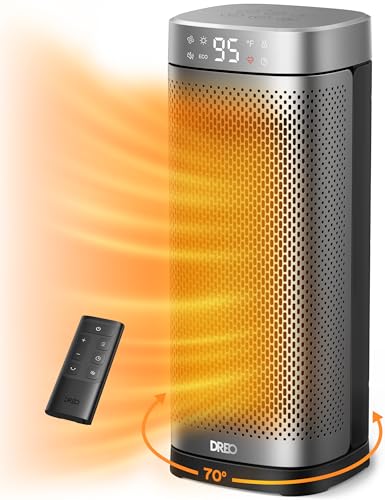
Another Dreo option emphasizes rapid warmth with a 1500W PTC ceramic element and Hyperamics technology. It promises quick warming of rooms up to about 250 square feet and offers a broad 70-degree oscillation to distribute heat widely. Safety is reinforced by Shield360° protection, tip-over and overheat safeguards, a 24-hour auto-off function, and flame-retardant materials. This model aligns with spaces that require consistent warmth throughout the day and night, especially in bedrooms and home offices where quiet operation is valued.
Wind Talk Space Heater, 1500W With Remote

Wind Talk delivers a compact 1500W ceramic heater with a 70° oscillation and a remote for convenient operation. It features an ECO mode designed to optimize energy use while maintaining a comfortable ambient temperature. The unit is designed for quiet performance, with modest noise output suitable for bedrooms and study areas. This model targets users seeking a balance of steady warmth, energy efficiency, and simple control in medium-sized rooms.
VESTA Self-Powered Camping Indoor/Outdoor Heater & Stove

The VESTA unit from Insta-Fire is a compact, two-in-one heater and stove. It operates without electricity, relying on fuel cans for heat, making it suitable for emergency scenarios where power is unavailable. The design supports indoor use, offering flexibility to cook and warm a space simultaneously, with a recommended coverage of up to 200 square feet. While its heat output is not as high as electric heaters, its independence from power sources makes it a compelling option for off-grid or emergency situations in smaller spaces.
Buying Guide: Key Purchase Considerations
Choosing an emergency heater involves balancing heat output, safety, convenience, and energy considerations. Here are the main factors to weigh when selecting a heater for indoor use:
- Heat output and coverage: For typical living rooms or bedrooms, aim for models in the 1500W range or kerosene heaters with ample BTU ratings, ensuring the unit can heat the intended space. In larger rooms, consider oscillating heaters that distribute warmth evenly.
- Power source and independence: Electric space heaters require outlets and electricity, while kerosene or propane units operate without electricity, offering reliability during outages. Combination options, like dual-use devices, can add versatility.
- Safety features: Look for tip-over protection, overheat shut-off, flame retardant housings, and ETL or UL certification. A tilt sensor or auto-off timer enhances safety in bedrooms and shared spaces.
- Thermal controls: Thermostats with fine increments (1°F steps) help maintain a stable comfort level and conserve energy. Wide-angle heating and oscillation help cover larger areas efficiently.
- Ventilation and odors: Combustion-based heaters require proper ventilation to avoid buildup of fumes. Electric heaters typically pose fewer ventilation concerns but may dry the air; consider a humidifier if needed.
- Noise level: For bedrooms or study spaces, quieter models (often below 50 dB) are preferable. Ceramic elements frequently provide quiet operation.
- Portability and storage: Lightweight, compact designs facilitate repositioning across rooms. Look for carry handles or wheels if you plan to use the heater in multiple spaces.
- Maintenance needs: Kerosene or propane heaters demand fuel management, flame adjustments, and routine inspections. Electric heaters generally require less ongoing maintenance but may need periodic filter or safety checks.
- Energy efficiency: ECO modes and programmable timers help reduce energy consumption. Consider models with per-room zoning to avoid heating unused spaces.
When selecting, consider how you will use the heater most: as a primary heat source in a small apartment, as a temporary solution during a power outage, or as a supplementary heater to reduce heating costs. Prioritize models with robust safety features and reliable performance for everyday use in American homes.