Gas tube heaters provide rapid warmth for garages, workshops, patios, and outdoor spaces. This guide highlights five reliable models from trusted brands, focusing on output, venting options, installation considerations, and safety features. Use the quick-reference table below to compare top picks at a glance.
| Product | Brand | BTU / Coverage | Vent / Installation | Notes |
|---|---|---|---|---|
| Mr. Heater F260550 Big Maxx MHU50NG | Mr. Heater | 50,000 BTU / up to 1,250 sq. ft. | Powered exhaust; vertical or horizontal venting | External thermostat and gas access |
| SunStar Garage Tube Heater – Natural Gas 45,000 BTU | Sunstar | 45,000 BTU | Ventless options noted; installation height 8 ft. | Compact 110″ length for spaces |
| Heatstar F125444 Radiant Overhead | Heatstar By Enerco | 500–600 sq. ft. range | Overhead radiant, no power needed for thermostat | CSA Certified |
| SunStar Garage Tube Heater – LP 45,000 BTU | Sunstar | 45,000 BTU | Compact 110″ length; 8 ft. minimum install | LP option; efficient performance |
| Universal Ray RH-150-40-P | Universal Ray | 150,000 BTU | 40′ long radiant tube, propane | For commercial/industrial use; not residential |
Mr. Heater F260550 Big Maxx MHU50NG Natural Gas Unit Heater
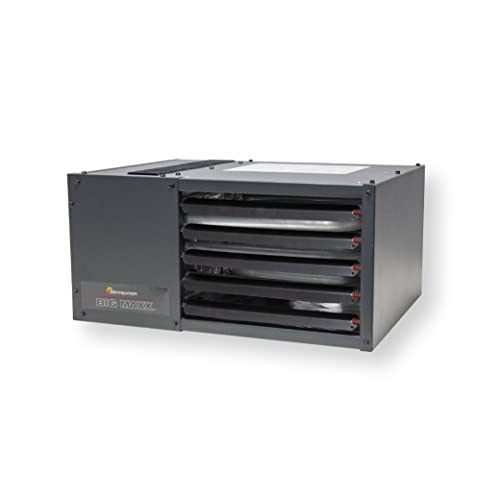
The Mr. Heater F260550 Big Maxx MHU50NG delivers 50,000 BTU per hour, capable of heating up to approximately 1,250 square feet. A powered exhaust system supports vertical or horizontal venting, enabling flexible installation. The unit provides straightforward access to thermostat and gas connections from outside, simplifying maintenance and adjustments. This model suits garages, workshops, and larger spaces where consistent warmth is required. Compliance with safety standards and robust construction are typical in Mr. Heater products, ensuring long-term operation in colder months.
SunStar Garage Tube Heater – Natural Gas 45,000 BTU

This natural gas tube heater offers 45,000 BTU with a compact overall length of 110 inches to fit tight installation spaces. It provides high efficiency, with reported efficiencies up to 84.5%, and is designed for installations as low as 8 feet above the floor. Such specs make it a practical option for garages and shop spaces where wall or ceiling clearance is limited, while still delivering solid warmth for larger work areas.
Heatstar By Enerco F125444 Radiant Overhead Garage Heater H25Ng
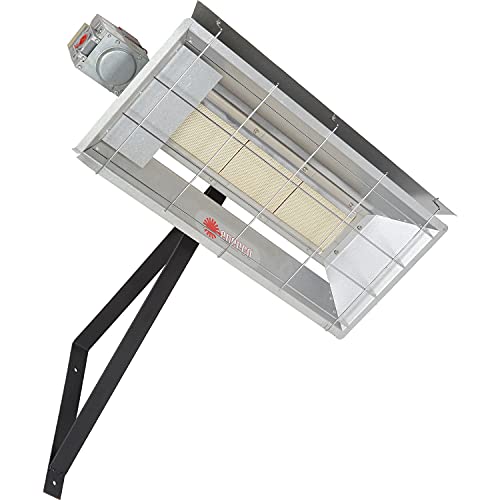
The Heatstar F125444 delivers radiant heating for overhead installation, suitable for 500–600 square feet typical garages. It is CSA Certified and can operate without external power for thermostat control, providing reliable warmth even in low-power scenarios. This model emphasizes direct heat transfer to occupants and objects in the space, offering efficient performance for mid-size garages or workshops seeking a simple, dependable solution.
SunStar Garage Tube Heater – LP, 45,000 BTU

This LP-ready 45,000 BTU tube heater combines compact length with solid efficiency, matching many natural gas models in output while offering LP fuel compatibility. Installation considerations include venting method compatibility and ensuring proper clearance. It is well-suited for garage spaces where LP fuel is preferred or where natural gas lines are not available, providing flexible fuel options without sacrificing performance.
Universal Ray RH-150-40-P Single Stage Propane Gas 150,000 BTU

The Universal Ray RH-150-40-P provides a substantial 150,000 BTU output across a long radiant tube, designed for propane systems. It is marked for commercial or industrial use and is not approved for residential settings, making it more suitable for larger facilities or specialized spaces where high heat output is necessary. Robust construction with black-coated aluminized steel emitter tubes supports sustained operation in demanding environments.
Buying Guide
Key purchase considerations vary by space and fuel source. These factors help determine the best gas tube heater for a given environment:
- Space and heat load: Match BTU output to the size of the area. Overkill wastes energy, while underpowered units fail to maintain comfort.
- Fuel type: Natural gas offers steady supply; propane adds flexibility for spaces without gas lines. Ensure your space has a proper fuel source and venting plan.
- Ventilation and venting options: Some models support vertical or horizontal venting; others are designed for vent-free operation with caution. Adequate combustion air is essential.
- Installation height and clearance: Ceiling or wall mounting requires adequate clearance from combustibles and a stable mounting surface. Some units specify minimum installation heights (e.g., 8 ft).
- Thermostat and control features: Thermostatic control without power is beneficial in some setups; externally accessible controls simplify servicing in work areas.
- Safety certifications: CSA or other certifications indicate compliance with safety standards. For commercial spaces, verify suitability for intended use.
- Durability and maintenance: Look for robust housings and tubes, corrosion resistance, and ease of access for service and filter changes where applicable.
- Noise and airflow: Consider blower-assisted designs if even heat distribution is important, but note potential noise implications.
- Cost of ownership: Include installation, fuel, and potential venting requirements in total cost estimates over the heater’s lifespan.
When evaluating options, compare not only BTU ratings but also installation complexity, venting requirements, and safety certifications. For spaces used year-round, a model with flexible venting and reliable thermostatic control often provides the best long-term performance and energy efficiency.