When selecting a garage heater, a 40,000 BTU unit is a popular balance of power and efficiency for medium-to-large spaces. This guide highlights top options, including the classic propane units and versatile dual-fuel or electric models, to help you compare performance, fuel type, and safety features.
| Product | BTU (approx.) | Fuel Type | Notes |
|---|---|---|---|
| Mr. Heater 40,000 BTU Propane Garage Heater MH40LP | 40,000 | Propane | Infrared heat, no electricity required |
| InoKraft MaXheat MH68 | 30,000–68,000 | Propane | Adjustable, heated area up to 1,600 sq ft |
| Dura Heat LPC80 | 50,000–80,000 | Propane | Convection heat, 1900 sq ft max |
| BILT HARD 125,000 BTU | 75,000–125,000 | Propane | Large-area heating up to 3,125 sq ft |
| Mr. Heater MH170QFAVT | 125,000–170,000 | Propane | Portability for large spaces and job sites |
Mr. Heater 40,000 BTU Propane Garage Heater MH40LP

Product overview: This infrared heater provides efficient, cost-effective heat with no electricity required. It’s designed for garages and workshops where electricity may be limited. Clearances include top 36″, sides and back 30″, below 68″. Its fuel is propane, and it produces heat quickly to warm workspaces effectively.
Mr. Heater F260550 Big Maxx MHU50NG Gas Unit Heater
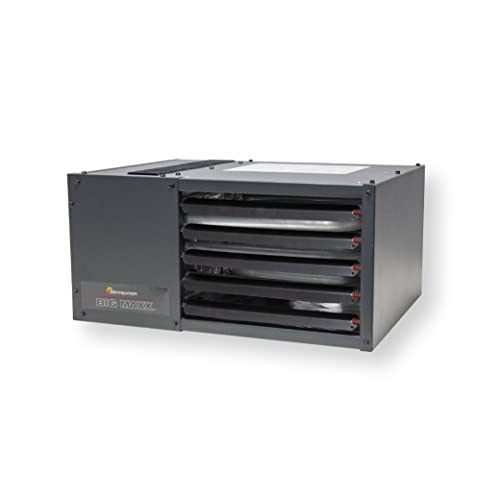
Product overview: This 50,000 BTU natural gas unit heater heats up to 1,250 sq ft and offers flexible venting options with powered exhaust. It includes easy outside access to thermostat, A/C terminals, and gas connections for straightforward installation in larger garages or workshops.
Dyna-Glo 30,000 BTU Blue Flame Wall Heater

Product overview: Dual-fuel design allows operation with LP or natural gas. This wall-mounted heater uses Blue Flame Technology to convect heat like a central system and can heat up to 1,000 sq ft, with up to 30,000 BTU/hr for efficient garage heating.
BILT HARD 125,000 BTU Propane Heater

Product overview: This versatile torpedo heater provides 75,000–125,000 BTU, heating up to 3,125 sq ft. It offers adjustable heat angles, robust build quality, and CSA certification, ideal for large garages or job sites requiring rapid space heating.
InoKraft MaXheat MH68 68,000 BTU Heater

Product overview: This portable propane forced-air heater offers 30,000–68,000 BTUs, heating up to 1,600 sq ft. It features adjustable heat angle, fast heat-up time, and multi-protection safety features ensuring safe operation in garages and job sites.
Buying Guide
- BTU needs: Match the heater’s BTU rating to your garage size. Larger spaces typically benefit from higher BTU ranges, but oversizing can waste fuel and reduce efficiency.
- Fuel type: Propane units are common for garages without reliable electricity. Natural gas models require a gas line. Dual-fuel options offer flexibility where fuel access varies.
- Ventilation and exhaust: Some units vent vertically or horizontally; others are vent-free. Ensure adequate airflow and follow manufacturer safety guidelines to prevent carbon monoxide buildup.
- Safety features: Look for tip-over switches, high-temperature limit switches, and auto shut-off features. CSA or UL listings indicate adherence to safety standards.
- Portability and installation: Consider wheeled or compact units for movable heating. Wall-mounted or ceiling options save floor space in compact shops or garages.
- Electrical needs: Electric-powered heaters require suitable outlets and sometimes hardwiring. If power outages are common, non-electric infrared heaters may be advantageous.
- Maintenance: Regularly inspect hoses, regulators, and gas connections. Clean filters and vents to maintain efficient heat distribution.
- Cost of operation: Compare fuel efficiency, runtime on a full tank, and maintenance costs to estimate long-term expenses.
- Noise and comfort: Quieter models improve work environments. Consider burner technology and fan noise when choosing between models.
- Use case variety: For frequent outdoor or job-site use, portability and rugged build matter; for a fixed garage, a higher BTU, vented model may be preferable.