When dealing with bed bugs, heat treatment is a proven, chemical-free option used by professionals and serious homeowners. This guide highlights five top bed bug heater systems commonly used in large-scale and home environments. Each option offers substantial heat output, easy setup, and targeted interior coverage. Read on to compare how these units address life-stage coverage, portability, and operational requirements for effective heat-based eradication.
Summary of selected products:
| Product | Brand | Key Benefit | Approximate Coverage |
|---|---|---|---|
| Dr Infrared Heater Upgraded Version 2-Tier DR-122 | DR. INFRARED HEATER | Fast heating to 120-155F; large treatment area | 38x38x26 inches |
| ZappBug The Oven 2 XL | ZappBug | Large-item efficiency; simple setup | Heats large items above 120F |
| ThermalStrike Ranger Bed Bug Heater | ThermalStrike | Six-sided heating; professional-grade control | Surrounds items for uniform heat |
| GreenTech Heat Solutions ePro 600 Package | GreenTech Heat Solutions | Comprehensive kit; 600 sq ft capability | Up to 600 sq ft rooms |
| GreenTech Heat Solutions ePro 400 Hotel Package | GreenTech Heat Solutions | Compact hotel-ready kit; efficient heating | Up to 400 sq ft rooms |
Dr Infrared Heater Upgraded DR-122 — Large Bed Bug Treatment

The DR-122 expands heat coverage with a two-tier steel rack design, enabling treatment of a broad assortment of items within a single session. Its upgraded heating system quickly reaches 120–155F, a range verified to affect all bed bug life stages. The model is well-suited for spaces that require rapid, efficient heating with a sizable treatment area measuring about 38 by 38 by 26 inches. This configuration supports large blankets, luggage, and stacked items, making it a practical option for cluttered spaces or multi-item infestations.
ZappBug The Oven 2 XL Bed Bug Heater

ZappBug The Oven 2 XL is designed for efficient heat treatment of large items with minimal setup. It heats to temperatures above 120F (50C) and emphasizes a straightforward, one-person operation. The system is described as free from mixing, measuring, odors, or stains—relying on heat alone to kill bed bugs. Its emphasis on ease of use makes it a popular choice for homeowners handling large or bulkier items without professional equipment or complex procedures.
ZappBug Heater Bed Bug Killer

This ZappBug model focuses on heat-only bed bug control, providing a streamlined setup that supports quick deployment. Users can load items, start the heating cycle, and rely on the system’s capability to reach lethal temperatures for bed bugs, including eggs and nymphs. The tent design folds flat, aiding storage and portability between rooms or properties while maintaining effectiveness in heat distribution across treated items.
ThermalStrike Ranger Bed Bug Heater
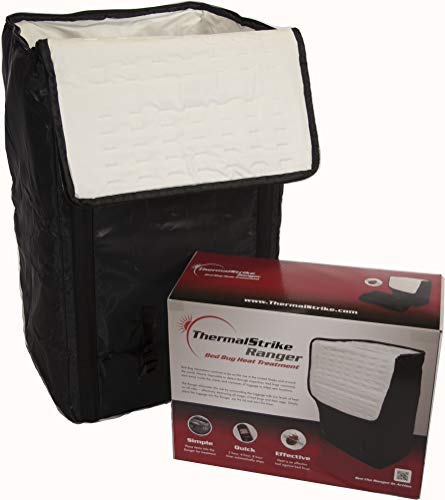
The ThermalStrike Ranger stands out with a six-sided heating system that surrounds items to ensure no cold spots. It claims to deliver temperatures in excess of 120 degrees, with a fully sealed inner liner and multiple thermostats for consistent performance. Its commercial-grade construction and tight control make it suitable for both professional use and serious DIY applications. The Ranger’s design prioritizes durability and thorough coverage for resistant bed bug populations, including eggs and larvae.
Hotel Portable Electric Bed Bug Sanitation Heater (GreenTech)

The Hotel Portable Electric Bed Bug Sanitation Heater package from GreenTech Heat Solutions combines high-output heat with comprehensive accessories for hotel settings. Aimed at achieving 100% kill of bed bugs and eggs, this kit describes a full suite of components—including a powerful ePro 600 heater, air movers, temperature sensing tools, and training materials. The system emphasizes a scalable approach, designed to handle larger rooms and varied layouts while maintaining safety and thorough heat penetration.
Buying Guide: Key Purchase Considerations and Comparisons
- Heat output and duration: Look for units capable of sustained temperatures above 120F (49C) to ensure penetration into cracks and fabrics. Consider BTU or temperature-range specs and how quickly the unit reaches treatment temperature.
- Coverage area: Assess the claimed treatment footprint—larger spaces require equipment with broader heat distribution or multi-surface coverage. For cluttered rooms, a wide footprint reduces treatment time.
- Portability and setup: If you move between rooms or properties, prioritize models with lighter weight, integrated racks, or simplified assembly. One-person operation features can save time during treatment.
- Durability and safety: Commercial-grade designs offer better long-term reliability. Look for sealed inner linings, multiple thermostats for control, and stable enclosures to minimize heat loss and electrical load.
- Accessories and training: Some packages include training materials, temperature sensors, and air movers—valuable for achieving consistent outcomes in DIY or professional settings.
- Egg and life-stage effectiveness: Choose systems explicitly designed to affect eggs, nymphs, and adults, ensuring a comprehensive kill across bed bug generations.
- Maintenance and storage: Consider units with foldable or easily stowed components, especially for smaller spaces or limited storage.
- Safety considerations: Ensure proper ventilation guidance and adherence to electrical requirements to avoid hazards in occupied spaces or near flammable materials.
When selecting a propane bed bug heater, consider the trade-offs between portability and coverage, as well as the availability of compatible accessories and training. For larger infestations or hotel environments, a comprehensive kit with robust support and training can improve reliability and outcomes. For home use, models offering straightforward operation, reliable heat delivery, and simple storage tend to maximize effectiveness with minimal setup complexity.