For households seeking year‑round comfort, a portable heater and air conditioner combo offers flexible climate control without permanent installation. The following five models combine cooling, heating, and dehumidification in compact units designed for rooms ranging from small bedrooms to larger living spaces. Each option features multiple modes, built‑in fans, and remote controls for convenient operation. Read on to compare performance, energy use, and practical design differences that matter for American homes.
| Product | Approx. Coverage | Key Feature |
|---|---|---|
| Whynter ARC-14SH | Up to 500 sq ft | Dual‑hose design with auto drain and dehumidifier |
| Midea Duo 14,000 BTU | Up to 550 sq ft | Inverter, dual hose design, smart control |
| DOMANKI 14,000 BTU | Up to 700 sq ft | 4‑in‑1 with sleep mode, timer, auto evaporation |
| SereneLife 12,000 BTU | Up to 550 sq ft | 4‑in‑1: cooling, heating, dehumidifier, fan |
| Uhome 12,000 BTU | Up to 400 sq ft | Self‑evaporating system, remote, window kit |
Whynter 14,000 BTU Portable AC With Heater

Whynter’s ARC-14SH combines 14,000 BTU cooling with heating capabilities suitable for spaces up to 500 square feet. The unit operates quietly at low speeds (as low as 51 dBA), which makes it appropriate for bedrooms and home offices. It uses a dual‑hose exhaust system that improves efficiency and temperature control by supplying fresh air while removing heat, reducing energy consumption. The built‑in dehumidifier handles up to 71 pints per day, and the auto drain feature minimizes manual maintenance. The ARC‑14SH is designed for flexible installation with a window kit and a compact footprint, enabling easy relocation between rooms. Its eco‑minded design emphasizes energy efficiency and reliable cooling performance in American homes.
Midea Duo 14,000 BTU Inverter Portable AC

The Midea Duo 14,000 BTU inverter model uses a dual hose design to balance indoor air and prevent heat gain from outside. This unit is engineered for higher energy efficiency thanks to inverter technology, delivering significant energy savings—often exceeding 40% versus traditional portable units. It cools rooms up to 550 square feet quickly and can also heat, dehumidify, or function as a fan. The advanced airflow system and automatic swing help distribute air evenly, while the window kit and remote control offer straightforward setup and operation. Alexa/Google compatibility is supported, allowing voice control in smart homes. This is a strong option for users prioritizing quiet operation and energy efficiency.
SereneLife 12,000 BTU Portable AC With Heater
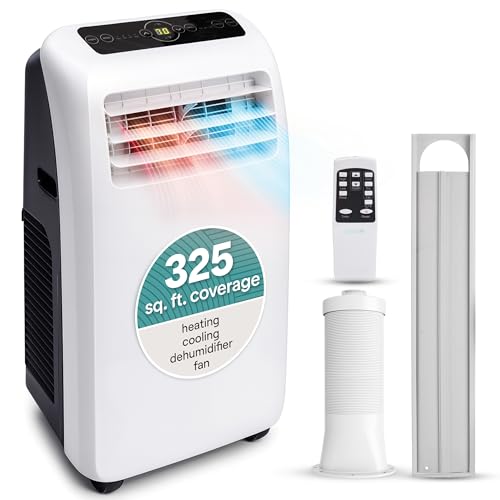
This SereneLife model delivers 12,000 BTU cooling suitable for spaces up to 550 square feet. It integrates heating, a built‑in dehumidifier, and a fan to provide all‑season comfort. The unit emphasizes portability with wheels and a sleek design, making it easy to move between rooms or use in different areas of a home or office. A remote control and window exhaust kit simplify operation and installation. The 4‑mode operation—cool, heat, dehumidify, and fan—enables year‑round climate control, while the automatic swing feature helps maximize airflow distribution for even temperatures. This model focuses on practical versatility in mid‑sized spaces.
SereneLife 10,000 BTU Portable AC With Heater
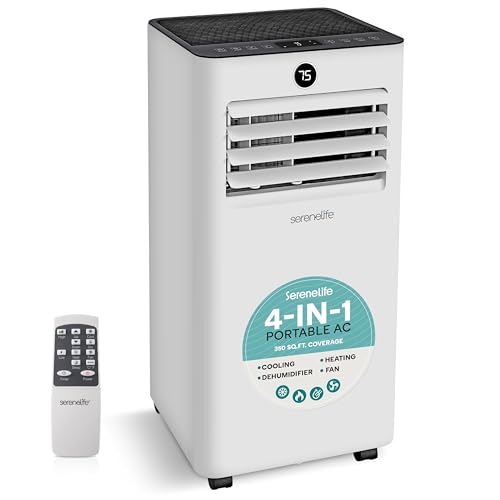
The 10,000 BTU SereneLife model is designed for rooms up to 450 square feet and combines cooling with heating, a dehumidifier, and a fan in a compact footprint. It includes a remote control and window mount kit for straightforward installation. The unit emphasizes ease of use with a LED display and programmable timer. Self‑evaporating technology helps minimize condensate buildup, adding convenience for daily use. This option is well suited for smaller living spaces or home offices seeking a cost‑effective all‑season climate solution.
Buying Guide: Key Purchase Considerations
Choosing a portable heater and AC combo requires weighing capacity, energy use, and practicality for your space. Consider the following factors to make an informed selection:
- Room size and BTU coverage: Match the unit’s cooling and heating capacity to the room square footage. Oversized or undersized units can waste energy or fail to maintain comfort.
- Dual vs. single hose design: Dual‑hose models generally offer better cooling efficiency and moisture management, especially in warmer climates, but may be less portable due to hoses length. Single‑hose models can be lighter and cheaper but may pull warm air from outside in humid environments.
- Energy efficiency and inverter technology: Inverter units adjust compressor speed for steadier temperatures and lower energy consumption, which is beneficial for extended use and running costs over time.
- Dehumidification capacity: If humidity is a concern, look for higher pint/day dehumidification ratings and auto‑drain features to minimize manual emptying.
- Noise levels: For bedrooms or study areas, prioritize units with low decibel ratings especially on cooling or high fan speeds.
- Installation and mobility: Window installation kits, caster wheels, and remote controls improve ease of use. A self‑evaporating system reduces maintenance in drier climates.
- Smart features and compatibility: Voice control, programmable timers, and app integration can simplify daily routines and energy management in smart homes.
- Maintenance and durability: Look for accessible filters, easy cleaning, and sturdy casings to ensure long‑term reliability in American homes with varying climates.
In summary, the best portable heater and AC combo balances cooling and heating capacity with efficiency, ease of use, and flexible installation. The listed models provide options across room sizes and feature sets, so buyers can select based on space, climate, and how much automation they value in daily climate control.