Finding the right baseboard heater can make a noticeable difference in comfort and energy use. This guide highlights top electric baseboard options from Cadet, Comfort Zone, and EZ-HEAT, focusing on power, size suitability, safety features, and ease of installation. Each product is evaluated for small to large spaces, making it easier to choose a model that fits your room and existing thermostat setup. Below is a quick summary of five strong picks to consider.
| Product | Brand | Approximate Power | Best For |
|---|---|---|---|
| Cadet F Series 48″ Electric Baseboard Heater (4F1000W) | Cadet | 1000W / 750W | Medium rooms, wall or floor mounting |
| Cadet F Series 36″ Electric Baseboard Heater (3F750-1W) | Cadet | 750W | Single rooms, simple installation |
| Cadet F Series 72″ Electric Baseboard Heater (6F1500W) | Cadet | 1500W | Large spaces, robust heating |
| Comfort Zone 1,500W Electric Baseboard Heater (CZ600) | Comfort Zone | 1500W | Flexible, safe, quiet heating |
| EZ-HEAT 1,500W Baseboard Space Heater (CZ600) | EZ-HEAT | 1500W | Whisper-quiet operation, versatile controls |
Note: The table focuses on electric baseboard solutions suitable for homes seeking straightforward installation, reliable heat, and common thermostat integration. Hydronic or non-heating cover products are excluded to keep the focus on direct-baseboard heating performance.
Cadet F Series 48″ Electric Baseboard Heater
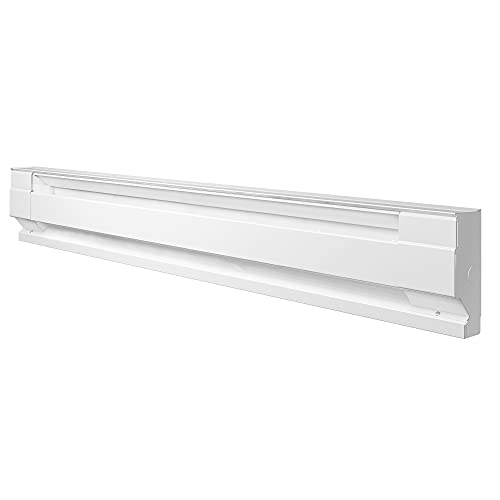
Powerful heat output at 1000/750 watts and 240/208 volts makes this Cadet model well-suited for small to medium rooms. Its universal wiring and 1-inch interval knockouts allow flexible floor or wall mounting, minimizing installation costs. Safety features include a high-temperature shutoff to reduce risk and protect occupants. The slim, long profile provides even heat distribution along walls, helping to avoid cold spots in the room. This unit is a practical choice for retrofit projects where ductwork is not feasible.
Cadet F Series 36″ Electric Baseboard Heater
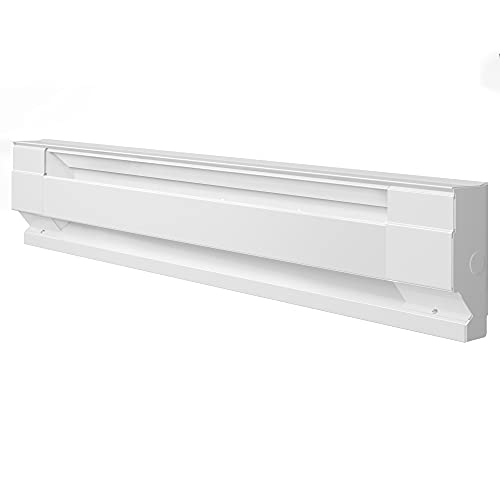
This 36″ Cadet model delivers 750 watts of steady warmth at 120 volts. It emphasizes durability with 25-gauge steel construction and a powder-coated finish, plus a grounded 20-gauge junction box. While it requires a thermostat for operation, its all-metal build provides reliable long-term performance in modern homes. The unit is suitable for bedrooms or small living rooms where a discreet heating solution is preferred without noisy operation.
Cadet F Series 72″ Electric Baseboard Heater

Designed for larger rooms, this 72″ model provides substantial heat with 1500/1125 watts at 240/208 volts. It uses a durable all-metal, powder-coated finish and requires a thermostat for precise temperature control. The extended length allows for uniform heat distribution along long walls, reducing cold spots and enabling energy-efficient heating for open-plan spaces or rooms with higher heat demand. It’s a solid option when a single heater must cover a broader area.
Comfort Zone 1,500W Electric Baseboard Heater

The CZ600 by Comfort Zone combines 1500 watts of heating power with adjustable thermostat and safety features such as a tip-over switch and overheat protection. Its stay-cool body minimizes burn risk during handling, and a silent operation profile reduces ambient noise for bedrooms or home offices. The unit’s dual safety mechanisms and modern construction support reliable daily use in medium-sized spaces, offering a balanced mix of safety and comfortable warmth.
EZ-HEAT 1,500W Baseboard Space Heater

EZ-HEAT’s CZ600 model mirrors Comfort Zone’s 1500W capability with two heat settings and an adjustable thermostat. It features a tip-over switch, stay-cool exterior, and overheat protection for enhanced safety. Quiet operation and smooth, consistent heat output make it suitable for living rooms or home offices where minimal disturbance is desired. This unit provides reliable baseline warmth with straightforward control, ideal for users seeking predictable performance.
Buying Guide: Key Purchase Considerations
- Room size and heat requirements: Choose wattage based on room square footage and insulation. Larger spaces typically benefit from higher-wattage models (e.g., 1500W) or longer heaters that distribute heat across a wall.
- Thermostat and control options: Check whether the heater includes an adjustable thermostat and whether it supports line-voltage or low-voltage thermostats. A programmable thermostat can improve energy efficiency.
- Installation considerations: Consider mounting options (wall vs. floor), available clearance from walls, and whether universal wiring or knockout access is included for easier installation.
- Safety features: Look for high-temperature shutoff, tip-over protection, overheat protection, and stay-cool surfaces to prevent accidental contact injuries.
- Durability and materials: All-metal casings with powder-coated finishes tend to last longer in busy areas and resist wear. Steel construction adds rigidity and heat distribution consistency.
- Noise and comfort: Most baseboard heaters operate quietly, but some models emphasize near-silent performance—beneficial for bedrooms, nurseries, or study areas.
- Thermal efficiency: Longer or multiple units can create even heat distribution along a wall, reducing cold spots and improving perceived comfort without oversizing a single heater.
- Maintenance and accessibility: Consider ease of cleaning and whether doors, end caps, or panels are removable for service or replacement parts.