When selecting a potent heater for large areas, efficiency, safety, and reliability are essential. This guide highlights top heaters with high BTU outputs that are well-suited for garages, outdoor workspaces, or commercial environments. Each product section provides core specifications and notable features to help you compare performance, fuel type, and venting needs.
| Product | BTU Range | Typical Area | Fuel Type | Notes |
|---|---|---|---|---|
| Mr. Heater MH170QFAVT | 125,000–170,000 | Up to 4,250 sq ft | Propane | Heavy-duty outdoor & job-site use |
| Mr. Heater F260560 Big Maxx MHU80NG | 80,000 | Up to ~2,000 sq ft | Natural Gas | High output for larger spaces |
| Dura Heat LPC80 | 50,000–80,000 | Up to ~1,900 sq ft | Propane | 360° convection; wind shield |
| Mr. Heater Corporation Convection Heater | 30,000–80,000 | Up to ~2,000 sq ft | Propane | Standing pilot; long runtime |
| Dura Heat LPC25 | 15,000–25,000 | Typical large rooms | Propane | Convection with wind protection |
Mr. Heater MH170QFAVT 170,000 BTU Portable Propane Heater

The MH170QFAVT provides a high-output range of 125,000 to 170,000 BTU per hour, suitable for large job sites, garages, and outdoor areas. Safety features include a high-temperature limit switch and thermoelectric safety valves, which help prevent overheating and fuel issues. Its quiet burner technology reduces noise by about half compared to standard propane heaters, contributing to a more comfortable work environment. The rugged construction and heavy-duty handle support easy transport between locations, making it a practical option for temporary or semi-permanent heating needs.
Mr. Heater F260550 Big Maxx MHU50NG Natural Gas Unit Heater
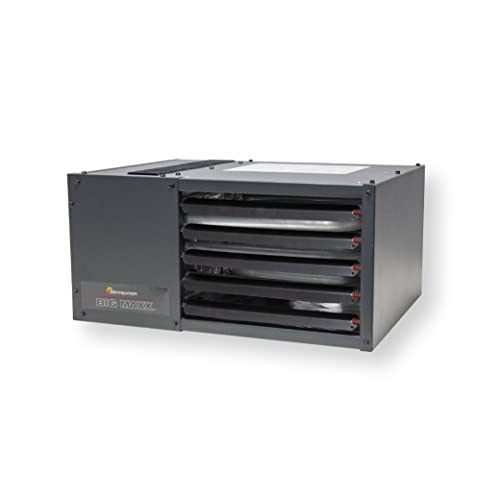
The Big Maxx MHU50NG delivers 50,000 BTU per hour, heating spaces up to roughly 1,250 square feet. It features powered exhaust for flexible venting options (vertical or horizontal) and convenient access to a thermostat, A/C terminals, and gas connection from the outside. This design supports safer, easier setup in larger indoor or semi-outdoor spaces where venting and monitoring are priorities. Its efficiency and modular venting options make it a reliable choice for commercial or workshop environments needing steady heat without frequent fueling.
Dura Heat LPC80 50-80,000 BTU Convection Heater

The LPC80 provides 50,000 to 80,000 BTU with 360-degree convection, offering even heat distribution across large spaces. This LP propane heater operates without electricity, making it versatile for areas with limited power. It can run up to 17 hours on a 40-pound cylinder and includes a piezo igniter for straightforward ignition. It’s well-suited for both indoor and outdoor use, provided proper ventilation is available. A wind shield helps protect the flame in outdoor conditions, promoting consistent heat output even in breezy environments.
Mr. Heater Corporation Convection Heater
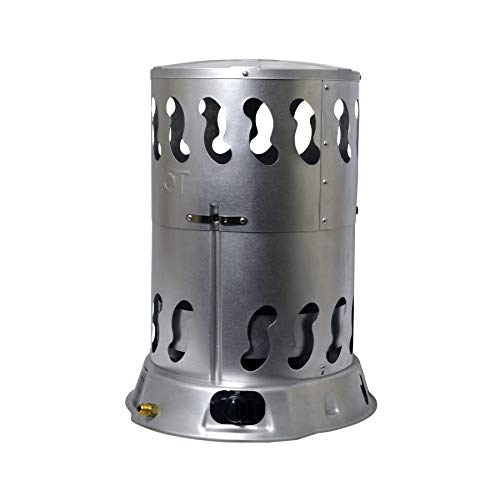
This convection heater provides a 30,000 to 80,000 BTU range suitable for heating up to 2,000 square feet. It’s designed for propane gas operation with a standing pilot for added safety. The model supports extended runtimes and is commonly used in spaces where a balance of warmth and fuel economy is needed. Its setup is straightforward for standard HVAC-type installations, and it’s a practical option for mid-to-large spaces requiring reliable heat with simple venting requirements.
Dura Heat LPC25 15-25,000 BTU Convection Heater

The LPC25 offers 15,000 to 25,000 BTU with 360-degree heating for large rooms and is designed for both indoor and outdoor use with proper ventilation. It includes a wind shield to protect the flame from gusts and maintain consistent heat output. While it operates at a lower BTU than some models, it provides reliable convection heating for spaces that require steady warmth without higher energy demands. Its compact profile makes it easy to install in garages or workshops with limited space.
Buying Guide: High-Btu Heating Considerations
- BTU needs and space size: Larger areas require higher BTU outputs. Match the heater’s BTU rating to the square footage and ceiling height to avoid underserving or wasting energy.
- Fuel type and availability: Propane units are common for portable outdoor use, while natural gas models can be more economical for permanent installations. Check fuel supply and appliance clearance requirements.
- Ventilation and indoor use: Many high-BTU units are intended for outdoor or well-ventilated spaces. Indoor installations must comply with local codes and venting needs to prevent harmful gas buildup.
- Vent configuration: Some units offer vertical or horizontal venting options. Choose based on room layout and exterior venting constraints.
- Safety features: Look for high-temperature limit switches, flame safeguards, automatic shutoff, and stable housings. A standing pilot or ignition method can affect startup reliability in cold conditions.
- Portability vs. permanence: Portable units (propane) are flexible for job sites, while larger fixed units (natural gas) suit workshops and garages needing constant heat.
- Maintenance and accessories: Consider ease of maintenance, availability of replacement parts, and included accessories such as thermostats or conversion kits when evaluating overall cost of ownership.
- Vent-free vs. vented designs: Vent-free (or low-vent) units may be convenient but require careful room sizing and oxygen depletion monitoring in accordance with safety guidelines.
- Noise and comfort: Quieter burner technology and robust construction improve comfort in work environments, particularly in spaces where people spend long hours nearby.
- Energy efficiency: Compare efficiency ratings and runtime on standard fuel tanks. Efficient units can reduce operating costs despite higher upfront prices.