Choosing an electric water heater involves balancing flow needs, installation requirements, and energy efficiency. The following selections highlight electric tankless and mini-tank options that deliver on-demand hot water for multiple fixtures or point-of-use scenarios. Each option includes clear usage notes and installation considerations to help you compare performance and value.
| Product | Brand | Type | Approximate Flow | Key Note |
|---|---|---|---|---|
| 14kW Tankless Water Heater Electric | Orbek | Tankless | Up to 3.38 GPM | Requires 240V/60A two-pole breaker |
| 18kW Tankless Water Heater Electric | Orbek | Tankless | Up to 4.17 GPM | Two 240V/40A breakers; 3/4″ water connections |
| BOSCH Electric Mini-Tank | BOSCH | Mini-Tank | 2.5 gallons | Thermal efficiency 98%; 120V plug-in option |
| WINTEMP 27kW Tankless | WINTEMP | Tankless | Up to 6.3 GPM | Requires multiple 40A breakers; 250A capable service |
| Tankless Electric 110V 3000W | xwdzswgs | Tankless | Low flow, under-sink use | Under-sink 110V installation |
Orbek 14kW Tankless Electric—Instant Hot Water

The Orbek 14kW electric tankless heater provides on-demand hot water with a claimed flow of up to 3.38 GPM, suitable for 2–3 points of use simultaneously. It emphasizes quick supply, delivering hot water within about three seconds and using water-electricity separation to help minimize scale and corrosion. Installation notes underline the need for a 240V/60A two-pole breaker, 6 AWG wiring, and 1/2″ NPT water connections. This unit targets homes with moderate hot water needs and a compatible electrical panel.
Orbek 18kW Tankless Electric—Higher Capacity
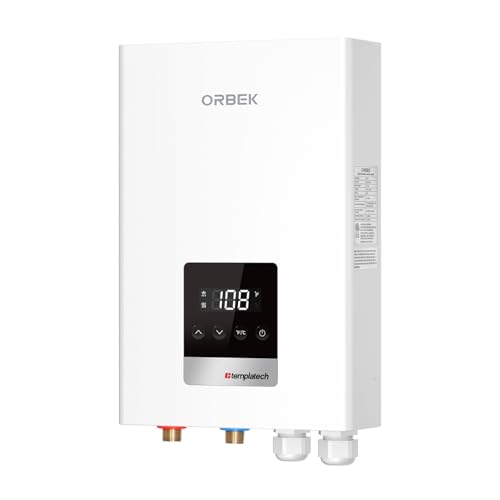
This 18kW Orbek model is designed to supply up to 4.17 GPM for 2–3 fixtures at once and maintains stable temperature with a quick on-demand supply. It requires two 240V/40A two-pole breakers and 3/4″ NPT water connections. The unit uses water-electricity separation to reduce scale buildup and corrosion and promises similar rapid hot-water delivery as the 14kW model, with higher flow capability for busier households.
BOSCH Electric Mini-Tank Tronic 3000 T
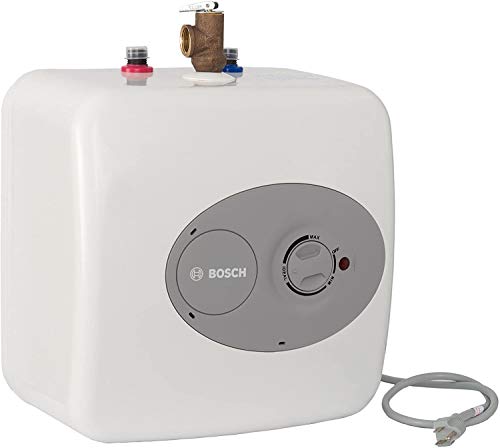
The BOSCH Tronic 3000 T is a compact 2.5-gallon mini-tank designed for point-of-use under-sink placement. It features a 98% thermal efficiency, 120V operation, and a plug-in cord for easy standalone installation. It’s well-suited for supplying hot water directly at a sink or small fixtures, reducing waiting time and keeping energy use focused where water is consumed. The unit is straightforward to install and maintain, with a small footprint and reliable performance.
WINTEMP 27kW Tankless Electric

The WINTEMP 27kW unit targets larger homes with higher hot-water demands. It operates at 27kW (240V) and requires multiple 40A double-pole breakers. With a maximum flow around 6.5 GPM, it is designed to maintain stable temperatures across several fixtures. The system uses self-regulating power control and aims to reduce electricity usage compared with traditional tank heaters, potentially delivering substantial energy savings for households with consistent hot-water needs.
Rheem 18kW 240V Tankless
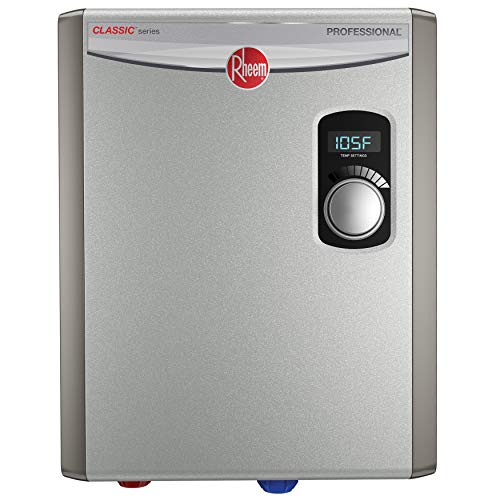
The Rheem tankless model features an external digital thermostatic control with an LED display and self-modulation to meet hot water demand. It uses copper immersion elements and offers a flow rate up to 4.4 GPM, making it suitable for typical households seeking continuous hot water for multiple fixtures. The unit is field-serviceable and designed for straightforward maintenance and repair while delivering dependable performance over time.
Feelrogast 8-Gallon Under-Sink

The Feelrogast under-sink tank provides 8 gallons and 1500W at 120V, designed for RVs, campers, or compact kitchen setups. It includes safety protections, a leakage protection plug, and multiple layers of insulation. The unit emphasizes rapid heating with a 86–167°F adjustable range, though its capacity and flow are best suited to point-of-use needs rather than whole-house hot water. It offers a compact solution for limited spaces and specific use cases requiring quick hot water without a full-size heater.
Buying Guide
Key purchase considerations include:
- Hot-water demand and flow rate: Determine GPM needs for your fixtures and choose units with appropriate maximum flow.
- Electrical requirements: Check available service and panel capacity. Tankless models often need 240V circuits with dedicated breakers; mini-tanks may run on standard 120V outlets.
- Installation space and mounting: Tankless units vary in size; under-sink mini-tanks provide space-saving options, while wall-mounted options require secure mounting and accessible connections.
- Energy efficiency: On-demand systems generally save energy, but peak power needs can affect overall cost. Look for self-regulating or water-electricity separation features to reduce scale and corrosion.
- Water temperature stability: Some units boast rapid heat delivery and stable output under varying flow, while others focus on compact use in a single location.
- Maintenance and serviceability: Consider units with accessible components and clear service instructions to minimize downtime during repairs.
- Warranty and certifications: ETL or UL listings, and manufacturer warranties, provide comfort for long-term ownership.
In environments with high hot-water demand or limited electrical service, a larger tankless unit paired with proper electrical upgrades may yield better long-term efficiency. For bathroom or kitchen sink use, a compact mini-tank can offer immediate hot water without significant electrical work. When comparing models, align product specifications to your home’s water usage patterns and electrical capacity to ensure reliable, energy-efficient performance.