Choosing a basement gas heater involves balancing heat output, safety features, and installation options. The following selections focus on ventless and vented units suitable for basements, workshops, and crawlspaces. Each option includes strong radiant or blue flame heat, automatic shut-off features, and versatile mounting. Use this guide to compare BTU ranges, coverage areas, and ease of use across compact and larger spaces.
| Product | BTU | Heats Up To (sq. ft.) | ||
|---|---|---|---|---|
| Mr. Heater F260560 Big Maxx MHU80NG | 80,000 | ≈2000 | Natural Gas Unit Heater | Wall or Floor |
| Mr. Heater F260550 Big Maxx MHU50NG | 50,000 | ≈1250 | Natural Gas Unit Heater | Vertical or Horizontal Venting |
| ProCom MN300TBA-B Ventless Blue Flame | 30,000 | ≈1400 | Ventless Blue Flame | Wall Mount or Base Feet |
| ProCom MN300HBA-B Ventless Blue Flame | 30,000 | ≈1400 | Ventless Blue Flame | Wall Mount or Base Feet |
| ProCom MN100TBA-B Ventless Blue Flame | 10,000 | ≈500 | Ventless Blue Flame | Wall Mount or Base Feet |
ProCom MN300TBA-B Ventless 30k BTU Blue Flame Heater

The ProCom MN300TBA-B delivers 30,000 BTU of natural gas heat with a compact, modern profile. It heats up to about 1,400 sq. ft. and includes thermostat control with High/Medium/Low settings. Suitable for basements that require quick warmth without relying on electricity, it offers wall-mount hardware and base feet for flexible placement. A slim design helps it blend into living or working spaces while delivering steady heat output.
Mr. Heater Vent Free Radiant 30k BTU Heater

This 30,000 BTU Mr. Heater unit uses infrared radiant technology to heat people and objects directly, efficiently covering spaces up to 1,000 sq. ft. It functions as a supplemental heat source for basements, garages, cabins, or sunrooms. Built-in safety features include an automatic low-oxygen shut-off system that responds to oxygen level changes, offering a reliable and safe heat option where electrical power may be limited or unavailable.
Mr. Heater F260560 Big Maxx MHU80NG
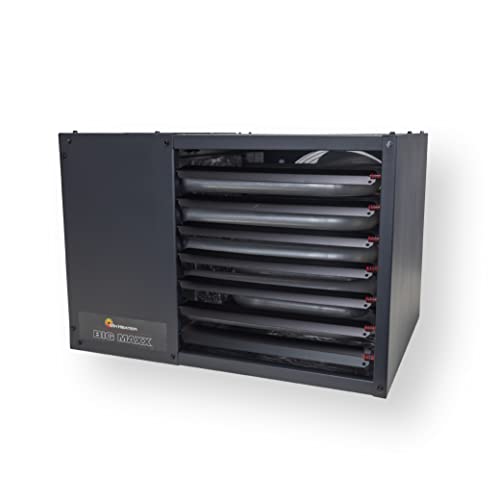
With 80,000 BTU output, the Big Maxx MHU80NG is designed for larger basements, workshops, or garages that require robust heat coverage. It’s a natural gas unit heater compatible with vertical or horizontal venting, depending on installation. The unit includes mounting options and is built for durable, continuous operation in larger spaces, delivering powerful warmth while maintaining efficiency. A compatible thermostat and gas hookup allow straightforward integration into existing systems.
Mr. Heater F260550 Big Maxx MHU50NG
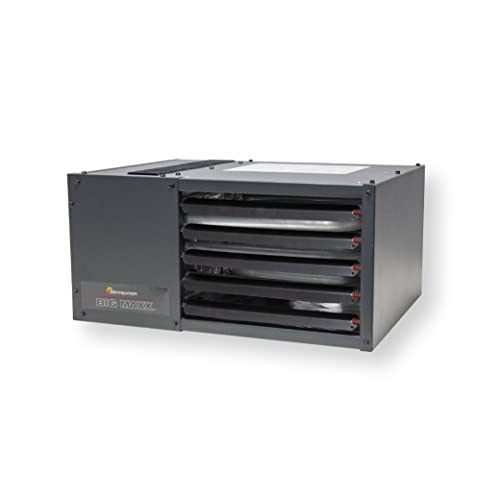
The 50,000 BTU Big Maxx MHU50NG provides substantial heat output for mid-sized basements and workshops. It supports vertical or horizontal venting and includes easy access to thermostat and gas connections from outside. The unit is designed for reliable operation and flexible installation, aiming to balance heat delivery with practical setup in spaces that demand dependable warmth.
ProCom MN300HBA-B Ventless 30k BTU Blue Flame
Similar to the MN300TBA-B, the MN300HBA-B delivers 30,000 BTU of natural gas heat in a compact ventless design. It is well-suited for basements and living spaces that require quiet operation and reliable warmth without external venting. The unit supports wall mounting or base feet, and includes a thermostat with controllable heat settings plus an oxygen depletion safety feature for added security in enclosed areas.
ProCom MN100TBA-B Ventless 10k BTU

This compact 10,000 BTU unit is designed for smaller basements or rooms up to roughly 500 sq. ft. It features thermostat control and a wall-mount or base feet configuration. The heater is a practical option when space is limited, providing dependable heat with a slim profile and straightforward operation, suitable for single-room warming in garages or living areas.
Buying Guide: Key Considerations For Basement Gas Heaters
- Heat output vs. space: Larger basements benefit from high BTU units (50,000–80,000 BTU), while smaller areas can be effectively warmed by 10,000–30,000 BTU models. Estimate space volume and desired temperature rise to choose appropriately.
- Ventilation requirements: Ventless (blue flame) models are easier to install but rely on good air exchange and carbon monoxide considerations. Vented units require ducting or venting paths, which affects placement and installation.
- Fuel type and availability: Natural gas units demand a gas line connection; propane models need a propane source. Confirm fuel availability and conversion options if you plan to relocate or re-setup.
- Safety features: Look for oxygen depletion sensors (ODS), automatic shut-off, tip-over, and child-safety features. Safety is especially important in enclosed basement spaces.
- Installation flexibility: Wall mounting, base feet, and clearances from floors and walls influence where you can install the heater. Ensure proper ventilation clearances as specified by the manufacturer.
- Maintenance and reliability: Check for easy access to filters (where applicable), durable construction, and reputable warranty coverage. Consider models with simple ignition systems for dependable use in cold seasons.
- Noise and aesthetics: Some units operate more quietly and feature slimmer profiles suitable for finished basements. If the space doubles as a living area, consider appearance and noise level.