Living aboard or docking by the marina often means managing cooler evenings and windy decks. A reliable marine propane heater can deliver steady warmth without relying on shore power. The following picks are optimized for portability, safety, and efficient heat, making them suitable for boats, cabins, sundecks, and tarps. Below are five top options that balance BTU output, safety features, and ease of use to help you choose the right heat solution for marine environments.
| Product | Brand | BTU / Type | Key Benefit |
|---|---|---|---|
| Mr. Heater MH540T | Mr. Heater | 45,000 BTU Radiant Tank Top | Wide radiant coverage; compact portable design |
| Portable Buddy Radiant Heater | Mr. Heater | 4,000–9,000 BTU/hr | Indoor/outdoor versatility; compact and lightweight |
| ProCom ML300HBA-B | ProCom | 30,000 BTU | Ventless operation; no electricity required |
| Mr. Heater Forced Air Space Heater | Mr. Heater | 30,000–60,000 BTU | Variable output; hose and regulator included |
| Avenger FBDTP30 Infra-Red | Avenger | 30,000 BTU | Infra-red heat with directional capability |
Mr. Heater MH540T 540-Degree Radiant Tank Top

The MH540T delivers a broad 360° radiant heat pattern with a 540° radiant coverage design. It operates on propane and provides three adjustable heat levels at 45,000, 36,000, and 30,000 BTUs, enabling boats and decks to achieve targeted warmth quickly. A swivel bracket supports flexible mounting, while its compact footprint suits tight marine spaces. Safety features include tip-over protection and auto shut-off if positioned incorrectly, reducing the risk of accidents on moving vessels.
Portable Buddy Radiant Heater

This compact heater emits radiant heat in 4,000–9,000 BTU/hr ranges, making it ideal for small boats, tents, or chilly docks. It is designed for both indoor and outdoor use and can warm spaces of roughly 225 square feet depending on insulation and airflow. Its portability is a major advantage for marine applications where space is premium and heat adaptability is crucial. Built-in safety features include flame safeguards and a sturdy handle for quick repositioning on deck or in cabin corners.
ProCom ML300HBA-B Liquid Propane Ventless Heater

ProCom’s ML300HBA-B is a ventless propane heater delivering up to 30,000 BTU. It heats up to about 1,400 square feet depending on space and ventilation. The unit operates without electricity, making it suitable for marine environments where shore power may be limited. It uses push-button Piezo ignition and offers three manual heat settings (low, medium, high). An Oxygen Depletion Sensor provides automatic shut-off to enhance safety when used in enclosed spaces. This model suits cabin dens and larger boats that lack reliable electrical supply.
Mr. Heater 60,000 BTU Forced Air Propane Space Heater
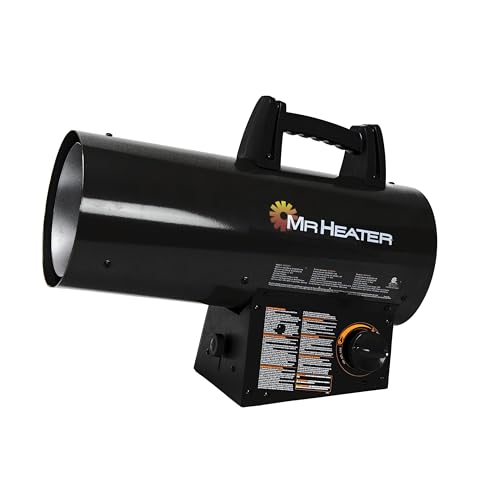
This forced-air heater provides a broad heat capability from 30,000 to 60,000 BTU, enabling quick space heating across larger cabins or decks. The package includes a 10-foot hose and regulator for flexible fuel setup and a glove-friendly handle for easy transport around a boat. For marine use, this option is beneficial when rapid, high-heat output is needed to combat cold wind gusts near the helm or aft deck.
Avenger FBDTP30 Infra-Red Tank Top Heater

The Avenger FBDTP30 uses infrared heat for directional warmth, delivering up to 30,000 BTU. Infra-red heat is less affected by drafts, making it useful on windy decks. It is designed to connect to standard propane tanks and includes protective guards and an automatic safety valve for shutoff if the flame goes out. Its compact form factor and directional heating can help crew stay warm near seating areas and work stations without overheating the entire cabin.
Buying Guide: Key Considerations for Marine Propane Heaters
- Heat output and space: Match BTU to your boat size and ventilation. Smaller cabins benefit from radiant or infrared units, while larger decks may require higher BTU or forced-air models.
- Ventilation and safety: Ventless models save on installation space but require adequate air exchange. Look for oxygen depletion sensors, tip-over switches, and flame-out protection to improve safety at sea.
- Portability vs. permanence: Propane heaters range from compact, portableBuddy-type units to larger, semi-permanent tank-top designs. Consider how often you move or re-seat heat sources on board.
- Electrical dependence: Some models need electricity, while ventless options can operate without power. For boats with limited electrical supply, prioritize non-electric or battery-independent units.
- Installation and mounting: Ensure mounting brackets, guards, and clearance from combustibles meet marine codes. Some models offer swivel brackets and easy mounting on rails or cabinets.
- Fuel stability and safety gear: Keep propane in approved containers, inspect hoses and regulators for wear, and maintain a working fire extinguisher and CO detector on board.
- Maintenance and warranty: Marine environments are harsh. Choose heaters with corrosion-resistant finishes and reputable warranty coverage; check parts availability for repair.
- Noise and drafts: Radiant and infrared heaters can emit less noise and create less ambient breeze disturbance than forced-air units, contributing to a quieter cabin.
- Heat distribution: Consider directional heats with adjustable aim or 360-degree patterns to evenly distribute warmth across social areas and sleeping cabins.
These options provide a range of heat delivery styles, from radiant to infrared to forced air, with safety features suitable for marine use. When selecting a marine propane heater, prioritize space, ventilation, and the balance between portability and heat capacity to maintain comfortable conditions aboard.