If you’re heating large spaces like garages, workshops, or construction sites, a high-BTU propane heater can deliver efficient warmth quickly. This guide highlights five powerful options that balance output, safety, and practicality. Each model is evaluated on heating capacity, safety features, portability, and fuel considerations to help you choose the right unit for your needs.
Summary of chosen products:
| Product | Brand | BTU Range | Approximate Coverage | Key Strength |
|---|---|---|---|---|
| Habitio 125,000 BTU | Habitio | 75,000 – 125,000 | Up to ~3,125 sq ft | Wide heating range and rapid warmth |
| Mr. Heater MH170QFAVT | Mr. Heater | 125,000 – 170,000 | Up to ~4,250 sq ft | High output for large spaces |
| Dura Heat LPC80 50-80k | Dura Heat | 50,000 – 80,000 | Up to ~1,900 sq ft | Convection heat with 360-degree reach |
| ProCom ML250TPA-B | ProCom | 25,000 | Up to ~1,150 sq ft | Infrared warmth with compact form |
| GASLAND MHA18W | GASLAND | 18,000 | Up to ~450 sq ft | No electricity required |
The following sections detail each model’s capabilities, safety features, and practical considerations to help you compare at a glance and choose the best option for your space and climate.
id=”habitio-125000-btu”>Habitio 125,000 BTU Forced Air Propane Heater

The Habitio heater offers a heating capacity of 75,000 to 125,000 BTU per hour, covering up to 3,125 square feet. It’s designed for large spaces like job sites and garages, delivering fast warmth with a heavy-duty forced-air fan. A key feature is adjustable heat output, enabling efficient use by tuning BTU levels to match the space. While it provides robust performance, operators should note that setup may require attention to gas connections and proper venting for safe operation.
Safety is emphasized with overheat protection and automatic shutdown capabilities, reducing risk during extended use. The unit is CSA certified, underscoring compliance with recognized safety standards. Users should ensure proper ventilation, use the included regulator and hose as intended, and follow all manufacturer guidelines for ignition and operation. For job sites that demand quick warmth across a broad area, this model remains a reliable contender.
id=”mr-heater-mh170qfavt”>Mr. Heater MH170QFAVT 170,000 BTU Portable Heater

This heavy-duty outdoor and job-site heater delivers 125,000 to 170,000 BTU per hour, designed to heat up to about 4,250 square feet. It’s built for safety with high-temperature limit switches and thermoelectric safety valves, providing reliable protection during operation. The MH170QFAVT also emphasizes a quiet burn, offering a smoother work environment compared with louder units. Rugged construction and a durable handle enhance portability for use across jobsites and garages.
Considerations include ensuring adequate ventilation and space for the unit’s intake and exhaust, as well as respect for fuel consumption and runtime in relation to your propane supply. This model is suitable for large, open spaces where consistent warmth is needed over extended periods, and where noise reduction is beneficial for crews and nearby residents.
id=”dura-heat-lpc80″>Dura Heat LPC80 50-80k BTU Propane Convection Heater

The LPC80 model provides a 50,000–80,000 BTU output with 360-degree convection to distribute warmth more evenly across larger spaces up to around 1,900 square feet. It operates on propane gas with a simple piezo igniter, and does not require electricity, adding resilience in power outage scenarios. The unit is designed for straightforward operation, with variable output to tailor heat to the environment.
Its 360-degree convection capability helps minimize cold spots in irregular layouts, making it a practical option for workshops and larger rooms that lack centralized heating. When planning for use, consider the availability of a propane supply, venting requirements (as with most propane heaters), and the desired balance of heat distribution versus maximum BTU output.
id=”procom-ml250tpa-b”>ProCom ML250TPA-B Liquid Propane Infrared Heater

The ML250TPA-B infrared heater provides a compact, targeted warming solution at an output of 25,000 BTU. It’s suitable for smaller spaces within larger facilities or as a supplementary heat source where radiant warmth is preferred. This model offers thermostat control with high/medium/low settings and supports wall mounting or placement on the floor with base feet. Infrared heating typically provides immediate warmth to occupants and objects without significantly heating the air, which can be advantageous in certain workshop layouts.
Safety features include standard controls and a focus on stable operation. Because infrared heat heats objects directly, it’s important to consider space layout, ventilation, and the potential for radiant heat exposure to nearby surfaces. This heater is a practical option when you need dependable heat without running a large blower system.
id=”gasland-mha18w”>GASLAND MHA18W Propane Radiant Heater
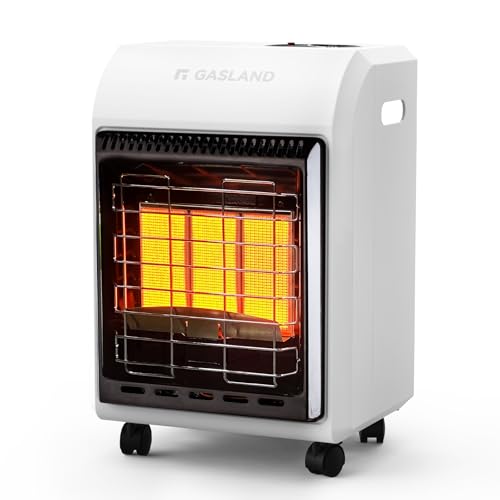
The GASLAND MHA18W offers 18,000 BTU of radiant warmth and can heat up to about 450 square feet. It’s designed for portability and indoor safe operation with a cabinet-style design that reduces the visibility of the propane tank. Notably, it operates without electricity, which can be beneficial during power outages or in areas with unreliable electrical supply. The unit emphasizes safety with tip-over and low-oxygen shut-off features, providing a layer of protection in ventilated spaces such as garages and workshops.
For spaces where electricity is limited or unavailable, this unit provides a practical, quieter source of heat. Its compact footprint and rolling design enable easy movement between jobsites or rooms, complementing larger heating strategies by filling smaller pockets of cold air when needed.
Buying Guide: Key Purchase Considerations
- Space size and BTU requirements: Larger areas demand higher BTU output, but efficiency depends on space layout and ventilation. For open garages or workshops, models in the 100,000 – 170,000 BTU range cover more square footage quickly, while 50,000 – 80,000 BTU units suit medium to large rooms with good airflow.
- Heat distribution: Forced-air units deliver quick warmth over broad areas, while infrared and radiant heaters warm occupants and objects directly. Convection heaters can minimize cold spots in irregular layouts.
- Ventilation and safety: Propane heaters require adequate ventilation to avoid dangerous gas buildup. Look for models with overheat protection, oxygen sensors, tip-over shut-off, and thermoelectric safety valves. CSA or UL certifications indicate adherence to safety standards.
- Fuel and power reliability: Units that operate without electricity offer resilience during outages. Conversely, some heaters pair well with electrical controls for precise thermostat management. Consider your access to propane supply and regulator compatibility.
- Portability and setup: Job sites benefit from units with durable handles, wheels, and robust construction. If space is frequently rearranged, lightweight or compact options may be preferable, even if BTU is lower.
- Maintenance and regulator safety: Regular inspection of hoses, regulators, and fittings helps prevent leaks. Tighten connections with the appropriate tools and replace damaged components per manufacturer guidelines.
- Vent-free vs vented: Some models are vent-free or designed for indoor use in well-ventilated spaces, while others require exhaust clearance. Always follow local codes and the manufacturer’s installation instructions.
When selecting a propane heater, align your choice with the specific space, ventilation, and duration of use. For large, frequently heated environments, high-BTU models offer faster warmth and broader coverage. For rooms with power instability or when electrical outlets are scarce, gas-powered units that operate without electricity provide an important alternative.