Choosing the right heater for a garage or workshop depends on space, fuel type, and reliability. The following hand-picked options are among the top sellers for American garages, combining safety features, power, and ease of use. This guide highlights five models that balance performance with practical installation considerations. Each product section includes a quick summary of key capabilities, so you can compare at a glance.
Product comparison at a glance
| Product | Fuel Type | BTU / Heat Output | Mounting | |
|---|---|---|---|---|
| Mr. Heater F260560 Big Maxx MHU80NG | Natural Gas | 80,000 BTU | Floor-standing | ≈2000 sq. ft. |
| Comfort Zone CZ230ER | Electric | 7,500 W | Ceiling Mounted | ≈1250 sq. ft. |
| VEVOR Electric 10000W | Electric | 10,000 W | Wall/Ceiling Mounted | ≈967 sq. m |
| TEMPWARE 10KW | Electric | 10,000 W | Ceiling Mounted | ≈1500 sq. ft. |
| InoKraft Maxheat MH125 | Propane | 125,000 BTU | Portable | ≈3200 sq. ft. |
Below, five highly relevant options are explored in detail. Each section includes setup considerations, safety features, and room-to-room performance notes to help you choose the best fit for your workspace.
Mr. Heater Big Maxx MHU80NG Natural Gas Unit Heater
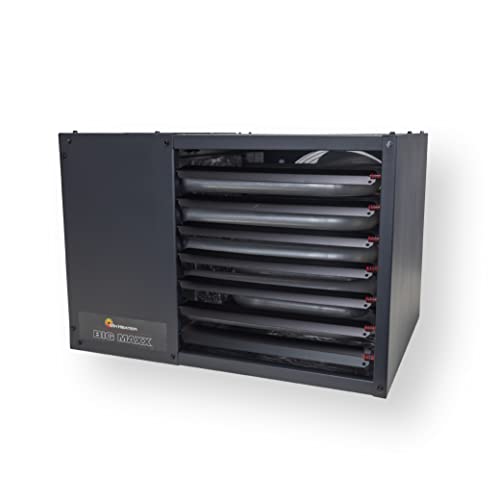
The Mr. Heater F260560 Big Maxx MHU80NG delivers 80,000 BTU for larger garages. This natural gas unit heater is designed for vertical venting and robust performance in uninsulated or poorly insulated spaces. It requires basic venting setup (Category 1 vertical, category 3 horizontal) and is intended for spaces up to 2000 square feet. Its compact 29.33″ L x 15.50″ W x 26.37″ H footprint helps with installation in tight areas. Users should note that thermostat, hose, and regulator are not included, so a compatible control system must be added for precise temperature management. This model is commonly paired with external thermostats for steady comfort.
Key considerations: ensure proper clearances from the floor and surrounding materials, confirm gas supply lines meet local codes, and verify venting direction matches your workspace layout. The unit’s electric draw is modest (2.3 amps at 120 V) for a heater of this size, helping to manage electrical load when combined with other shop equipment.
Comfort Zone Hard-Wired Ceiling Mount Garage Heater CZ230ER

This ceiling-mounted Comfort Zone CZ230ER is built for space-saving warmth in busy garages and workshops. With a robust steel housing, it supports hard-wired installations that free up floor space while promoting even heat distribution via a fan-forced system. Its heating coverage reaches up to 1250 sq. ft., making it a strong pick for mid-sized shops. The adjustable louvers and mounting angle let you direct airflow where it’s most needed, and a reliable safety design helps minimize hot spots and drafts. The model includes a remote control option for convenient operation, though installation and electrical work are required.
Considerations include ceiling height, ceiling structure for secure mounting, and the availability of a dedicated circuit. This heater performs well in spaces with variable insulation, where ceiling heat can circulate effectively to maintain comfortable temperatures without consuming excessive power.
VEVOR 10000-Watt Electric Garage Heater

The VEVOR 10000-Watt Electric Garage Heater is designed for hardwired installations with wall or ceiling mounting options. It offers two adjustable power levels and a 9-hour timer, enabling flexible operation in workshops and garages. Its SPCC steel shell provides durable protection, and overheat auto-off helps maintain safety during extended use. ETL certification adds a layer of compliance assurance for industrial spaces. The heater is praised for uniform heat distribution by promoting strong air circulation, maintaining a steady interior climate for projects that require steady warmth without gas lines or exhaust.
When considering this option, evaluate electrical service capacity, as 10 kW draws significant current. A dedicated circuit with appropriate conductors minimizes voltage drop and ensures reliable performance during peak usage. Remote control compatibility is a plus for convenience, especially in larger layouts.
TEMPWARE Electric Garage Heater 7500-Watt
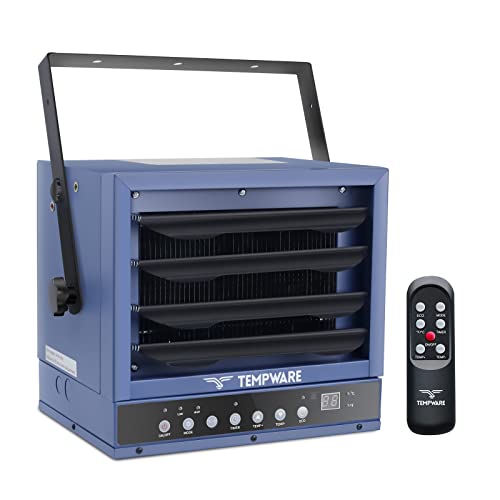
TEMPWARE’s 7500-Watt model provides solid heat output with adjustable louvers and a dual-heat setting system. This ceiling-mounted unit covers up to 1250 square feet, with a voltage range that supports hardwired installation and a timer function to reduce energy use. A built-in thermostat and overheating protection help maintain a stable environment and reduce risk during long sessions. The ECO mode helps optimize energy efficiency by adjusting operation to ambient temperatures, making it a practical option for fluctuating garage climates. It’s well-suited for workshops that require reliable heat without frequent adjustments.
Important considerations include balancing initial wiring costs with long-term energy savings. The timer and ECO mode can contribute to lower operating costs, but installation must ensure proper airflow and clearance around mounting hardware to prevent heat damage to surrounding fixtures.
InoKraft Maxheat MH125 125,000 BTU Propane Heater

The InoKraft Maxheat MH125 is a portable propane-powered forced-air heater, delivering up to 125,000 BTU for large garages and job sites. It heats spaces up to about 3200 square feet, making it suitable for expansive workshops or mixed-use environments. The unit features auto 25-95°F On/Off control, fast heating, and adjustable heat angle to tailor heating to specific zones. It includes safety features and CSA certification, helping ensure safe operation in ventilated spaces. It’s well-suited for temporary or mobile heating needs where gasoline or electrical options are limited, but it requires careful handling of propane and adequate ventilation.
Key considerations include fuel availability, ventilation requirements, and the need for a reliable intake/exhaust setup. Portable propane heaters can deliver rapid warmth, but operator safety and leak detection remain essential in enclosed shop areas.
Buying Guide: Key Purchase Considerations
- Heat source and space: Electric models are quiet and easy to install but require electrical capacity. Gas and propane models deliver high BTU but need venting and fuel logistics. Match heat output (BTU) to the garage size and insulation level.
- Mounting and footprint: Ceiling-mounted heaters save floor space in cluttered shops, while floor-standing or portable units offer flexibility for temporary setups. Ensure mounting hardware and clearance comply with safety codes.
- Ventilation and exhaust: Gas and propane heaters require proper venting to avoidCO2 buildup. Electric heaters do not produce combustion byproducts but may require dust control in poorly insulated spaces.
- Controls and safety features: Look for thermostats, overheat protection, auto-off timers, and remote control options. Digital displays help with precise temperature management.
- Electrical and fuel reliability: Electric heaters demand robust circuits; gas/propane heaters need safe fuel supply lines and storage considerations. Consider backup options for power outages or fuel shortages.
- Energy efficiency: ECO modes, programmable timers, and smart thermostats can reduce energy use in uninsulated garages that experience long idle periods.
- Maintenance and serviceability: Consider ease of cleaning, access to filters or fans, and the availability of replacement parts and service.
- Cost of ownership: Include installation, fuel, and energy costs. While high-BTU units heat quickly, ongoing running costs can vary by fuel type and insulation quality.
- Safety first: Ensure units meet ETL or CSA approvals where applicable, with clear user manuals and wiring diagrams. Always follow manufacturer guidelines for space clearance and venting.
In summary, electric garage heaters are ideal for well-insulated spaces with reliable power, while gas and propane units suit larger or poorly insulated spaces where quick, high heat is needed. Consider mounting options, safety features, and local codes when selecting a heater for your garage or workshop.