When it comes to heating large spaces like job sites, garages, or industrial floors, a high-BTU heater can dramatically improve comfort and productivity. This guide highlights five top options that are closest to the 175,000 BTU range, blending high output with safety features, durability, and practical usability. Each model below includes a quick look at why it stands out, along with real-world considerations to help you choose the right unit for your needs.
| Product | BTU Range | Fuel Type | Ideal For |
|---|---|---|---|
| Mr. Heater MH170QFAVT | 125,000–170,000 | Propane | Large outdoor spaces, job sites |
| Dura Heat GFA150A | 120,000–150,000 | Propane | Medium to large spaces, workshops |
| Mr. Heater F271390 | 125,000 | Propane | Garages and outdoor areas |
| Mr. Heater F260590 MHU125NG | 125,000 | Natural Gas | Heated spaces with gas supply |
| Mr. Heater 80,000 BTU Kerosene | 80,000 | Kerosene | Smaller large spaces, multi-fuel flexibility |
Choosing a heater in the 170k-150k BTU range involves balancing heat output, fuel availability, and safety. The following sections review five prominent options that offer high-output performance, robust construction, and practical features for American work sites and garages. Each product is evaluated on layers of performance, safety, ease of use, and maintenance to help you compare effectively.
Mr. Heater MH170QFAVT 170,000 BTU Heater

Engineered for heavy-duty outdoor use, the MH170QFAVT delivers up to 170,000 BTU per hour, heating large areas quickly and evenly. Its rugged design includes a high-temperature limit switch and thermoelectric safety valve, enhancing reliability in tough work environments. Quiet burner technology reduces noise by about half compared with standard propane heaters, making long jobs more tolerable for crews. A robust carry handle and solid construction support frequent transport between job sites. The unit is well-suited for garages, commercial spaces, and outdoor events that demand steady, high-output heat. Consider fuel availability, storage, and ventilation when planning to deploy this heater on job sites.
Dura Heat GFA150A Propane Forced Air Heater
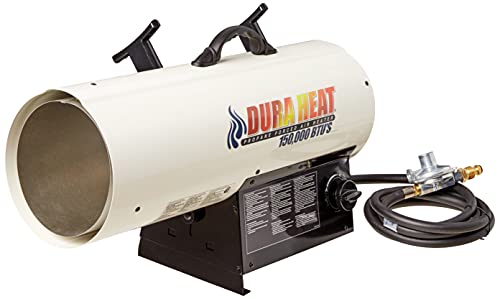
The GFA150A provides a broad heat range from 120,000 to 150,000 BTU, making it a flexible option for varying project sizes. It operates on propane gas and is designed for extended burn times—14 to 18 hours on a 100-pound cylinder—ideal for continuous workspace heating. A fan-forced system helps distribute warm air efficiently, and the unit’s straightforward control layout supports quick setup on chilly job mornings. When evaluating this model, consider propane supply logistics, ventilation requirements, and potential connections for long-duration operation in unheated spaces.
Mr. Heater 125,000 BTU Forced Air Propane Heater F271390

The F271390 delivers 125,000 BTU of heating output with Quiet Burner Technology, making it about 50% quieter than typical propane heaters. This model comes with a 10-foot hose and regulator, offering flexible placement around a workspace. A high-temperature limit switch enhances safety for frequent, prolonged use. It’s a solid choice when you need significant heat but have limited power or ventilation options, and it pairs well with outdoor job sites where electricity is not always reliable. Review space dimensions, venting needs, and hookup compatibility to ensure optimal performance.
Mr. Heater F260590 MHU125NG NG 125K BTU Unit Heater
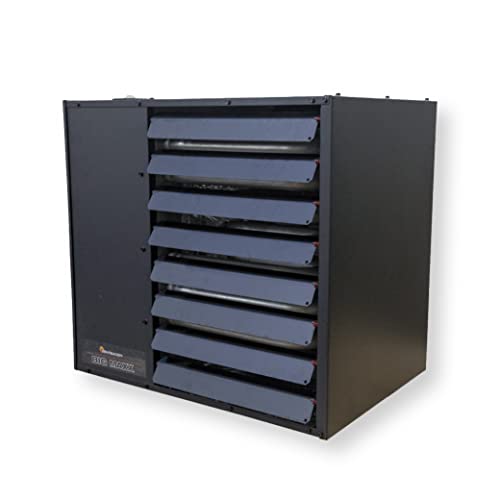
The F260590 is a natural gas unit heater delivering 125,000 BTU with powered exhaust and easy external access to thermostat and gas connections. Its multi-fuel possibilities are distinguishing features that can accommodate different fuel infrastructures on site. This model is suitable for facilities with consistent gas supplies and a need for straightforward installation without electricity dependencies, given its natural gas configuration. When considering this option, assess gas line capacity, venting options, and the availability of a reliable exhaust path for proper operation.
Mr. Heater 25,000 BTU Convection Heater
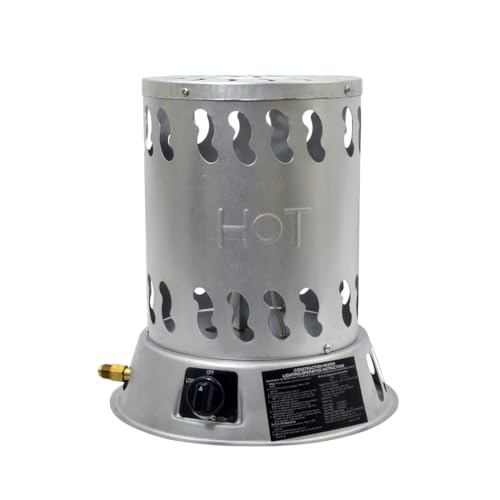
This versatile convection heater provides 25,000 BTUs per hour and warms up to 625 square feet, operating up to 17 hours on a 20-pound propane tank. It’s CSA certified and includes a standing pilot light and thermo-electric safety valve, offering a degree of independent operation without electricity. The setup includes a 10-foot propane hose and regulator for quick deployment. While not in the 150k–170k BTU tier, it’s a practical option for smaller spaces that require reliable, electricity-free heat, especially in remote or temporary work zones.
Mr. Heater MHU50NG Natural Gas Unit Heater
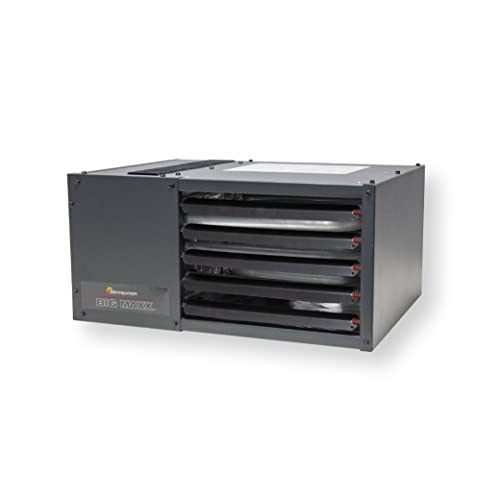
The MHU50NG provides 50,000 BTU per hour with options for vertical or horizontal venting via powered exhaust. It includes easy outside access to thermostat and A/C terminals and the gas connection. While not in the top end BTU range, it serves well as a supplemental or primary heat source in larger spaces where a dedicated gas line exists and venting can be arranged. This option is notable for straightforward installation and reliable performance in moderate heating scenarios.
Mr. Heater F260550 Big Maxx MHU50NG
Big Maxx MHU50NG is a natural gas unit heater option designed to deliver consistent warmth across larger spaces. It emphasizes ease of ventilation and external thermostat access to simplify control. The built-in safety features and durable construction are aligned with job site needs, making it a practical solution for long-duration heating where a steady natural gas supply is accessible. Evaluate the space layout, gas line requirements, and possible venting positions to ensure optimal integration with your facility’s infrastructure.
Buying Guide: Key Considerations For High-BTU Heaters
High-BTU heaters demand careful planning beyond raw heat output. The following considerations help you compare models and pick a unit that fits your space, fuel availability, and safety standards:
- Heat Output and Space Coverage: Match the BTU rating to the square footage you need to heat. Higher BTUs boost performance in open or industrial spaces, but you may not need full capacity if space is smaller or well insulated.
- Fuel Type and Availability: Propane, natural gas, and kerosene each have pros and cons. Propane offers portability but requires tanks; natural gas eliminates tank handling but needs a gas line; kerosene provides alternative fuels but requires fuel management and air quality considerations.
- Ventilation and Exhaust: High-output heaters require proper ventilation to prevent carbon monoxide buildup. Units with powered exhaust or external venting features simplify safe operation in enclosed spaces.
- Safety Features: Look for high-temperature limit switches, flame-out protection, automatic shutoffs, and CSA/UL certifications. Safety should be a primary buying criterion for work sites and outdoor events.
- Durability and Portability: Heavy-duty handles, rugged housings, and stable bases aid transport and long-term use in demanding environments. If you move units between sites, consider weight and wheel options.
- Electrical Requirements: Some high-BTU units require electricity for ignition or fans. If electricity is limited on site, prefer models with safe gas-only operation or battery-assisted controls.
- Maintenance and Spare Parts: Availability of replacement parts, hoses, regulators, and ignition components affects long-term ownership costs and downtime.
- Noise Levels: Quieter burner technology improves onsite worker comfort and compliance with noise regulations in some zones.
- Vent Placement and Clearances: Ensure adequate clearance around the heater to reduce fire risk and improve air distribution.
In summary, the best choice depends on the balance between heat demand, fuel logistics, and safety features. For large outdoor jobs, units near 170,000 BTU that offer rugged construction and safety protections are strong candidates. If a fixed fuel line exists, higher-performing natural gas models can be very cost-effective over time. For portable operations, propane-based units allow flexibility but require adequate tank management and storage planning.