Finding a reliable 100,000 BTU hanging heater helps keep industrial spaces, garages, and outdoor work areas warm efficiently. The following selections emphasize hydronic (hot water) and propane models designed to mount from ceilings or walls, offering strong heat output, remote controls, and durable construction. Each option provides details on performance, control features, and suitability for different environments.
| Product | Brand | Heat Output | Notes |
|---|---|---|---|
| Alecoil Hydronic Hanging Unit Heater 100,000 BTU Pro (Blue) | Alecoil | 100,000 BTU | Remote control, Bluetooth connection, multiple modes |
| Alecoil Hydronic Hanging Unit Heater 100,000 BTU Pro (Blue) — Version | Alecoil | 100,000 BTU | Remote control, temperature modes, long-range operation |
| Mr. Heater MH170QFAVT 170,000 BTU Portable Propane Forced Air Heater | Mr. Heater | 125,000–170,000 BTU | For large outdoor and job-site spaces |
| Dura Heat GFA125A 70K-125K BTU LP Heater | Dura Heat | 70,000–125,000 BTU | Versatile propane model with variable output |
| 150,000 BTU Hot Water Hanging Unit Heater (Hydronic) | American Royal | 150,000 BTU | Two-speed hydronic heat with fan |
Note: The list focuses on products that align with 100,000 BTU class ratings, with emphasis on hanging or ceiling-mount configurations suitable for garages, warehouses, and workshops. For broader options, consider the other listed models that provide higher output or hydronic versatility.
Product selections
Mr. Heater MH170QFAVT 170,000 BTU Portable Propane Forced Air Heater
Mr. Heater MH170QFAVT 170,000 BTU Portable Propane Forced Air Heater

Key features include high-output performance, delivering 125,000 to 170,000 BTU per hour and heating areas up to 4,250 square feet—well suited for large job sites, garages, and outdoor spaces. Built for safety with a high-temperature limit switch and thermoelectric safety valves. The unit also emphasizes quieter operation with Quiet Burner Technology and rugged construction with a heavy-duty handle for portable use. This model targets scenarios needing rapid, robust heat where a fixed indoor system isn’t available.
Alecoil Hydronic Hot Water Hanging Unit Heater 100,000 BTU (Blue) — Remote Control
Alecoil Hydronic Hot Water Hanging Unit Heater 100,000 BTU Pro

This hydronic hanging unit leverages an existing hot water source to provide efficient, whisper-quiet operation. It includes a remote control with Bluetooth that connects to the heater across a distance up to 33 feet (10 meters), offering flexible placement. Three modes—Water Temperature, Room Temperature, and Dual—enable adaptable control: you set the target temperature, open the hot water valve, and the heater manages the rest. It requires pre-installed power cable and remote installation guidance for straightforward setup. A solid option for space heating without large electrical draws.
Alecoil Hydronic Hot Water Hanging Unit Heater 100,000 BTU (Blue) — Remote Control
Alecoil Hydronic 100,000 BTU Hanging Unit Heater (Blue) with Remote

This model emphasizes energy efficiency and remote operation. Similar to the other Alecoil unit, it uses hot water heat to deliver comfortable warmth with quiet operation. It supports three modes and Bluetooth remote control, designed for spaces where a wood boiler or building’s hot water loop feeds the system. The installation guidance highlights compatibility with typical hydronic setups and a need for a pre-installed power cable, ensuring reliable integration with existing infrastructure.
Dura Heat GFA125A 70K-125K BTU Propane LP Convection Heater
Dura Heat GFA125A Propane Convection Heater
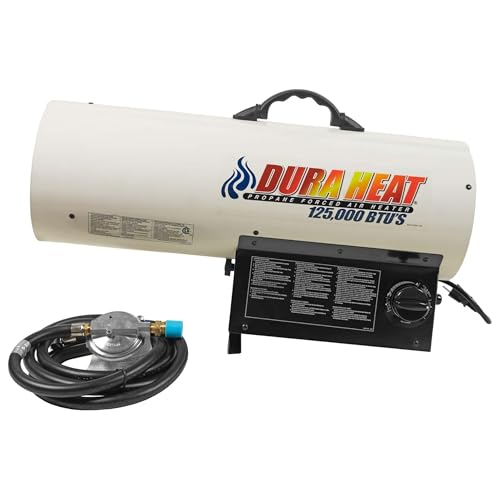
This unit offers variable output between 70,000 and 125,000 BTU, making it flexible for different space heating needs. It operates on propane and is designed for outdoor or well-ventilated indoor use. The model includes a wind shield to protect the flame in outdoor conditions and deliver more consistent heat distribution. It is a solid option when you need a propane heater that can scale within the 100K BTU range while maintaining portability and straightforward operation.
150,000 BTU Hot Water Hanging Unit Heater (Hydronic) — 2 Speed with Fan
150,000 BTU Hydronic Hanging Unit Heater
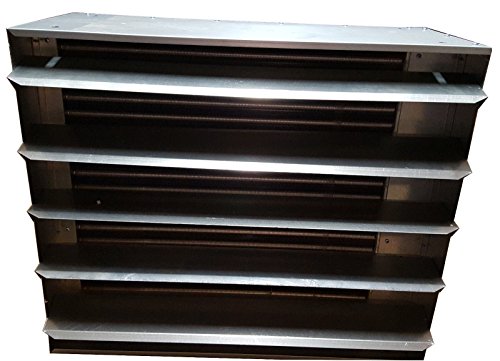
While rated higher than 100,000 BTU, this hydronic unit provides robust heat for larger spaces and can be a practical option in environments that require significant warmth via hot water circulation. It features two speeds and a fan for improved heat distribution, particularly in garages or warehouses with higher ceilings. Its integration with wood boiler systems makes it a viable alternative when hydronic heating is preferred.
Buying Guide: Key considerations for selecting a 100,000 BTU hanging heater
When choosing a hanging heater in the 100,000 BTU category, consider the following factors to ensure the best fit for your space and use case.
- Heat source and fuel type: Propane units (gas) are common for portable, outdoor, or poorly vented spaces, offering rapid heat. Hydronic (hot water) systems use your building’s boiler or wood boiler, delivering quiet operation and energy efficiency but requiring a compatible system.
- Mounting and installation: Hanging or ceiling-mounted models should have secure mounting hardware and appropriate clearances. Hydronic units need plumbing hookups; propane units require safe gas connections and ventilation considerations.
- Control features: Remote controls, thermostatic options, and multi-mode operation (room vs water temperature modes) provide flexibility and energy savings. Bluetooth or wired remotes can extend placement options.
- Noise and comfort: Quieter burner designs or fan-assisted distribution improve on-site comfort, especially in work environments or residential-adjacent spaces.
- Durability and safety: Look for high-temperature limit switches, flame safeguards, and rugged housings. Outdoor-rated IP protection and weather resistance add long-term reliability.
- Ventilation and safety compliance: Ensure the space has adequate ventilation for combustion heaters. Hydronic systems do not release combustion byproducts into the air and may suit enclosed spaces better than propane units.
- Energy efficiency and operating costs: Hydronic systems often offer favorable operating costs in large facilities, while propane units provide rapid warmth for temporary or outdoor heating needs.
- Maintenance and accessibility: Consider ease of servicing, spare parts availability, and the ability to access remote control components and thermostats for routine upkeep.
These considerations help compare models across the spectrum—from compact, portable propane units to larger hydronic hanging heaters designed for industrial environments. Assess your space size, ventilation, and whether you prefer a fixed or portable solution to guide your selection.