Looking for an infrared bathroom ceiling heater that delivers fast warmth without blasting up the thermostat? This guide highlights top infrared and heat-and-ventilation ceiling options. It’s ideal for small to medium bathrooms, powder rooms, or en-suites where quick comfort matters. Each product is described with who it’s best for, why it’s selected, and a practical caution. The summary table below helps you compare core specs at a glance.
| Product | Best For | ||
|---|---|---|---|
| Broan-NuTone 164 Bulb Heater and Fan | Small to medium bathrooms needing quick warmth | Infrared bulbs plus quiet 70 CFM fan | Bulbs not included |
| Broan® Ceiling Bathroom Exhaust Fan/Infrared Heater | Compact bathrooms seeking ventilation & heat | Integrated 70 CFM exhaust | Standard 250-Watt heater |
| Broan-NuTone 157 Low-Profile | Low-ceiling spaces needing subtle heating | Low-profile, energy-saving 1250W | Not the main heat source for long-term use |
| Aero Pure A515A W | Bedrooms or bathrooms with combined light/heat | 4-in-1: fan, heater, light | Heater and light may be wired separately |
| Noblequest 157 Replacement | Broan-NuTone 157 users needing replacement | 1250W rapid heating, overheat protection | Not primary heating source for long-term use |
Note: All listed products are selected for infrared or heat-assisted ceiling applications in residential bathrooms, focused on rapid comfort, quiet operation, and straightforward installation.
Broan-NuTone 164 Bulb Heater And Fan

Best for buyers who want an infrared heating solution with an integrated fan for added comfort. This model uses two 250-Watt infrared bulbs to deliver warmth quickly, and a vent fan that operates at 70 CFM for effective bathroom ventilation. It is energy-efficient as it heats via infrared elements rather than relying solely on room air. Suitable for smaller bathrooms where immediate warmth and minimal central heating are desired. A potential limitation is that the infrared bulbs are not included, so installation requires separate procurement.
Broan® Ceiling Bathroom Exhaust Fan/Infrared Heater
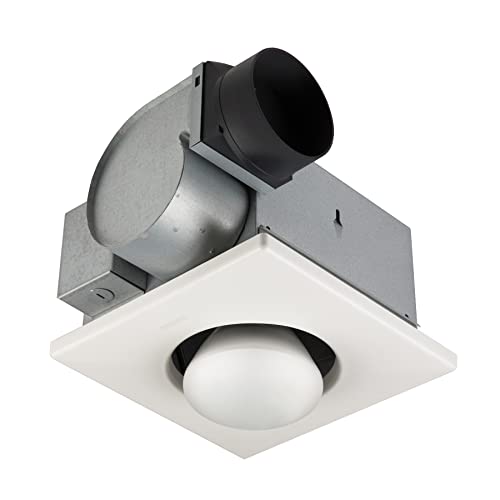
Best for small bathrooms needing both ventilation and heat in one package. It delivers 70 CFM of ventilation and 250-Watt infrared heating, with robust steel housing and adjustable mounting brackets for easier installation. This unit is ideal where odor and humidity control is as important as warmth. Limitation: the setup can be more involved if you’re replacing an older fixture due to mounting considerations.
Broan-NuTone 157 Low-Profile Fan-Forced Ceiling Heater

Best for low-ceiling spaces needing discreet warmth. This model offers a low-profile design with a standard 1250W heater and enclosed sheath element for reliable operation. The satin aluminum grille blends with many decors, and its functional design emphasizes durability. Caution: It should be considered as a supplemental heat source rather than primary heating for large spaces.
Bathroom Ceiling Heater Compatible With 157

Best for owners seeking a compatible replacement for the Broan-NuTone 157 with rapid heating and safety features. This unit uses PTC ceramic elements to deliver 1134W–1250W of warmth quickly, and includes an overheat protection system. It’s positioned as a supplemental heat source. Limitation: It is not recommended as a long-term primary heat source for large spaces.
157 Bathroom Heater Ceiling by Howaoo

Best for households needing a high-wurn heat boost in compact spaces. The 157 Low-Profile design uses PTC ceramic heating for fast warmth and includes built-in overheating protection. It’s easy to install with built-in mounting hooks and is compatible with standard ceiling junction boxes. Caution: Not recommended as the sole heating source for extended periods.
Buying Guide: How To Choose The Right Infrared Ceiling Heater
- What space will be heated? For small bathrooms, choose compact, low-profile units to avoid crowding the ceiling.
- Heat source type: Infrared bulbs vs. PTC ceramic elements. Bulb models warm quickly but require bulb availability; ceramic models are durable and safer for continuous use.
- Ventilation needs: If you want both heat and odor control, consider a model with an integrated fan.
- Installation complexity: Some units are designed for quick, do-it-yourself mounting; others may require mounting brackets or electrical adjustments.
- Safety features: Overheat protection and automatic shutoff enhance safety in small, enclosed spaces.
- Energy considerations: Look for models that provide efficient warmth without running a central furnace unless needed.
Practical Comparison: Key Specs To Consider
- Output: 1250W–1250W range common for many 157-series units; infrared bulb options typically around 250W per bulb paired with two bulbs.
- Ventilation: Some units include a 70 CFM exhaust; this helps with humidity and odor control.
- Sound: Sones ratings indicate quiet operation; aim for 1.0–4.0 sones for bathroom comfort.
- Profile: Low-profile designs save ceiling space in rooms with low ceilings.
- Compatibility: Replacement parts exist for popular models; confirm compatibility with your existing setup.
FAQ
- Q: Are infrared bathroom heaters safe for long-term use? A: Yes, when used as a supplemental heat source with proper overheat protection and following manufacturer guidelines.
- Q: Do these units require professional installation? A: Some models are straightforward for DIY installation; others may need electrical work or professional help, especially when integrating with existing wiring.
- Q: Can I replace an older Broan-NuTone unit with a different brand? A: Replacement parts are available, but ensure mounting, electrical wiring, and safety protections align with the new unit.
- Q: Is a separate light necessary with these heaters? A: Some models include lights; others pair a separate bulb with the heater. Check wiring options and compatibility with your bathroom setup.
- Q: Do infrared heaters heat the entire bathroom evenly? A: They heat objects and people directly, providing fast warmth in the occupied zone while the room may warm more slowly.
- Q: What maintenance is required? A: Regular cleaning of grills and ensuring vents remain unobstructed helps maintain efficiency and safety.