Choosing a reliable vented liquid propane (LP) heater can simplify warmth in spaces like garages, workshops, and outdoor rooms. This guide highlights five top options, focusing on vented designs that vent combustion byproducts outside. Each product includes key heating capacity, venting details, and practical notes to help you compare installation requirements and performance.
| Product | Brand | BTU | Vent Type | Approx. Coverage |
|---|---|---|---|---|
| Big Maxx MHU50NG | Mr. Heater | 50,000 | Vertical or Horizontal venting | Up to ~1,250 sq ft |
| Big Maxx MHU80NG | Mr. Heater | 80,000 | Category 1 vertical, Category 3 horizontal venting | Up to ~2,000 sq ft |
| Hot Dawg HD45AS01-21 | Modine | 45,000 | Direct vent LP gas | Moderate garage/workspace areas |
| Mr. Heater 30K LP Vent Free | Mr. Heater | 30,000 | Vent-free (not vented outside) | Up to ~1,000 sq ft |
| Dyna-Glo 30K LP Vent Free | Dyna-Glo | 30,000 | Vent-free (not vented outside) | Smaller to mid-size spaces |
Note: Venting configurations, clearances, and local code requirements vary. Always follow manufacturer instructions and consult a professional installer for proper venting and ventilation planning.
Mr. Heater F260550 Big Maxx MHU50NG (50,000 BTU)
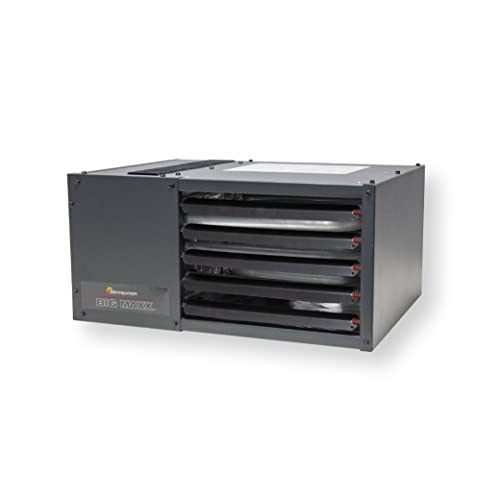
The Mr. Heater F260550 Big Maxx MHU50NG is a natural gas unit heater with ventilation options suitable for larger spaces. It delivers 50,000 BTU per hour, heating up to about 1,250 square feet. The design supports vertical or horizontal venting, which can simplify installation in garages with existing flues or vent paths. The unit is engineered for outdoor-friendly thermostat access and gas connections. This makes it a practical option where a robust, vented heat source is needed for sizable rooms, with flexible venting to match space constraints.
Mr. Heater F260560 Big Maxx MHU80NG (80,000 BTU)
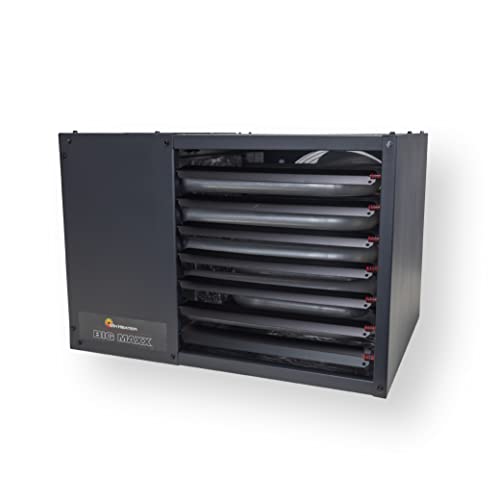
This big-capacity natural gas unit heater provides 80,000 BTU and covers around 2,000 square feet. It features a robust venting design for vertical or horizontal exhaust paths, optimized to serve large garages or newly built workshops. With flexible venting layouts and a roomy heat output, the MHU80NG is suitable where fast, even warmth is needed across extensive spaces. The product page notes comprehensive venting guidance and practical installation considerations for best results.
Modine Direct Vent Garage Heater Hot Dawg HD45AS01-21

The Modine Hot Dawg HD45AS01-21 is a direct vent LP gas garage heater, offering reliable warmth with vented combustion outdoors. With 45,000 BTU, it targets moderate spaces such as garages and workshops. Direct venting reduces indoor emissions by drawing combustion air from outside and exhausting combustion byproducts externally. This configuration supports safer use in partially enclosed spaces where proper ventilation is a priority. The unit’s compact footprint makes it a practical retrofit option for existing garages with compatible venting paths.
Mr. Heater 30K LP Vent Free Blue Flame Heater

This 30,000 BTU LP heater is vent-free, relying on indoor air for combustion and heat distribution. It includes a built-in blower to help circulate warmed air. While vent-free products can be convenient for spaces without a dedicated vent system, they rely on proper indoor ventilation and are best suited for well-insulated rooms or short-term heating needs. The blue flame design promotes efficient convection and even warmth in smaller to mid-sized areas.
Dyna-Glo IR30PMDG-1 Infrared Vent Free Wall Heater

The Dyna-Glo IR30PMDG-1 is an infrared vent-free wall heater delivering 30,000 BTU with radiant heat that warms objects and people directly. It is designed to heat spaces efficiently without ductwork or external venting. Infrared heaters can provide quick heat in occupied zones, though long-term use in poorly insulated spaces may increase energy usage. The model supports convenient wall mounting and is suitable for rooms where direct radiant warmth is preferred.
Buying Guide: Key Purchase Considerations For Vented LP Heaters
- Vent type and installation site: Vented LP heaters require a safe exhaust path outdoors. Confirm whether the unit supports vertical or horizontal venting and whether your structure has an appropriate venting plan and clearance from combustibles.
- BTU output and space coverage: Choose a heater with sufficient BTU to heat the target area efficiently. Larger spaces need higher BTU units, but oversizing can waste energy; use a heater sized for the square footage you intend to warm.
- Fuel type and availability: LP gas is common for outdoor-ready and garage heaters. If you have natural gas readily available, a natural gas unit may be preferred for continuous supply and potentially lower running costs in some regions.
- Ventilation requirements and air quality: Vented systems must exhaust outside and include proper combustion air provisions. Ensure the space has adequate ventilation to meet safety standards and prevent carbon monoxide buildup.
- Safety features: Look for automatic shut-off or oxygen-depletion sensors (ODS) and reliable trigger mechanisms. For direct-vent models, verify that outdoor venting is secure and that the unit includes a safe, enclosed vent path.
- Installation clearances: Heaters require minimum clearances from walls, ceilings, and combustible materials. Confirm the unit’s installation dimensions and ensure a compliant mounting or freestanding arrangement.
- Maintenance and serviceability: Choose models with accessible thermostats, simple flame and venting components, and widely available replacement parts. Regular servicing helps sustain efficiency and safety.
- Noise and comfort: Some heaters include built-in blowers or fans. Consider noise levels and the desired warmth distribution, especially in workshop areas where quiet operation may matter.
- Energy efficiency considerations: Venting efficiency and heat distribution influence overall energy use. Compare standby requirements, pilot settings, and any automatic temperature controls bundled with the unit.
- Warranty and support: A solid warranty coupled with responsive customer support helps address installation questions and potential component replacements over time.