If you’re seeking instant hot water without a bulky tank, a tankless electric water heater is your best bet. This guide highlights five reliable options, explaining who each is best for and why. Ideal buyers include small homes, apartments, or point-of-use needs where space and energy savings matter. The top picks cover compact designs, varying flow rates, and self-modulating technology to match hot water demand. Below, compare key specs at a glance and read detailed sections for practical use cases.
Quick Reference Buying Table
| Product | Best For | Key Benefit |
|---|---|---|
| EcoSmart ECO 11 | Small homes, apartments, point-of-use | Space-saving design, self-modulating efficiency |
| Rheem 11kW Tankless | Compact setups, single fixture at a time | Simple dial control with digital temp display |
| Rheem 18kW Tankless | Higher hot water demand, two points of use | LED temp display, durable copper elements |
| APUS 27kW Tankless | Whole-home use, multiple stations | Memory function, high GPM |
| WINTEMP 27kW | 2–3 bathroom homes, robust flow | WiFi control, auto temperature stabilization |
Note: All products are electric tankless heaters. When selecting, verify your electrical panel capacity and breaker requirements. This guide emphasizes objective comparisons and practical buying considerations to help you choose the right model for your home or apartment layout.
EcoSmart ECO 11 Electric Tankless Water Heater

Best for space-conscious homes and point-of-use installations. The EcoSmart ECO 11 uses patented self-modulating technology to adjust heat based on flow, delivering on-demand hot water with energy efficiency. It’s compact and typically installed on a wall or near a sink. Flow rate is suitable for single-use demands and small households. Limitation: may struggle with simultaneous multi-room use at maximum temperature in larger homes.
Why selected: It combines small footprint with dependable on-demand performance and ongoing temperature control to minimize energy waste. This makes it a strong fit for apartments and secondary bathrooms where space is at a premium.
Rheem 11kW 240V Tankless Electric Water Heater
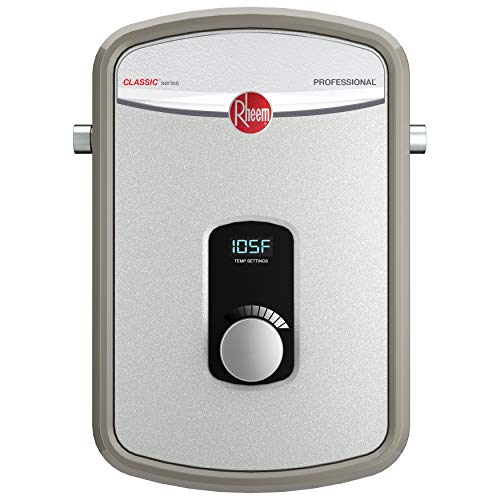
Best for compact installations requiring straightforward temperature control. This Rheem model features an ON/OFF dial with an adjustable digital display for precise warmth. Self-modulating power helps reduce energy use, while the 11kW rating supports up to about 2.68 GPM. Choosing this unit is ideal when you want simple setup and predictable performance for a single faucet or sink at a time. Caution: limited flow for multiple simultaneous uses in a larger home.
Rheem 18kW 240V Tankless Electric Water Heater

Best for homes with higher hot-water needs or two-use scenarios. This Rheem model offers external digital thermostatic control with LED display and advanced self-modulation to adjust power to meet demand. Up to 4.4 GPM is available, with copper immersion elements for durability. Limitation: higher electrical requirements may demand a capable panel and professional installation.
APUS 27kW Tankless Water Heater Electric
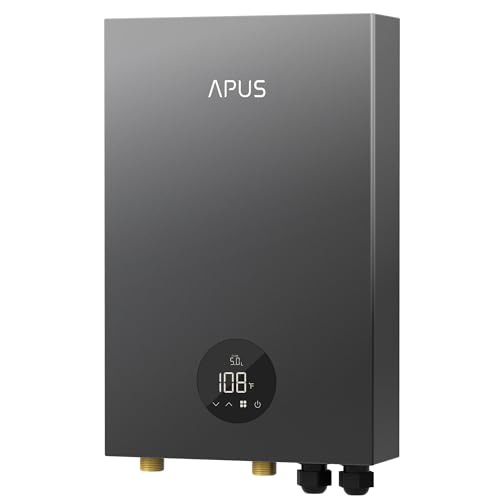
Best for whole-home use with multiple simultaneous outlets. The APUS 27kW unit delivers up to about 6.5 GPM and features a memory function plus self-modulating technology for energy efficiency. It requires a robust electrical setup (three 40 A breakers and appropriate wiring). Caution: installation should align with local electrical codes and panel capacity.
WINTEMP 27kW Tankless Water Heater

Best for mid-size homes needing robust hot water with digital control. The WINTEMP model offers LED temperature display, WiFi control, and up to 6.3 GPM. It’s designed for stability and efficiency with self-modulating power. Caution: ensure your service panel supports the recommended 200–250A service and enough breakers/wiring for safe operation.
110V Tankless Water Heater Electric, 3000W

Best for under-sink or compact point-of-use needs where 110V power is available. This unit uses 3000W to provide on-demand hot water with a compact footprint and LED display. It’s suitable for quick heat for the immediate outlet but not ideal for showers or high-flow demands. Limitation: flow at higher temperatures may be limited, making it better for sinks or small fixtures only.
Summary Buying Guide
When choosing a tankless electric heater, consider: flow rate (GPM) vs. required outlets; electrical service and breaker capacity; installation location and space; self-modulating features for energy efficiency; and compatibility with your home’s wiring. For whole-home comfort, select higher kW units with robust GPM ratings and ensure the electrical panel can support the load. For tight spaces, prioritize compact models with strong performance at low flow. For apartments or secondary bathrooms, point-of-use options may be sufficient and more economical.
Buying Guide: Key Purchase Considerations
- Flow Rate Needs: Determine the maximum GPM you require across all fixtures used simultaneously. Higher GPM models suit multi-outlet use.
- Electrical Requirements: Check your service panel capacity and required breakers. Tankless units often need 40A or higher per unit and thick gauge wiring.
- Temperature Control: Self-modulating technology helps conserve energy by adjusting heat to the flow rate.
- Space and Installation: Consider wall-mount options if floor space is limited; ensure proper clearances for venting (if applicable) and access for service.
- Durability and Materials: Copper heating elements tend to offer longevity; verify corrosion resistance where applicable.
FAQ
- Q: What is tankless water heater tankless capability? A: They heat water on demand with no stored hot water, saving energy when not in use.
- Q: Can these units supply hot water for multiple fixtures at once? A: Some models can, but many are best for single-use or light-duty multi-use; always check GPM rating.
- Q: Do I need professional electrical work for installation? A: Yes, due to high amperage requirements and wiring standards, professional installation is advised.
- Q: Are there safety concerns with 240V vs 110V models? A: 240V models typically offer higher flow but require appropriate wiring and circuits; 110V models are for point-of-use with lower flow.
- Q: How much space do tankless heaters save? A: They are compact and wall-mounted, often 90% smaller than traditional tank heaters, depending on model.