Keeping a basement warm and evenly heated can be challenging due to layout, drafts, and lower ceilings. The right space heater with thermostat provides consistent warmth, energy efficiency, and smart controls to fit homes, offices, and garages. Below are five reliable options that blend safety, performance, and modern features to help you choose the best basement heater for your space.
| Product | Brand | Key Feature |
|---|---|---|
| FLANUR Space Heaters | FLANUR | 12h timer, 4 modes, 70° oscillation, WiFi and voice control |
| Lasko Oscillating Digital Ceramic Tower Heater | Lasko | Adjustable thermostat, remote control, 8-hour timer |
| Dreo Smart Wall Heater WH719S | Dreo | 120° oscillation, remote + app control, 24h timer |
| GiveBest Smart Wall Heater | GiveBest | WiFi, remote control, three heating modes |
| Dreo Space Heater | Dreo | 5 modes, 12h timer, 70° oscillation, quiet operation |
Note: This article focuses on basement-friendly heaters with built-in thermostats or precise temperature control. Each option below is suitable for basement use, with safety features and programmable options to help manage energy and comfort levels in cooler spaces.
FLANUR Smart Electric Space Heater

The FLANUR space heater offers smart control via the Havaworks app and voice compatibility with Alexa and Google Home. It includes a 12-hour timer and a 1500W PTC ceramic heating element for rapid warmth. An ECO mode automatically adjusts heat levels to save energy, while a 70-degree oscillation helps distribute warmth throughout a basement. The LED display shows current temperature for quick status checks. Safety features include flame-retardant materials, overheat protection, tip-over protection, dual fuse protection, child lock, and a 30-second post-shutdown countdown to dissipate residual heat. Compatible with 2.4GHz WiFi networks only.
Lasko Oscillating Digital Ceramic Tower Heater
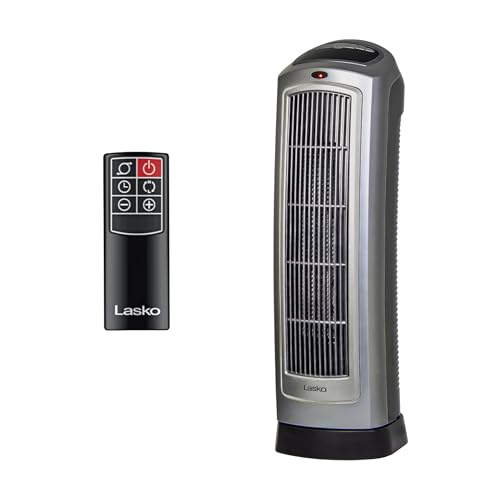
This tower heater provides two quiet heat settings and an adjustable thermostat to maintain room temperature. The optional oscillation feature helps distribute warm air evenly, which is beneficial for larger basement areas. The multi-function remote control simplifies operation, and a back-mounted storage slot keeps the remote nearby when not in use. An auto-off timer ranges from 1 to 8 hours, allowing manual control of heat duration. This unit is compact and designed for spaces where floor space is at a premium.
Dreo Smart Wall Heater WH719S

The Dreo WH719S wall heater delivers 1500W of warmth with 120° vertical oscillation for broad coverage. It supports smart control via a mobile app and voice assistants (Alexa/Google Home), plus a remote for convenient adjustments. A 24-hour timer and precise thermostat help tailor basement heating, while a wide oscillation pattern ensures warmth reaches corners and work areas. The design emphasizes quick heat response and safe operation in indoor spaces.
GiveBest Smart Wall Heater

This wall-mounted heater supports remote control, WiFi connectivity, and touch controls for easy operation. It can be mounted on the wall or placed on the floor with retractable feet for versatile placement. The ECO thermostat mode helps maintain a steady temperature while conserving energy. It’s suitable for living spaces, garages, basements, and other indoor areas, with three heating modes to adapt to varying climate conditions. The device emphasizes remote preheating and simple temperature management.
Dreo Space Heater With Thermostat

The Dreo space heater combines five modes, a 12-hour timer, and a 70° oscillation to maximize warmth distribution in basements of various sizes. It has an energy-efficient ECO mode and robust safety features, including a flame-retardant shell and multiple protections against overheating and tip-overs. The heater is designed for quiet operation, making it suitable for bedrooms or home offices in basements where noise must be minimized. Its compact design supports flexible placement in corners or near workspaces.
Buying Guide
Key considerations when choosing a basement heater with a thermostat:
- Heating capacity and space size: Look for devices rated for the square footage of your basement. Smaller rooms may suffice with 1000–1500W, while larger areas may require higher wattage or multiple units.
- Thermostat control and settings: A precise thermostat (if possible in 1°F increments) helps maintain a stable temperature. ECO or energy-saving modes reduce consumption during steady basements conditions.
- Oscillation and air distribution: Wide oscillation or top-to-bottom airflow improves warmth in corners and across open layouts typical of basements.
- Smart integration and remote controls: WiFi or app control, along with voice assistant compatibility, enhances scheduling and remote operation for unpredictable basement usage.
- Safety features: Overheat protection, tip-over sensors, flame-retardant materials, child safety locks, and auto shutoffs add layers of protection in basement environments.
- Placement flexibility: Consider models that can be mounted on walls or ceilings or placed on floors with minimal footprint to maximize usable space in basements with limited layouts.
- Noise level: Quieter operation (below 40 dB) is preferable for bedrooms or home offices within the basement to avoid disruption.
Comparison at a glance:
- Smart features: FLANUR, Dreo WH719S, and GiveBest smart models offer app and voice control, with timers and remote options for automated heating schedules.
- Coverage and placement: Wall-mounted and ceiling options (Comfort Zone, Dreo) target large basement areas, while portable units (Lasko, FLANUR, Dreo) are easier to move between spaces.
- Energy efficiency: ECO modes and precise thermostats help reduce energy waste by maintaining stable temperatures instead of fluctuating heat output.