Choosing the right heater for a betta bowl or tiny desktop aquarium is essential for stable water temperature and fish health. This guide highlights five compact 25W heaters designed for 1–6 gallon tanks, focusing on preset temperatures around 78°F, quick setup, and reliable operation. Each product below includes key features, setup tips, and safety considerations to help you compare at a glance.
| Product | Brand | Tank Range | Preset Temp |
|---|---|---|---|
| PULACO 25W Small Aquarium Heater | PULACO | 1–6 gallons | 78°F |
| Orlushy 25W Small Submersible Heater | Orlushy | 1–6 gallons | 78°F |
| AQUANEAT 25W Mini Heater | AQUANEAT | 3–5.5 gallons | 78°F |
| AquaMiracle 10W USB Heater | AquaMiracle | up to 1 gallon | 5V/2A powered; 64–93°F range |
| VCRAZE Mini 25W Heater | VCRAZE | 3–5 gallons | 64–93°F |
Note: All products listed are submersible heaters suitable for small betta bowls or nano tanks. Always ensure the heater is fully submerged according to the manufacturer’s instructions and monitor water temperature with a reliable thermometer.
PULACO 25W Small Aquarium Heater
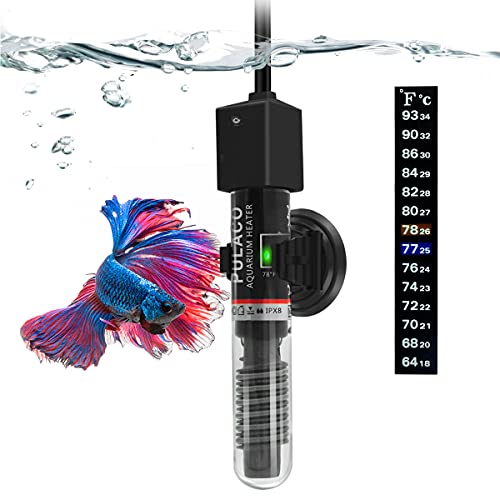
The PULACO heater is designed for 1–6 gallon tanks and must be fully submerged. It offers a preset 78°F temperature with automatic control, indicated by a red light during heating and a green light when maintaining the target temperature. Installation supports vertical or horizontal placement, making it adaptable to various desktop setups. The device is compact and unobtrusive, helping preserve viewing space in small bowls. It carries a stated accuracy of ±3°F, which means occasional minor temperature fluctuations can occur but should remain within a safe range for most betta species.
Orlushy 25W Small Submersible Heater

Orlushy’s 25W heater covers 1–6 gallon tanks and emphasizes full submersion with a vertically oriented installation. The preset temperature is 78°F, and a red indicator light signals heating, transitioning to green once the target is reached. The unit’s durability comes from a durable ABS outer shell and a nickel-chromium heating rod with a quartz glass interior. Its low-profile design helps hide the heater in small tanks, while its energy-conscious operation and simple on/off behavior make it a solid choice for beginners and experienced hobbyists alike.
AQUANEAT Aquarium Heater, 25W Mini

AQUANEAT’s compact 25W heater is sized for 3–5.5 gallon tanks and helps preserve aquarium aesthetics by occupying minimal space. It ships with a preset 78°F temperature and requires no extra setup beyond plugging in. The indicator light provides a quick daily check: red during heating, green when maintaining the target temperature. Its small footprint makes it ideal for betta bowls and small displays where space is at a premium, while its simple electronic controls reduce the chance of misadjustment.
AquaMiracle Adjustable 10W USB Heater

The AquaMiracle heater is notably tiny at about 1.97 inches, ideal for nano and betta tanks up to 1 gallon. It runs on a 5V/2A USB power supply, reducing electrical risk in small setups. The device provides a 64–93°F temperature range with an inverter-based thermostat offering 1°F accuracy. A dual-readout display shows the current and set temperatures, helping keep precise control without bulky hardware. While convenient for USB-powered setups, power availability and cable management are considerations in wall-bowled or desktop environments.
VCRAZE Mini 25W Heater
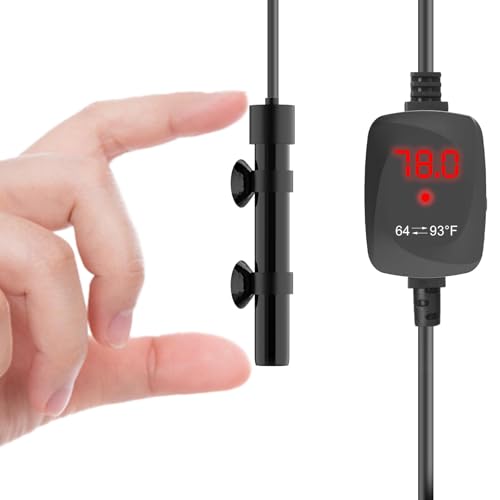
The VCRAZE mini heater targets 3–5 gallon tanks with a 25W output and an alumina ceramic build for durability and efficient heat transfer. It features a precise inverter-based thermostat with 1°F accuracy and a digital display that shows both current and target temperatures. Its compact size helps it blend into small betta habitats while maintaining reliable performance. The heater’s efficient design is noted for energy savings and quick response to temperature changes, which is beneficial for maintaining thermal stability in small ecosystems.
Buying Guide: Key Purchase Considerations
- Tank size and placement: For bowls and nano tanks, choose compact, fully submersible heaters that fit without obstructing the view. Horizontal and vertical installation options increase flexibility for various tank shapes.
- Preset vs. adjustable temperature: Preset 78°F units are convenient for common tropical fish, but adjustable models offer flexibility if your betta species or room conditions differ.
- Accuracy and safety features: Look for ±1–3°F accuracy, overheating protection, and dry-run protection. A clear indicator light helps monitor operation at a glance.
- Power source: USB-powered heaters work well in compact desks or setups with USB hubs, but ensure power stability. Conventional wall outlets work reliably for most tanks.
- Durability and materials: Quartz glass and ceramic components improve durability and heat transfer. ABS shells provide impact resistance in small environments.
- Maintenance and visibility: Low-profile designs help minimize clutter in a small bowl. Regular checks with a thermometer ensure temperatures stay within safe ranges.
- Energy efficiency: Efficient heaters save electricity in rooms with continuous use. Inverter-based thermostats can reduce energy usage while maintaining stable temperatures.
- Safety for bettas: Avoid overheating and ensure thorough submersion to prevent exposed heating elements. Regular temperature monitoring is essential for happy, healthy fish.
For optimal results, pair any of these heaters with a reliable aquarium thermometer placed inside the tank. Regularly verify that the water temperature remains within the preferred range for your specific betta breed, environmental conditions, and tank setup. When selecting among these options, consider tank size, power source, and whether you prioritize preset simplicity or adjustable control for future needs.