When choosing a boiler pressure relief valve, select models designed to automatically open at a safe set point to protect against overpressure. This guide highlights five reliable options best suited for residential and light commercial boiler and hydronic heating systems. The top picks balance corrosion resistance, secure fitting, and straightforward installation. The buyer is likely a homeowner, contractor, or facility manager seeking dependable, low-maintenance protection against overpressure events.
| Product | Why It Stands Out | Best For |
|---|---|---|
| Watts 0342691 | Bronze body, 3/4″ inlet/outlet, reliable Watts design | Residential heating systems needing durable bronze |
| dyseer 3/4″ FNPT | Lead-free brass, automatic 30 PSI, easy swap | New installations or replacements in homes and light commercial boilers |
| Gulfmew 3/4″ NPT | Includes PTFE tape, brass body, leak-resistant | Budget-conscious replacements with complete sealing kit |
| HYDRO MASTER 30 PSI | All-brass body, stainless spring, ASME-rated | Systems needing robust corrosion resistance |
| VAV 30 PSI | Pre-calibrated 30 PSI, CSA listed, leak-resistant | New installations requiring fixed, safe setting |
Watts 0342691 30 PSI Pressure Relief Valve

Best for traditional residential boilers needing a durable bronze body. The Watts 0342691 is a 3/4″ inlet and outlet, female connection designed to prevent overpressure in hot water systems. Its bronze construction offers long-term corrosion resistance in demanding heating environments. Choose this if you favor a proven brand with straightforward installation and a compact footprint. Caution: verify compatibility with existing piping standards and ensure proper threading during mounting.
3/4″ FNPT Female Inlet & Outlet – 30 PSI Valve (Lead-Free Brass)
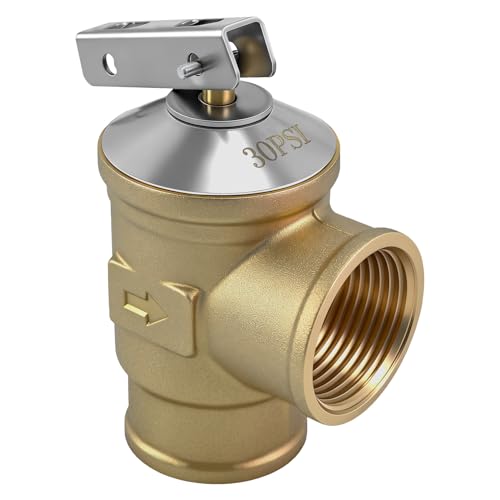
Best for easy replacement on residential and light commercial boilers up to 510,000 BTU. This valve uses a lead-free brass body and provides automatic 30 PSI relief. It is suitable for systems needing a simple swap-in option with common 3/4″ FNPT connections. Better for budget-conscious installs. Limitation: ensure the 510,000 BTU range matches your boiler capacity to avoid oversizing concerns.
Gulfmew 30 PSI Boiler Relief Valve, 3/4″ NPT

Best for quick replacement with a ready-made sealing kit. Gulfmew provides a 3/4″ NPT valve, brass construction, and includes PTFE thread sealing tape for enhanced leak resistance. Choose this if you want a complete kit in one purchase. Caution: Not suitable for drinking water delivery systems, use strictly for boiler protection.
HYDRO MASTER 30 PSI ASME Safety Relief Valve

Best for ASME-rated protection with corrosion-resistant materials. This valve features a 3/4″ male NPT inlet, brass body, and a stainless steel spring. It is designed to guard against excessive pressure in hot water systems. Choose this if you require an ASME-certified component with robust construction. Limitation: confirm your system’s compatibility with a male inlet orientation.
VAV 30 PSI Boiler Relief Valve, 3/4″ NPT

Best for fixed-pressure protection with CSA listing. The VAV valve is pre-calibrated to open at 30 PSI and uses a lead-free brass body with a 3/4″ NPT connection. It’s straightforward to install in residential or light commercial boiler setups. Better for installations requiring a known, unadjustable setting. Caution: avoid using with mismatched inlet/outlet threading or non-standard piping systems.
Buying Guide: Key Considerations For Boiler Pressure Relief Valves
What setting do you need? Most residential boilers use a 30 PSI relief setting. Confirm your system manufacturer’s recommended setpoint before selecting a valve. Fixed-setting models simplify installation and reduce adjustment errors.
Material matters. Brass and bronze bodies resist high temperatures and corrosion. Stainless steel springs add longevity in demanding environments. Avoid valves with questionable materials for long-term reliability.
Connection type and compatibility. Check inlet and outlet sizes (3/4″ is standard for home boilers) and ensure FNPT or NPT threads match your piping. LEAD-FREE brass builds are important for compliance in many regions.
Leak prevention. Look for one-piece valve bodies or models that come with sealing tape or gaskets. A good seal reduces the risk of drips and maintenance calls.
Monitoring and safety features. Some valves offer built-in monitoring or compatibility with building management systems via add-ons. If this matters for your project, confirm what is required for integration.
Frequently Asked Questions
What PSI should a residential boiler relief valve be set to?
Most residential systems use 30 PSI relief valves, but always verify the manufacturer’s recommendations for your boiler model.
Can I replace a boiler relief valve myself?
Yes, if you are comfortable with basic plumbing and shut-off procedures. Ensure the system is depressurized before removal and follow local codes for installation.
What does a blockage or leaking relief valve indicate?
Leaks or failure to relieve pressure may indicate a malfunction or improper installation. Replacing with a properly rated valve is advised.
Is a CSA or ASME listing important?
CSA or ASME listings provide safety certification and quality assurance. For commercial or regulated installations, these listings are often a requirement.