Looking for a cast iron gas fireplace that blends classic style with reliable heat? This guide compares five top ventless and dual‑fuel options, focusing on performance, realism, and usability. Each pick targets a specific buyer—from traditional ambiance lovers to tech‑savvy smart home enthusiasts—so you can choose the right fit for your space. Below you’ll find quick pros, who it’s best for, and any practical limitations to consider. A concise buying table is included for fast comparison.
| Product | Best For | Key Benefit |
|---|---|---|
| Duluth Forge Ventless Natural Gas Stove QSL250T | Medium living spaces, budget‑conscious buyers | 25,000 BTU, thermostat control |
| Ashley DV Cast Iron Gas Stove | Cozy ambience with blower support | Circuit with 23,500 BTU, remote included |
| Duluth Forge Ventless Liquid Propane Stove QSL250T | Propane setups, flexible fuel options | 25,000 BTU, same ceramic detailing |
| Country Living Infrared Freestanding Electric Stove | Plug‑in convenience, smart features | Multiple flame colors, Alexa/WiFi |
| Duluth Forge Dual Fuel Ventless Stove FDSR25 | Dual‑fuel capability for versatility | 26,000 BTU, remote control |
Duluth Forge Ventless Natural Gas Stove QSL250T

This ventless gas stove is designed for compact warmth and a realistic faux‑log presentation. It delivers 25,000 BTUs to heat roughly 1,100 square feet, suitable for medium living spaces. The carved logs and cast‑in concrete detail create a high‑end look that mimics a real wood burning fire. A thermostat control lets you set continuous warmth without manual adjustments, making it better for rooms that require steady comfort. A caveat is that ventless units rely on indoor air ventilation; ensure proper clearance and follow local code requirements to maintain indoor air quality.
Ashley DV Cast Iron Gas Stove
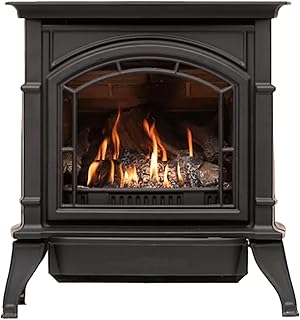
The Ashley DV model offers a traditional cast‑iron silhouette with robust heating capability. It heats up to 1,000 square feet with 23,500 BTUs for natural gas and includes a 130 CFM blower plus a remote control, enabling easier temperature management from across the room. The red brick liner and included Ridgewood timber logs add realism, making it a strong choice for spaces where visible flame ambiance matters. It’s best for buyers who value a classic look combined with adjustable delivery of heat and some automated convenience.
Duluth Forge Ventless Liquid Propane Gas Stove QSL250T
This model mirrors the natural gas version but uses liquid propane as the fuel source. It shares the same 25,000 BTU output and 1,100 square feet heating capacity, with detailed hand‑painted logs and heat‑resistant ceramic materials for durability. The thermostat‑operated control offers customizable warmth, and the ventless design simplifies installation in spaces without existing chimney connections. Choose this if you need propane compatibility and an authentic visual without altering existing gas lines. A limitation is the need for proper propane tank placement and handling in smaller rooms.
Country Living Infrared Freestanding Electric Fireplace Stove

This is an electric hearth designed for plug‑in convenience rather than gas combustion. It features multiple flame colors and faux wooden logs with a metal body, plus Alexa and Wi‑Fi compatibility for smart home integration. It’s ideal for spaces where venting gases or fuel storage is a concern or where a purely electric heat source is preferred. Consider this as a safer, low‑maintenance alternative to vented or ventless gas units, especially in rooms without gas service. The main trade‑off is lower heat output and lack of real flame ambiance for traditional purists.
Duluth Forge Dual Fuel Ventless Gas Stove FDSR25

The FDSR25 offers dual‑fuel versatility, combining natural gas or propane with ventless operation. It delivers 26,000 BTU for heating up to about 1,200 square feet, a step up for larger spaces. A thermostat remote is included to adjust comfort without reaching the stove, and the unit emphasizes six hand‑painted logs crafted from durable ceramic fiber materials. It’s best for buyers who require flexibility between fuel sources and want a slightly larger heating footprint. A potential limitation is that dual‑fuel configurations may require more setup and maintenance considerations to ensure safe operation in your home.
Buying Guide
Key purchase considerations for cast iron gas fireplaces include fuel type, venting needs, heating capacity, and realism of flame visuals. For ventless units, verify local code compliance and ensure proper room ventilation. If you want the most authentic wood‑fired appearance, prioritize detailed log sets and high‑fidelity log casting. When space is a constraint, choose compact BTU ranges with thermostat control for consistent heat without overheating. Dual‑fuel options offer flexibility but may require more complex installation. For smart home integration, consider electric models with Wi‑Fi or Alexa compatibility.
Practical questions buyers often ask
- What size room will a 25,000 BTU stove effectively heat?
- Is ventless acceptable in my local building codes and air quality standards?
- Which option includes a remote or blower for easier comfort control?
- How does propane compare to natural gas in terms of maintenance and safety?
- Can I integrate any of these with a smart home system?
- Which design best matches a traditional, rustic, or modern decor style?
FAQ
- Do ventless stoves require a chimney?
- Can I install a dual‑fuel stove myself?
- Are there safety features I should look for?
- What is the difference between natural gas and propane for these units?
- Will these units look realistic in a traditional living room?
No. Ventless stoves heat without a traditional chimney, but they rely on indoor air circulation and must meet local venting codes.
Installation typically involves gas connections or propane supply lines and should follow manufacturer instructions and local codes; professional installation is advised.
Thermostat control, remote operation, and protective shielding are common safety features; ensure proper clearance from combustibles and adequate ventilation.
Natural gas fittings integrate with home gas lines; propane requires an external tank or tankless system. Both can provide ample heat; choose based on fuel availability and installation feasibility.
Yes, especially models with hand‑painted logs and high‑fidelity log detailing; this enhances the authentic fire ambiance while maintaining the cast‑iron aesthetic.