The best digital wood stove thermometers help you monitor temperatures safely and efficiently, reducing creosote buildup and preventing overheating. This guide highlights five top options, suited for different setups—stove pipes, top surfaces, and digital readouts. Choose based on install type, readability, and where you want to monitor heat most closely. The table below summarizes each pick to aid quick comparison.
| Product | Best For | Key Feature | Limitations |
|---|---|---|---|
| Thermometer for Stove Pipe, Chimney, Outdoor Wood Boiler | Double-wall pipe setups needing a strong max-temp readout | Max 1650F, 4″ probe included | Fixed probe on double-wall pipe; 6 ft cable |
| Hanaoyo Wood Stove Thermometer with Large Dial | Any wood/gas/pellet stove user who wants easy reading | Large 3.34″ dial; magnetic mounting | Requires magnetic surface; may not fit non-magnetic areas |
| Midwest Hearth Magnetic Wood Stove Top Thermometer | Stove-top surface monitoring and creosote awareness | Premium porcelain enamel finish; magnetic to 800F | Top-surface reading only; not suitable for flue gas directly |
| 2PCS Wood Stove Thermometer Magnetic | Budget-friendly dual-pack for magnetic monitoring | Bright white needle; 100-800F range | Single-wall use; ensure magnet contact is safe |
| UCTRONICS -30-800 Degree Digital Meter | Digital precision from -30 to 800C in any environment | Wide range; reverse polarity protection | Requires setup; separate probe management |
Note: Each product targets different stove configurations. The following sections provide detailed insights to help you pick the right thermometer for your setup, whether you prefer a pipe-mounted readout, a magnetically attached surface dial, or a compact digital meter.
Thermometer for Stove Pipe With Alarm
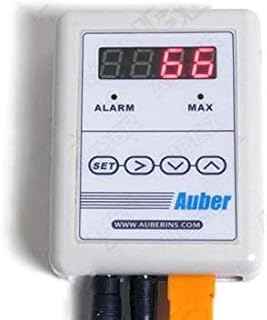
This pipe thermometer is designed for stove pipe and chimney installations, including a 4″ probe suitable for double-wall pipes. A 6 ft sensor cable helps position the readout away from heat sources. Best for: homeowners with double-wall exhaust lines who need a strong max-temperature readout (up to 1650°F). Limitation: primarily suited for pipe installations; not as convenient for on-stove surface readings.
Hanaoyo Wood Stove Thermometer With Large Dial
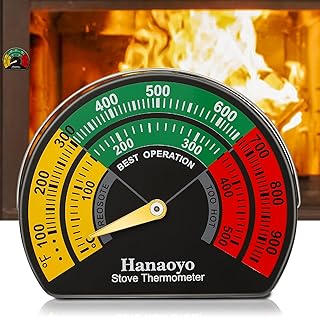
This thermometer features a large 3.34-inch dial, a durable aluminum dial, and a magnetic mounting option. Best for: readers who value easy readability from across the room and quick stove-status checks. Why selected: the larger dial improves visibility, and the magnetic attachment adds flexible placement. Limitation: magnetic mounting may not work on non-metal surfaces or certain stoves without a suitable metal area.
Midwest Hearth Magnetic Wood Stove Top Thermometer

Designed for mounting on the stove top surface, this thermometer uses a magnetic attachment and a porcelain enamel finish. Best for: users who want a durable, color-stable readout that stays affixed to a metal stove. Why selected: the porcelain enamel finish helps maintain color and legibility over time. Limitation: top-surface reading may be less direct for exhaust temperatures and creosote insights.
2PCS Wood Stove Thermometer Magnetic
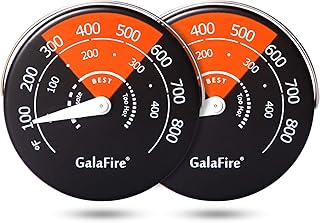
This two-pack uses a bright white needle for high visibility and magnetic placement on the stove top or side. Best for: households needing multiple readouts for different stove zones or backup units. Why selected: the exclusive white needle improves visibility, especially in low-light areas. Limitation: intended for single-wall flue pipes; ensure the magnet can securely attach to your surface.
UCTRONICS Digital Temperature Meter

This digital meter covers a broad range from -30°C to 800°C with a blue LED display. Best for: technical users who want precise digital readouts and a wide measuring range. Why selected: the device offers reverse polarity protection and a clear, numeric display. Limitation: setup complexity and the need to manage a separate sensor and wiring for accurate placement.
Buying Guide: How to Pick the Right Digital Wood Stove Thermometer
- Mounting location: Do you want a pipe-mounted readout, a top-surface dial, or a digital meter? Pipe probes measure flue temperatures; surface dials monitor stove-top heat; digital meters provide wide-range readings with flexible placement.
- Temperature range: For high-heat stoves, choose thermometers with higher max temperatures (e.g., up to 1650°F). For routine use, 800°F magnetic or dial options may suffice.
- Readability: Large, bright dials or high-contrast digital displays improve quick interpretation while cooking or loading wood.
- Mounting method: Magnetic attachments offer easy repositioning on metal stoves, while fixed probes require proper routing for safety and accuracy.
- Durability and finish: Porcelain enamel and robust metals resist creosote buildup and heat cycling for longer life.
- Installation constraints: Double-wall pipe setups may require specific probes; ensure the instrument is compatible with your stove model and flue design.
Frequently Asked Questions
- What is the best thermometer for a double-wall stove pipe?
– A thermometer designed for stove pipes with a robust probe and long sensor cable, capable of withstanding high temperatures up to 1650°F, is ideal for double-wall setups. - Are magnetic stove thermometers reliable?
– Yes, magnetic thermometers are convenient for on-stove placement and can be read quickly, but ensure the magnetic surface is durable and properly attached to metal areas. - Should I choose a dial thermometer or a digital meter?
– Dial thermometers are simple and fast to read; digital meters provide broader range and precise numbers, useful for more technical monitoring. - Can a top-mounted thermometer indicate flue temperature?
– Top-mounted units focus on surface temperature and may not reflect exhaust gas temperatures; for creosote risk, consider a pipe-mounted option or multiple readouts. - Do these thermometers require calibration?
– Some units offer factory calibration and simple readouts; check product details for calibration options and maintenance recommendations. - Is mounting a thermometer on the stove risky?
– When following product guidance, ensure heat exposure is within the device’s design, and avoid obstructing air flow or seals around the door and flue.