Direct burial heat tape is a crucial solution for protecting water pipes from freezing in harsh winter conditions. This article highlights five top options, each suited to different needs—from professional installers to homeowners working on RVs, outdoor hoses, and buried lines. The selections emphasize self-regulating design, durable construction, and reliable freeze protection down to -40°F. Use this guide to compare suitability, installation practicality, and safety considerations for your specific piping materials and environment.
Summary of chosen products
| Product | Best For | Key Benefit | Limitations |
|---|---|---|---|
| YeloDeer 100FT Bulk Roll | Pros and DIYers with flexible sizing needs | Self-regulating, versatile for various pipe types | Bulk roll may require more setup and trimming |
| JDZKOMKE 50FT Cable | Industrial or coastal installations | Full certification, rugged construction | Requires careful sizing for longer runs |
| SZFY 3FT–200FT Tape | Residential to light industrial multi-scenario use | Wide length range, high heating efficiency | Longer runs may need more components |
| Cupohus Thermostat 3FT | Hoses and small-diameter lines | Thermostat-based, energy-saving | Short length; may require spares for larger projects |
| HEATIT 40ft Self-Regulating | Certified, safety-conscious installations | ETL listed, reliable safety certification | Shorter length; best when combined with other sections |
YeloDeer 100FT Bulk Roll Heat Tape

This self-regulating heat tape arrives as a bulk roll, offering flexible sizing for professional installers and serious DIYers. It automatically adjusts power to keep water pipes above freezing, reducing energy use while protecting pipes down to -40°F. It works with metal, PEX, PVC, and plastic pipes up to 2 inches in diameter, including exterior lines, RV hoses, and garden piping. Best for: plumbers, electricians, and installers needing custom lengths. Limitation: bulk roll setup may require more trimming and insulation planning than pre-made lengths.
JDZKOMKE 50FT Pipe Heating Cable

Designed for robust freeze protection, this cable is certified along its entire length and includes a 5FT grounded plug with indicator light. It features an aluminum shield, a copper core, and a weatherproof outer jacket, rated IP67. Best for: industrial or coastal installations where durability and full-cable certification matter. Caution: do not use on fuel lines or gutters, as water absence can cause overheating in those contexts.
SZFY 3FT~200FT Heat Tape
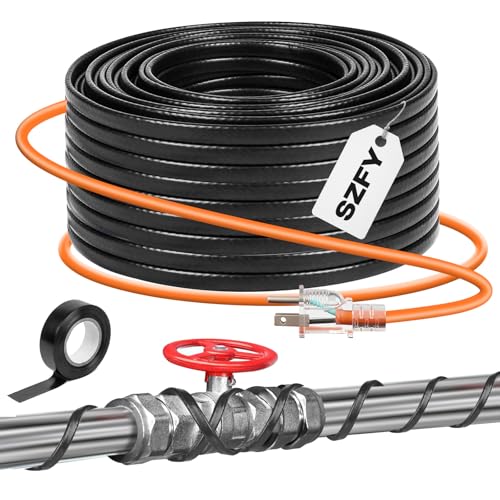
This versatile heat tape covers 3 to 207 feet, making it suitable for roofs, gutters, water pipes, farms, and outdoor plumbing. It claims -40°F protection with a notably thick copper core for efficient heating. Best for: homeowners needing adaptable lengths and strong heating performance. Limitation: Extended runs may require careful electrical planning and additional protection where exposed to harsh weather.
Cupohus Heat Tape with Thermostat

This 3-foot heat tape includes a built-in thermostat to maintain hose and pipe temperatures above 59°F (15°C) when ambient conditions drop to -40°F. It is particularly suitable for hoses and small-diameter lines in outdoor setups, roofs, and RV plumbing. Best for: users prioritizing automatic temperature control and energy savings. Caution: short length means plan for longer runs by adding additional segments where needed.
HEATIT 40ft Self-Regulating Heating Cable

HEATIT’s 40-foot option emphasizes full ETL certification and a 3 W/ft heating rate to keep water flowing in subfreezing temps. It includes a 2-foot power cord and offers a safety-first approach with comprehensive certification. Best for: safety-conscious buyers who need a fully certified system. Limitation: shorter length than some bulk options, so plan for larger projects with additional runs or multiple cables.
MAXKOSKO 30 Ft Heating Cable

This 30-foot self-regulating heat tape guards both metal and plastic pipes against freezing down to -40°F, and includes a 3-foot power cord. Best for: medium-length residential installs or small commercial runs. Feature emphasis is on self-regulating technology for energy efficiency. Limitation: shorter length may require multiple segments for longer pipelines or larger properties.
Buying Guide: Direct Burial Heat Tape Essentials
- Pipe materials: Confirm compatibility with metal, PVC, PEX, or plastic pipes you plan to protect.
- Length and layout: Measure run distances and account for bends. Self-regulating tapes can be cut to fit actual lengths.
- Power requirements: Check supply voltage, plug type, and whether a GFCI outlet is advisable for outdoor use.
- Temperature range: Ensure protection targets temperatures down to -40°F if you’re in extreme climates.
- Certifications and safety: Favor products with ETL, UL, or equivalent end-to-end safety certifications for reliability.
- Durability and environment: Look for IP ratings and jacket materials suitable for moisture, UV exposure, and soil contact if buried.
- Installation: Determine if a thermostat or smart control is necessary for energy savings or precise maintenance temperatures.
- Maintenance: Plan for inspection intervals, especially in areas with heavy snow or wildlife exposure.
FAQ
- What is direct burial heat tape best used for?
Direct burial heat tape protects buried or exposed water pipes, hoses, and outdoor fixtures from freezing in cold weather.
- Do these cables require a thermostat?
Some models include thermostats or thermostatic control, while others rely on self-regulating elements. Consider your installation environment when choosing.
- Can heat tape be cut to fit my pipe length?
Yes, many self-regulating tapes are designed to be cut to length for precise fitting. Follow manufacturer guidelines for safe trimming.
- Is certification important?
Yes. End-to-end safety certifications (ETL/UL) indicate overall product safety, including the plug and cable assembly.
- Which product is best for RV hoses and garden pipes?
Flexible bulk rolls or shorter segments with compatible jackets (waterproof, UV-resistant) are often ideal for hoses and garden plumbing.
- What is the protection temperature range I should look for?
Common requirements include protection down to -40°F to handle severe winter conditions and prevent pipe bursts.