Finding a reliable direct vent garage heater can keep your workspace warm without worrying about exhausting fumes inside. This guide highlights five top options that are designed for safe venting and efficient performance in American garages. Each model is evaluated for heating capacity, venting options, and ease of installation, helping you compare choices at a glance.
| Product | BTU / Coverage | Vent Type |
|---|---|---|
| Modine Direct Vent Garage Heater Hot Dawg HD45AS01-21 | 45,000 BTU | LP Gas Direct Vent |
| Direct Vent Garage Heater Hot Dawg | 60,000 BTU | LP Gas Direct Vent |
| Mr. Heater F260550 Big Maxx MHU50NG | 50,000 BTU | Natural Gas Direct Vent |
| Mr. Heater F260560 Big Maxx MHU80NG | 80,000 BTU | Natural Gas Direct Vent |
| Rinnai EX22DTP Direct Vent Wall Furnace | 20,700 BTU | Propane/Natural Gas Direct Vent |
Modine Hot Dawg 45K BTU Direct Vent Garage Heater

The Modine HD45AS01-21 is a direct vent unit designed for reliable garage heating with 45,000 BTU output. It aims for steady warmth while venting exhaust directly to the outside, reducing indoor fumes. The model emphasizes simple installation and compatibility with LP gas supplies, making it a common choice for insulated garages that require steady, zone-specific heat.
Modine Direct Vent Hot Dawg 60K BTU

This direct vent heater delivers 60,000 BTU for larger garages. It uses LP gas and features a direct vent configuration to vent combustion byproducts outdoors, which helps maintain indoor air quality. Its robust output makes it suitable for spaces with higher heating demands or uninsulated bays, while keeping installation practical for standard exterior venting setups.
Mr. Heater Big Maxx MHU50NG Natural Gas Heater
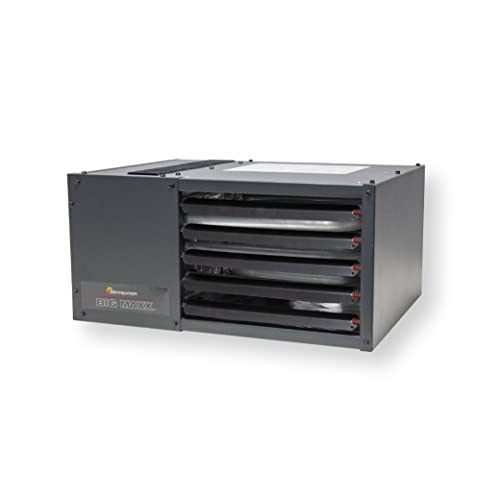
With 50,000 BTU, the Big Maxx MHU50NG is sized for mid-sized garages. It offers powered exhaust to support vertical or horizontal venting and provides convenient external access to thermostat and gas connections. This model is designed for straightforward outdoor venting and reliable performance across a variety of layout configurations.
Mr. Heater Big Maxx MHU80NG Natural Gas Heater
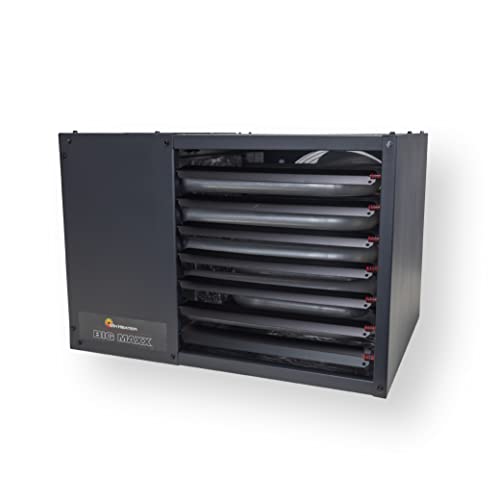
The 80,000 BTU Big Maxx MHU80NG targets larger or well-insulated garages. It ships with installation hardware and is designed for horizontal or vertical venting. The unit emphasizes durable construction and robust heat delivery while accommodating outside access for the thermostat and gas connections. It is a strong option for spaces requiring higher heat output.
Rinnai EX22DTP Direct Vent Wall Furnace

This wall furnace provides 20,700 BTU with direct venting for indoor use. It features modulating technology for consistent temperatures and a cool-to-the-touch exterior for safety. The self-diagnostic electronics offer quick status checks, making it a practical option for garages that prioritize internal air quality and reliable, adjustable warmth.
Buying Guide: Key Considerations For Direct Vent Garage Heaters
- Heat output vs. space size: Choose BTU ratings that match the garage square footage. Over-sizing wastes energy, while under-sizing leaves the space uncomfortably cold.
- Fuel type and availability: LP gas units are common in detached garages with outdoor storage tanks, while natural gas units require a connected gas line.
- Ventilation approach: Direct vent systems exhaust outdoors, improving indoor air quality. Ensure an exterior venting path that complies with local codes.
- Venting orientation: Some models support vertical or horizontal venting. Consider wall placement and space constraints when planning installation.
- Thermostat control: External vs. built-in thermostats affect ease of temperature management. Look for units with accessible outside thermostats if desired.
- Installation and maintenance: Check for included mounting hardware and service requirements. Regular checks help maintain safe operation and efficiency.
- Safety features: Look for cool-to-the-touch cabinets and self-diagnostics to reduce risk during operation, especially in spaces used for work.
- Durability and warranty: Garages can be harsh environments. Units with rugged construction and solid warranties offer longer, worry-free service.
- Noise and exhaust considerations: Noise levels and exhaust venting impact comfort and neighbor considerations in attached garages.
- Code compliance: Verify compliance with local building and venting codes. Professional installation may be advisable for larger units.
These options provide a range of capacities and venting configurations suitable for typical American garages. When selecting a model, balance heat needs, garage size, and how the unit will be vented to the outdoors. All five models listed here are designed for direct vent operation, helping maintain indoor air quality while delivering reliable warmth in winter months.