Direct vent and power vent water heaters each have distinct installation needs, performance profiles, and suitability for different homes. This article compares the two venting approaches, explains when to choose one over the other, and highlights five Amazon products that best fit common scenarios. Whether you’re upgrading an older system or installing a new unit, use these summaries to match the model to your home and usage patterns.
| Vent Type | Best For | Key Consideration | Typical Use Case |
|---|---|---|---|
| Direct Vent | Homes with outdoor venting options, ducted installations | Requires venting to exterior air and outdoor air intake | Compact, safer indoor air, exterior vent routing |
| Power Vent | Limited venting space, long vent runs, horizontal venting | Uses blower to push exhaust; may need electrical hookup | Flexible installation in tighter areas |
Buyer profile guidance: If you want quiet operation and exterior vent routing with minimal indoor air impact, a direct vent model is often preferred. If you have limited vertical space or longer horizontal vent runs, a power-vent option can offer practical installation advantages. The following picks illustrate typical advantages and limitations for each category.
Best Residential Power Vent Water Heater Help

The Rheem PROTECH SP21031B Water Heater Blower Assembly is designed for residential power vent systems. It is suited for homes where the vent run is longer or requires assistance to exhaust combustion gases. This blower assembly can help ensure consistent venting pressure and reliable operation in areas that may demand additional exhaust support. It is best for homeowners who already have a power-vent installation or who are upgrading a vented system that depends on a dedicated blower to push exhaust through longer duct runs.
Selection notes: Best for homes that need an additional exhaust push to accommodate longer vent runs or tighter vent routing. A potential limitation is that this component assumes compatibility with a power-vent configuration and may require matching with other system parts to operate safely and efficiently.
Best Wall Vent System for Larger Water Heaters
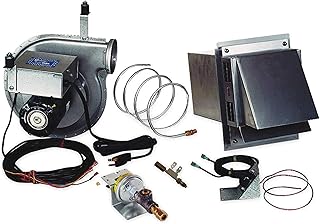
The Tjernlund VP-3F Side Wall Vent System is designed to vent any brand or type of millivolt gas water heater and can locate the heater anywhere up to 75 feet from an exterior wall without requiring a separate electrician. This makes it a strong pick for installations where vertical venting is impractical or where the unit needs to be positioned away from exterior walls. Best for homes with space constraints or unusual layouts where a traditional vent chase isn’t feasible.
Key benefit: It offers flexibility in heater placement and simplifies installation logistics. Limitation: It requires careful alignment with the heater’s venting needs and may not be suitable for all gas water heater models without compatibility checks.
Best Tankless Gas Water Heater for Whole-House Use
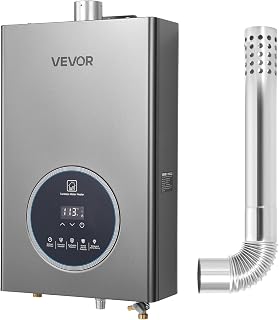
VEVOR’s Tankless Water Heater Gas, rated at 100,000 BTU and 4.3 gallons, offers on-demand hot water with smart temperature control and several safety protections. It’s positioned as an indoor, whole-house solution, suitable for homes that want continuous hot water without a storage tank. The LED display provides real-time temperature and status information. It’s best for households seeking a compact, high-demand hot water solution with precise temperature control and modern interface.
Selected use: Choose this if you want energy-efficient, on-demand hot water with clear digital feedback. Caution: Tankless systems may require proper venting and gas supply sizing considerations, which should be confirmed for your home before installation.
Best Direct Vent Installation Option

The Vent Wall Thimble offers a practical venting accessory for gas water heaters, stoves, and exhaust systems that require a properly protected vent passage through walls. It is adjustable and compatible with typical pipe diameters in the 2.36″ to 3.15″ range, with a stainless steel build for durability. Best for homeowners performing DIY vent penetrations or upgrading vent protection in outdoor-wall installations. Avoid this unless your vent pipe size matches the thimble’s range, as misfit can lead to improper sealing.
Buying Guide
Direct vent vs power vent: key differences
- Vent location and air supply: Direct vent systems pull outdoor air for combustion and vent exhaust outside, while power-vent systems use a blower to push exhaust and can accommodate longer vent runs.
- Installation flexibility: Power venting can help in spaces with limited vertical height, whereas direct venting excels when exterior vent routing is straightforward.
- Energy and efficiency considerations: Tankless or on-demand options vary by model; verify venting compatibility and gas supply sizing to ensure efficiency claims align with your home.
- Maintenance and reliability: Blower components in power-vent setups add moving parts that may require service, while direct-vent configurations typically rely on passive exhaust paths.
Frequently Asked Questions
- What is a direct vent water heater? A direct vent water heater uses outside air for combustion and vents exhaust outdoors, reducing indoor air impact.
- What is a power vent water heater? A power vent uses a fan/blower to exhaust gases, enabling longer or horizontal vent runs.
- When should I choose direct vent over power vent? Choose direct vent when exterior vent routing is feasible and you want minimal indoor air interaction. Choose power vent when vent runs are long or space constraints prevent vertical venting.
- Are there compatibility concerns with vent types? Yes. Check the heater’s venting requirements and ensure the blower or vent system matches the model and installation scenario.
- Can I install these systems myself? Some installations are DIY-friendly, but venting, gas sizing, and electrical connections often require a licensed professional. Always verify local code compliance.
- What maintenance do vented water heaters require? Regular inspection of vent seals, blower operation (for power vents), and purge/flush routines for efficiency and safety.