Answering common buyer questions: these electric tankless water heaters provide on-demand hot water with compact designs and energy efficiency. This guide highlights five models suited for apartments, small homes, and point-of-use setups. Each option is evaluated for best use case, reliability, and practical limits to help you choose wisely.
A quick summary table of selected products helps compare key specs at a glance.
| Product | Brand | Max Flow (GPM) | Key Power | |
|---|---|---|---|---|
| Rheem 18kW 240V Tankless Electric Water Heater | Rheem | Up to 4.4 | 18 kW | higher-demand singles or two-fixture setups |
| Orbek 14kW 240V Tankless Water Heater | Orbek | Up to 3.38 | 14 kW | 2 fixtures, compact spaces |
| EcoSmart ECO 11 13KW | EcoSmart | Typically ~2-3 GPM per unit (depending on inlet temp) | 13 kW | space-saving, point-of-use |
| Rheem 11kW 240V Tankless Electric Water Heater | Rheem | Up to 2.68 | 11 kW | smaller loads, under-sink or single fixture |
| CAMPLUX 6kW 240V Tankless Water Heater | CAMPLUX | Typically ~1-2 GPM | 6 kW | compact spaces, under sink use |
Note: Each model has installation needs such as dedicated circuit capacity and water connections. Consult a licensed electrician for panel and wiring requirements before purchase. This guide focuses on practical, user-facing aspects like space, efficiency, and use-case fit.
Rheem 18kW 240V Tankless Electric Water Heater
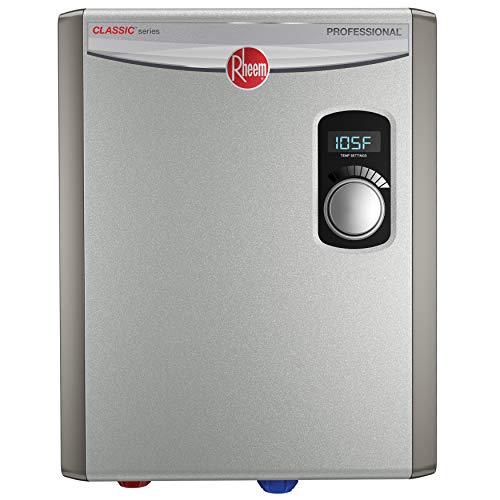
Best for higher hot-water demand in compact spaces. Features external digital thermostatic control with LED display and self-modulating technology that adjusts power to meet demand. Durable copper immersion elements and field serviceability are noted advantages. Flow rate up to 4.4 GPM makes it suitable for one or two fixtures in smaller homes or apartments. Potential limitation: installation requires adequate electrical capacity and proper venting or clearance per local codes.
Orbek 14kW On Demand Electric Water Heater

Best for two-fixture setups needing reliable on-demand hot water. Noted requirements include a 240V/60A two-pole breaker, and 6 AWG wiring, with 1/2″ NPT water connections. Provides up to 3.38 GPM and emphasizes energy savings and rapid hot-water delivery. A key caution: ensure your electrical panel can support the unit’s amperage to avoid tripping or overloading circuits.
EcoSmart ECO 11 Electric Tankless Water Heater

Best for space-saving and point-of-use installations. Self-modulating technology continuously monitors water temperature and adjusts flow to keep temperature within about 1 degree. This model weighs in with 13 kW of power and is significantly smaller than traditional heaters, making wall-mounted or dedicated-use setups practical. Limitation: actual GPM varies with incoming water temperature and climate; performance can drop in very cold supply conditions.
Tankless Water Heater Electric, 3000W 110V

Best for compact under-sink hot-water needs in kitchens or bathrooms. This 110V unit provides instant hot water with a digital display and 82° F to 131° F range, depending on flow. It is compact and wall-mounted, making it ideal for small spaces, RVs, or offices. Limitation: at 3,000 watts, the maximum flow is modest, making it better for single fixtures or point-of-use rather than whole-home hot water needs.
Rheem RETEX-36 Self-Modulating 36 kW

Best for larger-demand scenarios where quick, continuous hot water is essential. This model is a high-capacity option with self-modulation to adapt heat output to usage. Best for homes with higher simultaneous hot-water needs. A potential limitation is its higher installation requirements and energy demand; verify electrical panel capacity before purchase. Note: this is a refurbished product, which means it has undergone testing and re-packaging to look and function like new.
Rheem 11kW 240V Tankless Electric
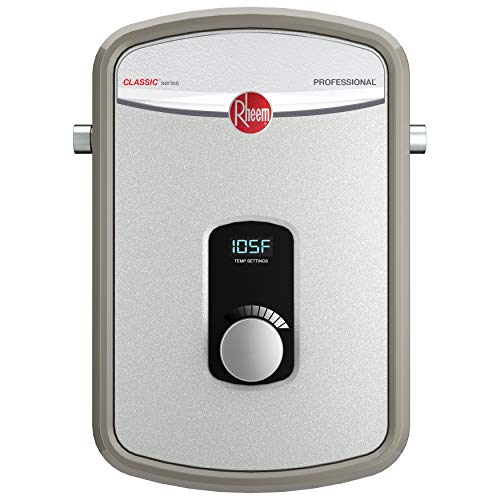
Best for compact layouts serving a single fixture or small apartment load. Features include ON/OFF dial control with adjustable digital temperature, self-modulating power control, and a flow rate up to 2.68 GPM. Choose this if you need a simple, space-conscious solution with predictable, modest hot-water output. Caution: performance comparable to flow demands near 2.5 GPM or less; not ideal for multiple simultaneous uses.
CAMPLUX 6kW Tankless Water Heater

Best for ultra-compact spaces and under-sink use. This 6 kW unit with temperature display uses self-modulating tech to adjust power based on demand, claiming substantial energy savings versus traditional heaters. Ideal for apartments, offices, or tiny homes. Limitation: lower maximum flow means it suits single-point or low-flow needs; not a primary whole-home solution.
Buying Guide
Key considerations when choosing an electric tankless water heater include power availability, flow requirements, space, and installation complexity. If your home can support higher wattages, models like the 18 kW Rheem offer stronger simultaneous hot-water capacity, useful for two fixtures at once. For limited electrical capacity, smaller units or modular EcoSmart configurations provide scalable options with easier wiring.
- Determine needed GPM: count the number of hot-water fixtures used simultaneously and typical flow per fixture.
- Electrical capacity: verify panel amperage and available circuits; many high-capacity units require dedicated breakers and 240V wiring.
- Space and mounting: wall-mounted, compact units save space but verify clearance and venting where required.
- Temperature control: check digital displays, self-modulating features, and minimum/maximum temperature ranges for safety and comfort.
- Installation considerations: some units are designed for point-of-use, others for whole-home use; plan for supply lines and water connections.
FAQ
- What is a tankless water heater?
It heats water on demand without storing hot water in a tank, saving space and often energy. - Do electric tankless heaters require high electrical capacity?
Yes. Many models need a dedicated 240V circuit and adequate amperage; consult a licensed electrician. - Can one unit serve multiple fixtures?
That depends on GPM needs and incoming water temperature; higher-kW units perform better for simultaneous use. - Are these easy to install at home?
Some are designed for DIY with clear wiring diagrams, but professional installation is recommended for electrical compliance. - How does self-modulating technology help?
It adjusts heater output to match demand, reducing energy waste and maintaining stable temperatures. - What is a point-of-use heater?
A compact unit intended for a single faucet or localized use, often mounted under a sink or near a shower.