Choosing the right electric PVC heater can speed up pipe bending with consistent heat. This guide surveys five reliable models, highlighting build quality, heating performance, and safety features. Whether you’re a professional installer or a DIY enthusiast, these options cover a range of pipe sizes and use cases. The following product sections include quick-access links and visual references to help you compare at a glance.
| Product | Brand | Pipe Range | Key Feature |
|---|---|---|---|
| Greenlee 851 Electric PVC Heater/Bender | Greenlee | ½” – 4” | Heavy-duty, reflective interior for even heat |
| Katywixu Electric PVC Conduit Heater | Katywixu | ½” – 2” | Reflective interior, real-time status lights |
| Hoadhen 1/2” to 4” PVC Conduit Heater | Hoadhen | ½” – 4” | Temperature monitoring, 120V, up to 2300W |
| Current Tools PVC Conduit Heater | Current Tools | ½” – 4” | Even heating with reflective interior |
| TEMCo TH4001 PVC Conduit Heat Blanket | TEMCo Industrial | ½” – 1 ½” | Longer heat blanket for wider bends |
The selections below are organized to help you compare essential aspects: heating method, capacity, safety features, loading/unloading convenience, and practical notes for first-time users and seasoned professionals alike.
Greenlee 851 Electric PVC Heater/Bender

The Greenlee 851 is designed for versatility across ½” to 4” PVC pipe sections. Its heavy-duty insulated metal walls with a reflective interior promote efficient, even heat distribution, reducing the time needed to reach pliable consistency. A full-length loading door simplifies the process of inserting and removing pipe, while the easy preheat cycle helps standardize bending across jobs. Users benefit from a robust build and straightforward operation that suits shop setups and field service alike.
Electric PVC Conduit Heater, 1/2″ to 2″ PVC Bender Heater

Katywixu’s model emphasizes even heat distribution via a heavy-duty insulated metal body with a reflective inner cover. This design supports quick, energy-efficient heating and consistent bending quality. Real-time indicator lights provide ongoing status monitoring, which is helpful for operators new to PVC heating or those who manage multiple duties. The full-length door allows fast loading and unloading, promoting smoother workflow in busy shop environments.
Hoadhen 1/2″ to 4″ Electric PVC Conduit Heater

Hoadhen offers a robust 120V system with 2300 watts of heat, designed for ½”–4” conduit. It uses a preheat-and-bend workflow: preheat to 500°F, load the pipe, rotate to pliable, then remove and form the bend. A full-length door improves loading efficiency, and the device includes a built-in temperature monitoring system for precise control. An automatic shutoff feature adds a safety layer, making it suitable for high-volume operations where consistent results matter.
CURRENT TOOLS PVC Conduit Heater
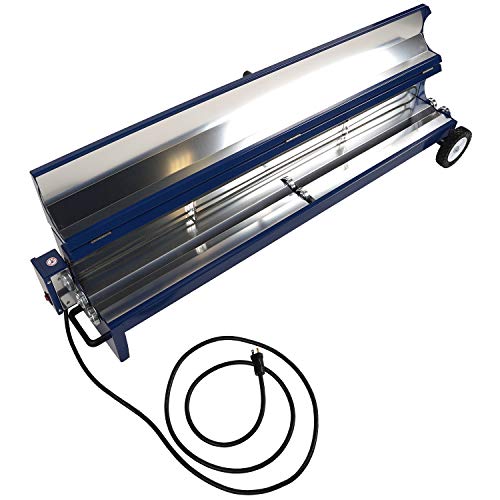
Current Tools focuses on making PVC bending straightforward for work environments. The unit promotes even heating with a highly reflective interior that supports consistent heat in all loading positions. Its design supports ½” to 4” conduit needs, balancing power (120 VAC, 2300 watts) with practical loading features. This model is noted for its practical, simple operation that suits busy job sites where repeatable bends are essential.
TEMCo TH4001 PVC Conduit Heat Blanket

TEMCo’s TH4001 uses a heat blanket approach, enabling wider bends than many standard units. The thermostat is positioned on the outside for a tighter wrap around conduit—promoting smoother bends and more precise angles. This option is particularly favored when working on longer runs or when you expect a variety of bend radii. The patent-pending blanket design broadens practical usage for complex conduit layouts.
Buying Guide: Key Purchase Considerations
- Pipe size compatibility: Confirm the heater covers your typical range (½” to 4” is common; some models are narrower).
- Heat distribution: Look for a reflective interior and insulated housing for even, efficient heating and faster cycle times.
- Loading and unloading: A full-length door or open/close mechanism reduces handling time and improves throughput.
- Temperature control: Real-time monitoring or built-in thermostats help achieve consistent bends and protect the conduit from overheating.
- Safety features: Automatic shutoffs, indicator lights, and certification (UL/CSA/ETL) reduce risk during operation.
- Power requirements: Ensure electrical compatibility with your workshop or job site, especially for higher-watt units.
- Durability and build: Heavy-duty metal construction and protective interiors can extend service life in demanding environments.
- Ease of use: For beginners, models with clear preheat steps and straightforward loading simplify training and adoption.
- Maintenance: Check for replaceable door gaskets, interior reflectivity, and availability of spare parts.
- Portability vs. stationary use: Consider whether you need a compact, transport-friendly model or a more permanent bench setup.
When selecting an electric PVC heater, consider your most frequent pipe sizes, bending angles, and job-site conditions. The models above balance performance with practical design elements, offering options that prioritize quick setup, even heating, and operator safety. For shops focused on speed, prefer units with real-time temperature metrics and robust heat distribution. For operations demanding broader bend capabilities, look toward heat blanket solutions that accommodate wider radii.