Far infrared heaters use radiant heat to warm objects and people directly, often delivering steady comfort with lower energy use. This guide highlights five top options, spanning portable space heaters, mineral heat lamps, graphene panel heaters, dual‑system hybrids, and infrared heating pads. Each entry includes practical features to consider, such as safety protections, room coverage, and control options. Use the Buying Guide at the end to compare capabilities and pick the model that best fits your space and needs.
Summary of chosen products
| Product | Brand | Key Feature | Type |
|---|---|---|---|
| Dr Infrared Heater Portable Space Heater, Original | DR. INFRARED HEATER | Infrared + PTC, 60% more heat, auto energy save | |
| KS TDP Far Infrared Mineral Heat Lamp | KS | Large 6.5″ mineral head, FDA notice, no bulb | |
| Humcalo Graphene Convection Panel Infrared Heater | Humcalo | Graphene panel, 180° heating, Wi‑Fi control | |
| DR. Infrared Heater DR-978 Dual Heating | DR. INFRARED HEATER | Hybrid dual heating, higher output, remote | |
| Pure Enrichment PureRelief Pro Far Infrared XL Heating Pad | Pure Enrichment | InfraWave therapy, large surface, deep heat |
Dr Infrared Heater Portable Space Heater, Original
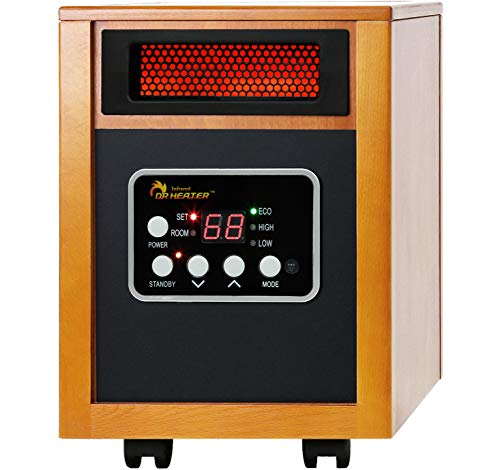
The original Dr Infrared Heater combines infrared quartz tubes with a PTC element, delivering robust warmth for large rooms. It features dual heating systems, a 12‑hour timer, and a quiet blower to spread heat evenly. The unit includes tip‑over and overheat protections, and an infrared remote for convenient control from across a room. It is designed to deliver about 5200 BTU of heat, with an energy‑saving Auto mode to balance comfort and efficiency. This model is well suited for living rooms or open‑plan spaces where steady, radiation‑based warmth is desired.
KS TDP Far Infrared Mineral Heat Lamp

This mineral heat lamp uses a 6.5-inch mineral plate to emit far infrared rays without relying on a high-temperature bulb. It combines a coil heat source with a mineral plate to achieve deep infrared penetration, supported by FDA recognition of its design. The absence of a traditional light bulb reduces maintenance, and the mineral plate offers a long service life of up to about 1,500 hours. It is intended to provide targeted warming for personal or small clinical spaces, with a focus on comfortable, extended infrared warmth.
Humcalo Graphene Convection Panel Infrared Heater

The Humcalo heater uses graphene fusion technology on a full‑width 32‑inch panel to deliver rapid warmth within 10 seconds. It combines convection and far infrared for broad, even heat distribution with a 180° coverage. Features include a programmable thermostat (41–95°F comfort mode; 34–89°F eco mode), 38% potential energy savings via PID intelligent control, and compatibility with Tuya smart home ecosystems for remote operation. The device is designed for larger rooms up to about 320 square feet and emphasizes steady, uniform heat with a focus on energy efficiency.
DR. Infrared Heater DR-978 Dual Heating

The DR-978 expands on the hybrid concept with a dual heating system that emphasizes higher heat output. It uses a larger blower to push air more effectively while maintaining low noise levels. The heater is designed with safety in mind for homes with children and pets, offering a robust 5200 BTU rating. Remote control adds convenience, allowing you to adjust settings from elsewhere in a room. This model suits medium to larger spaces where faster, more intense infrared warmth is desirable.
Pure Enrichment PureRelief Pro Far Infrared XL Heating Pad
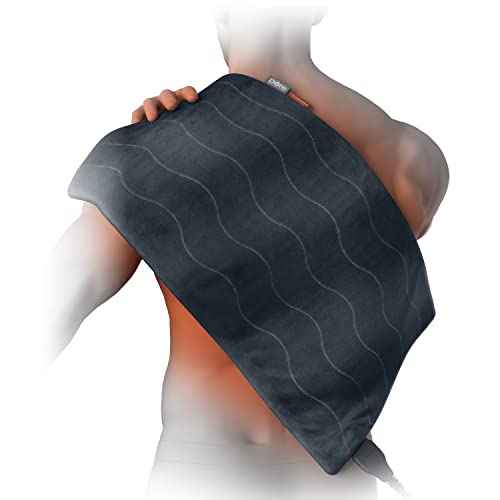
The PureRelief Pro XL heating pad uses InfraWave far‑infrared technology to deliver deep heat across a broad surface. The extra‑long 12″ x 24″ pad targets large muscle groups in the back, shoulders, neck, abdomen, and legs. It is designed to relieve pain and stiffness through improved blood flow and natural heat therapy. The cover is soft micromink, and the device offers multiple heat settings to suit different comfort levels, making it suitable for athletes and people with chronic muscular discomfort.
Buying Guide: Key Considerations For Far Infrared Heaters
- Heat delivery method: Infrared (radiant) versus convection fans. Infrared heaters warm people and objects directly, which can feel more immediate in smaller spaces, while convection heaters warm the air and may be better for consistent ambient temperature in larger rooms.
- Room size and heat output: Look at BTU or wattage specifications and consider the room’s size, insulation, and ceiling height. Higher BTU models are more suitable for larger rooms, while compact spaces benefit from portable infrared units with efficient heat transfer.
- Safety features: Prioritize tip‑over protection, overheat protection, child/pet safety, and cool‑to‑touch exteriors. A programmable timer and remote control can also improve usability while maximizing efficiency.
- Controls and smart features: Thermostats, eco modes, and Wi‑Fi or Tuya compatibility enable precise temperature management and remote operation, contributing to energy savings.
- Energy efficiency: Models with adaptive temperature control, multiple heat settings, and automatic shutoff help balance comfort with ongoing energy costs.
- Durability and warranty: Consider build quality, material durability, and warranty length. Longer warranties often indicate confidence in the product’s longevity.
- Use case variety: Heating pads and panels cater to localized pain relief or smaller zones, while portable space heaters address ambient room warming. Select based on whether you need whole‑room warmth, targeted therapy, or both.
- Maintenance: Mineral heat lamps and panel heaters typically require minimal maintenance, whereas heating pads should be checked for fabric wear and heating element integrity.
- Installation and footprint: Panels and larger units require floor space or wall mounting. Ensure your chosen model fits your room layout and safety clearance guidelines.
When evaluating options, compare the overall warmth strategy, maintenance needs, and control sophistication. The best choice aligns with your living space, climate, and preferred balance between immediate comfort and long‑term energy savings.