If you’re looking to improve fireplace safety and heat retention, fireproof ceramic fiber insulation is a smart choice. These blankets and boards resist extreme temperatures, helping protect walls, flue areas, and nearby materials. The best options below are suited for DIY fireplace upgrades, wood stoves, kilns, and pizza ovens. This guide highlights five reliable products, clarifies who benefits most, and notes practical limits to consider when planning installation.
| Product | Best For | Key Benefit |
|---|---|---|
| Cedolio 24″ x 12″ x 1″ Blanket | Wood stove baffles and pizza ovens | Withstands up to 2400°F while maintaining shape |
| Ceramic Fiber Blanket, 24″ x 15.7″ x 1″ | Fireplaces, pellet stoves, ovens | 2600°F constant temperature rating |
| Ceramic Fiber Blanket 1/4″ Thick x 16″ x 48″ | Custom insulations on curved surfaces | Flexible and low-profile insulation |
| Lynn Manufacturing 1/2″ Thick 12″ x 16″ (2-Pack) | Fireplace baffles and industrial rework | 2300°F short-term, 2100°F continuous use |
| MMasters Ceramic Fiber Blanket 24″ x 8″ x 1″ | High-heat kilns and stoves | Up to 2700°F continuous use |
Cedolio Ceramic Fiber Blanket Fireproof Insulation

Best for high-temperature performance in stoves and wood-burning setups. The blanket is rated to 2400°F and maintains its shape under flame, making it suitable for baffles and fireproof barriers in wood stoves and fireplace areas. It’s flexible and easy to cut, which helps when trimming to fit curved or irregular surfaces. The product notes mention odorless rockwool components, suggesting a cleaner installation compared with some other mineral wool options.
Best for: Homeowners planning a direct-fire surround update or a baffle repair where high heat is a factor. Consider this option if you need a robust, shape-retaining blanket that’s straightforward to work with. Limitation: some users may want to verify dimensional stability under prolonged continuous exposure beyond typical fireplace cycles.
Ceramic Fiber Blanket, 24″ x 15.7″ x 1″

This blanket offers a higher temperature rating, suitable for heavy-duty fireproof insulation tasks in fireplaces, wood stoves, and pizza ovens. Its 2600°F constant temperature makes it a strong candidate for locations that experience sustained high heat. Its broader application set includes chimneys, furnaces, boilers, and kilns, enabling versatile use across multiple high-heat projects.
Best for: Projects requiring maximum heat resistance and a large coverage area. Choose this if you expect long-duration heat exposure. Limitation: check the exact cut size feasibility for very tight spaces; larger sheets may require precise trimming and seam sealing for best performance.
Ceramic Fiber Insulation, 1/4″ Thick Blanket

Great for wrapping curved or irregular surfaces, this 1/4-inch-thick blanket balances insulation with flexibility. It withstands high temperatures and can be layered for added protection where space allows. Its lightweight nature makes it easier to handle for DIY installations around stoves and fireplaces.
Best for: Wrapping complex contours or adding a thin yet effective layer of protection. Avoid this if you need heavy-duty thickness in a single layer; multiple layers may be required for stronger insulation in extreme zones.
Lynn Manufacturing 1/2″ Ceramic Fiber Board (2-Pack)

This board-style insulation is designed for tougher environments and includes a heavier density. Rated for 2300°F short-term use and 2100°F continuous use, it’s well-suited for stoves, fireplaces, and industrial-grade applications such as forges and kilns. It’s a solid pick when a rigid board is preferred for mounting or forming a protective wall behind fuel-burning equipment.
Best for: Applications needing a rigid, fireproof panel with reliable temperature tolerance. Caution: boards can be more challenging to fit into tight geometries; plan cuts and mounting carefully to avoid gaps that reduce insulation effectiveness.
MMasters Ceramic Fiber Blanket, 24″ x 8″ x 1″
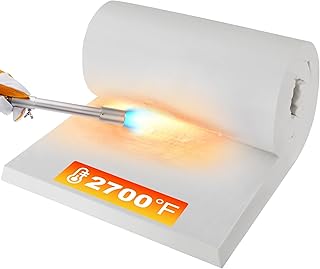
Best for extreme heat environments, this blanket handles up to 2700°F continuous use, making it suitable for kilns, high-heat stoves, and specialized forge work. It is described as durable and easy to cut, which supports quick custom fits in complex spaces. It also emphasizes chemical and physical stability over long-term use.
Best for: High-temperature, long-duration applications where the insulation must endure sustained heat. Limitation: ensure you have proper protective gear during cutting and installation to handle fibers safely.
Buying Guide: Key Considerations For Fireproof Insulation
- Temperature rating: Match the insulation’s continuous-use rating to your most demanding hot-spot. Higher ratings offer greater long-term safety margins.
- Material form: Blankets are flexible and easier to shape; boards provide rigidity for mounting; thickness and density affect both protection and handling.
- Application environment: Consider whether the part is exposed to direct flame, radiant heat, or indirect heat. Direct exposure requires higher ratings and sometimes multiple layers.
- Ease of installation: Flexible blankets are generally easier for DIY installs; rigid boards require precise cuts and secure mounting.
- Fit and coverage: Calculate area and allow for overlaps or seams. Gaps reduce insulation effectiveness and may create hot spots.
- Safety practices: Wear protective gear when cutting or handling ceramic fiber products. Follow manufacturer guidelines for installation and curing if applicable.
FAQ: Quick Answers For Buyers
- What temperature rating is best for a wood fireplace? A: For most wood fireplaces, choose insulation rated at least 2400°F continuous use, with higher ratings offering extra safety margin for longer burn cycles.
- Can I use ceramic fiber blankets on curved surfaces? A: Yes. Many blankets are flexible and can be wrapped around irregular shapes; some thickness options support tighter radii better than others.
- Is a board or blanket better for a fireplace baffle? A: Boards provide rigid support and easier mounting, while blankets offer easier shaping around curved surfaces. Choose based on space and mounting needs.
- Do these products emit odors when first heated? A: Some products mention initial odors due to binders; ensure proper curing or follow manufacturer guidance during first use when applicable.
- Can I stack multiple layers for more insulation? A: Layering is common for additional protection, but ensure the total thickness fits the installation space and that seams are properly sealed.
- Are there safety considerations during installation? A: Yes. Use gloves, eye protection, and a mask if recommended. Ceramic fiber dust can be irritating; work in a well-ventilated area.