If you’re heating a garage or workshop with a vertical venting setup, you’ll want units that pair clean combustion with reliable vertical vent options. This guide highlights five top choices designed for vertical or ceiling-mounted venting, spanning natural gas garage heaters and robust vent-capable models. Each product is evaluated on heat output, venting compatibility, installation ease, and practical room coverage to help you select a dependable garage heater for American spaces.
| Product | Brand | BTU / Capacity | Vent Type | Notes |
|---|---|---|---|---|
| Mr. Heater F102848 4 Inch Vertical Vent Kit | Mr. Heater | N/A | Vertical vent kit | Essential accessory for vertical venting on compatible units |
| Mr. Heater MHU80NG Big Maxx | Mr. Heater | 80,000 BTU | Vertical or horizontal with kit options | Widely used for large garages |
| Mr. Heater MHU50NG Big Maxx | Mr. Heater | 50,000 BTU | Vertical or horizontal with venting | Compact option for mid-size spaces |
| Reznor UDXC-100 | 1HVAC | 105,000 BTU (rated) | Vertical Cat 1 B-Vent Kit | Commercial-grade ceiling/vent options |
| Reznor UDXC-60 | 1HVAC | 60,000 BTU | Vertical Cat 1 B-Vent Kit | Ceiling-mount capable for garages |
Note: Each option supports vertical venting in different capacities and applications. The following sections provide detailed product insights, focusing on vertical venting compatibility, installation considerations, and suitable coverage areas.
Mr. Heater F102848 Vertical Vent Kit

The F102848 kit is designed to support vertical venting for specific Mr. Heater Big Maxx systems. It includes components such as a roof flashing and a 3″ to 4″ adapter, facilitating a clean vertical exhaust path. This kit is particularly useful for garages with ceiling or roof venting requirements and can enhance vent install options for compatible MHU heaters. Installation should follow the product’s specifications and local code requirements, ensuring safe clearance and proper exhaust venting away from occupied spaces.
Mr. Heater F260550 Big Maxx MHU50NG
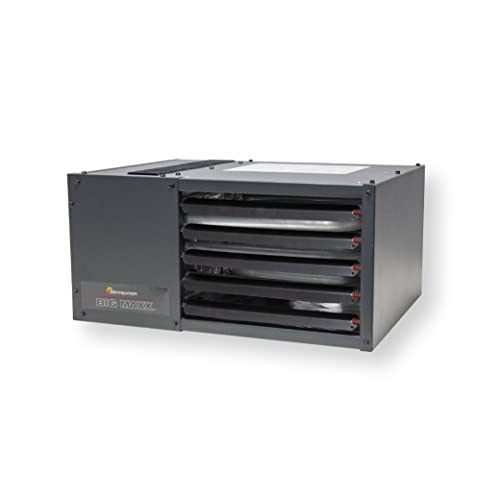
The MHU50NG Big Maxx is a natural gas unit heater designed for garages and shops. With a listed 50,000 BTU output, it can heat spaces efficiently up to roughly 1,250 square feet depending on insulation and climate. The unit supports flexible venting options, including vertical exhaust configurations, making it suitable for ceiling vent installations. It prioritizes accessible thermostat and gas connections for serviceability. When venting vertically, ensure a proper vertical chase and clearances per the manufacturer and local codes to maintain safe operation.
Mr. Heater F260560 Big Maxx MHU80NG
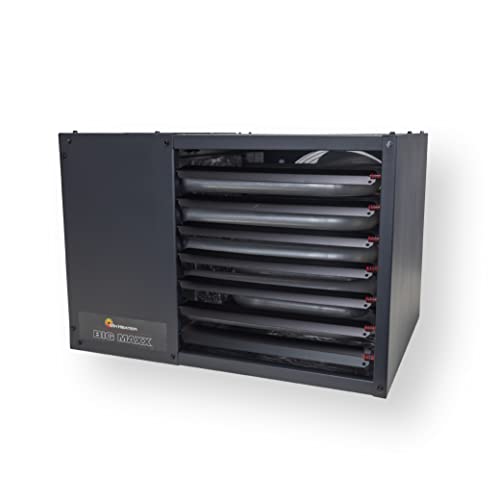
The 80,000 BTU Big Maxx MHU80NG is designed for larger garages and workshops. It is a natural gas heater with a compact footprint and robust heating capacity. Vertical venting is supported through appropriate venting kits and hardware, offering installation flexibility when ceiling mounting is the preferred option. This heater is commonly paired with a thermostat and venting system capable of handling higher exhaust flow, ensuring safe and efficient operation in well-ventilated spaces. Careful heat zoning and proper clearance are essential for optimal performance.
Reznor UDXC-100 Vertical Vent Kit

The Reznor UDXC-100 is a ceiling-mounted gas unit designed for indoor garages, shops, or warehouses. With a 105,000 BTU capacity (thermally efficient at about 83%), this unit provides strong heating output for larger spaces. It uses a vertical cat 1 B-vent kit for exhaust, enabling a vertical venting configuration. Mounting points include four suspension points, and the kit supports ceiling or wall mounting depending on the bracket used. This unit is aimed at commercial-grade projects requiring high heat output and reliable vertical venting performance.
Reznor UDXC-60 Vertical Vent Kit
The Reznor UDXC-60 is a 60,000 BTU unit designed for indoor garage and shop environments. It features a vertical Cat 1 B-vent kit for ceiling-mounted or specialized vertical exhaust configurations. Performance at this size suits medium-to-large garages that require steady, consistent heat without excessive footprint. As with other vertical venting setups, ensure proper venting clearances, bracket compatibility, and ceiling mounting provisions to maintain efficient operation and safety.
Buying Guide: Key Purchase Considerations for Vertical Venting Garage Heaters
- Venting compatibility: Confirm that the heater is compatible with vertical venting and the specific vent kit required (e.g., Cat 1 B-vent for ceiling mounting). Some models ship with venting accessories; others require separate kits.
- Heat output and space sizing: BTU ratings indicate potential coverage; larger spaces demand higher BTU units (e.g., 60k–105k BTU) and may warrant multiple zones for even distribution.
- Vent routing and clearance: Vertical venting requires a safe vent path from unit to exterior. Plan for roof or ceiling routes, clearances from combustibles, and proper termination to prevent backdrafts.
- Fuel type and utility access: Natural gas models offer steady cost efficiency but require gas line availability and professional installation. Propane options may require different venting considerations.
- Installation flexibility: Ceiling-mounted or vertical-vent options can influence ceiling height, support brackets, and available space. Ensure the mounting system supports the chosen configuration and weight.
- Maintenance and serviceability: Look for units with accessible thermostat terminals, clean combustion assemblies, and straightforward service access to minimize downtime.
- Safety features: Overheat protection, proper gas shutoff, and venting integrity are essential. Verify ETL orCSA/UL listings and local code compliance for garage installations.
- Noise and airflow characteristics: Some units can produce noticeable fan or blower noise. Consider sound levels in the context of the garage’s use and nearby living spaces.
- Energy efficiency: Higher efficiency ratings reduce operating costs over time. For large spaces, deliberate zoning and thermostat control can optimize energy use.
- Professional installation recommendations: Vertical venting often benefits from professional assessment and installation to ensure safe vent runs, proper clearances, and compliance with building codes.
These considerations help balance upfront installation complexity with long-term operation, ensuring a safe and effective vertical-venting setup for American garages and workshops.