Gas heater built-in systems offer steady heat without relying on electricity, making them ideal for backup power scenarios or spaces where traditional furnaces aren’t practical. This guide highlights five reliable options, from vent-free infrared plaques to ceiling-mounted forced-air units, to help you choose the right fit for your space. Suitable buyers include: homeowners seeking energy-efficient supplemental heat, garage or workshop users needing robust warmth, and apartment dwellers needing safe, space-saving heaters. Below is a quick buying table to compare the five suggested products at a glance.
| Product | Best For | Key Benefit |
|---|---|---|
| Mr. Heater 30,000 BTU Vent Free Blue Flame | Medium to large living spaces | High BTU output for quick warming |
| ProCom MN300HPA-B 30,000 BTU | Non-electric operation needs | Oxygen Depletion Sensor and manual control |
| Mr. Heater 9,000 BTU Portable Buddy | Small rooms, indoor/outdoor use | Compact and portable radiant heat |
| Mr. Heater 50,000 BTU Forced-Air | Garages, barns, workshops | Large-space heating with thermostat compatibility |
| ProCom MN100TPA-B 10,000 BTU | Small rooms, offices | Compact infrared heat with thermostat control |
Mr. Heater 30,000 BTU Vent Free Blue Flame Natural Gas Heater

The 30,000 BTU vent-free blue flame heater is designed for larger living spaces up to about 1,000 square feet. It uses natural gas and features a battery-operated electronic ignition. Best for: spaces where steady, cost-efficient heat is needed without electrical power; mid-sized living rooms or open-plan areas. Limitation: vent-free operation means it releases combustion byproducts inside; ensure proper ventilation per installation guidelines.
ProCom MN300HPA-B 30,000 BTU Ventless Infrared Plaque Heater
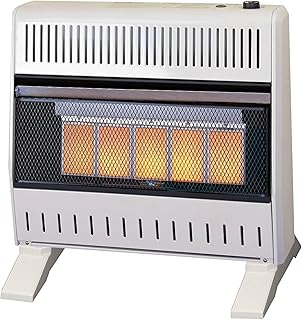
This 30,000 BTU infrared plaque heater heats up to 1,200 square feet and operates on natural gas only, with no electricity required. It includes manual control with three heat settings and an Oxygen Depletion Sensor with automatic shut-off. Best for: spaces that need heat when electricity is unavailable; larger rooms in homes or cabins. Limitation: combustion exhaust must be vented to comply with safety standards; consider room size and venting requirements carefully.
Mr. Heater 9,000 BTU Portable Buddy Radiant Propane Heater

The Portable Buddy provides 4,000 to 9,000 BTU radiant heat and is suitable for indoor and outdoor use, warming up areas around 225 square feet. Best for: portable heating in small living areas, workshops, or outdoor spaces. Limitation: propane fuel dependence requires safe storage and ventilation; not ideal for very large rooms.
Mr. Heater 50,000 BTU Forced-Air Unit Heater

This ceiling-mounted forced-air unit heater delivers 50,000 BTU to heat up to about 1,667 square feet, suitable for garages, barns, and larger workshops. Best for: spaces needing quick, robust heat with wide coverage. It supports standard 24-volt thermostats and newer Wi-Fi-enabled thermostats sold separately. Limitation: installation is designed for permanent mounting; verify ceiling clearance and duct compatibility before purchase.
ProCom MN100TPA-B 10,000 BTU Infrared Heater
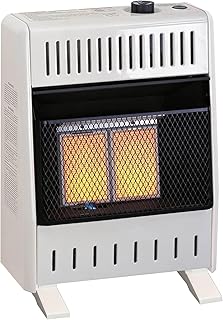
This 10,000 BTU infrared heater heats up to 500 square feet and offers thermostat control with High/Medium/Low settings. Best for: small-to-medium rooms needing quiet, steady heat with simple control. Limitation: infrared heat is directional; optimize placement for uniform warmth and be mindful of nearby combustibles.
Buying Guide: Gas Heaters Built In
What space and fuel type do you prefer? Ventless infrared heaters are great for electricity-free zones or zones with limited wiring, while vent-free blue flame and forced-air units deliver faster warmth for larger spaces. Consider room size, ceiling height, and ventilation requirements before selecting a model.
Which heater delivers the best efficiency? Infrared models focus heat where you need it by warming objects and people rather than air volume, while blue flame and gas-forced-air units can heat a room more quickly but may require more ventilation and space planning.
What about safety features? Look for Oxygen Depletion Sensor (ODS) with automatic shut-off, battery or piezo ignition, and proper tip-over or tilt switches. For larger garages or workshops, a ceiling-mounted unit with thermostat compatibility can help maintain consistent temperatures.
Installation considerations: vent-free units should be installed with adequate ventilation to avoid buildup of combustion byproducts. Where possible, have a licensed professional review ventilation, clearance from combustibles, and proper mounting or placement requirements. If you plan to shift heat between rooms, consider models with adjustable heat settings and clear control interfaces.
FAQ
- What does BTU mean and how do I size a heater? BTU stands for British Thermal Units. Higher BTU indicates more heat; select a size that matches the room’s square footage and insulation level.
- Are vent-free gas heaters safe for indoors? When installed correctly with proper ventilation and sensors, vent-free units can be safe for indoor use. Always follow the manufacturer’s installation guidelines and local codes.
- Do these heaters require electricity? Some models run on natural gas only with no electricity, while others use electricity for ignition or control. Choose based on whether power reliability matters in your space.
- Can I install a gas heater myself? Installation should follow local codes and product instructions. For ceiling-mounted or venting-related installations, professional assistance is often recommended.
- Which heater is best for a garage? A high-BTU, forced-air unit or a large vent-free option generally suits garages best due to larger space and faster heat distribution.
- Do these units require venting? Vent-free units typically do not require a vent hood, but they must be installed with proper ventilation per safety guidelines and local codes.