Answering the search for efficient, reliable home heating, this guide highlights five top choices across ventless gas fireplaces, dual‑fuel inserts, and electric options. Each selection targets a different buyer type—from compact spaces to larger living areas and from strict heat focus to decorative ambiance. The table below helps compare core specs at a glance.
| Product | BTU / Size | Fuel Type | Best For |
|---|---|---|---|
| ProCom Ventless 25,000 BTU Space Saving Dual Fuel Fireplace | 25,000 BTU, 1,100 sq ft | Natural Gas or Propane (dual fuel) | Small to mid rooms, budget-conscious heating |
| Duluth Forge Dual Fuel Ventless Gas Fireplace Insert FDI32R | 32,000 BTU | Natural Gas or Propane (dual fuel) | Medium to large rooms, flexible fuel choice |
| Duraflame Freestanding Electric Fireplace Stove | Infrared heat for up to 1,000 sq ft | Electric | apartments or rooms with no gas line, visual flame realism |
| Mr. Heater 30,000 BTU Vent Free Blue Flame | 30,000 BTU | Propane | Basements, workshops, high‑heat needs |
| Duluth Forge DLS-24T-2 Dual Fuel Logs Set | 33,000 BTU (logs set) | Natural Gas or Propane (dual fuel) | Existing fireplaces needing an upgrade with dual fuel |
ProCom Ventless 25,000 BTU Dual Fuel Fireplace
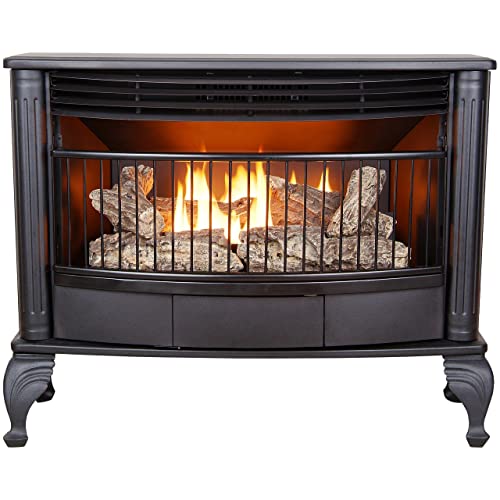
Best for compact living spaces where venting isn’t available. This ventless unit delivers up to 25,000 BTUs, heating roughly 1,100 square feet, which makes it suitable for small-to-mid rooms. Its thermostat‑operated control allows tailored warmth without manual adjustments. The realistic hand‑painted logs and durable refractory ceramics contribute to a premium look and extended lifespan. Best for homeowners who want dependable heat with simple setup and no chimney requirements. Caution: ventless fireplaces rely on indoor air for combustion, so ensure proper room ventilation and follow local safety guidelines.
Duluth Forge Dual Fuel Ventless Fireplace Insert FDI32R

Best for larger spaces that require flexibility in fuel source. The 32,000 BTU insert works with either natural gas or propane and heats up to 1,500 square feet. A remote control with LCD screen adds convenient operation, while the 9 hand‑painted ceramic logs and mesh screen enhance realism. Choose this if you want dual‑fuel capability without external ducts and prefer remote heat management. Limitation: remote control operation relies on battery power and may require regular battery changes.
Duraflame Freestanding Electric Fireplace Stove

Best for versatile, ventless ambiance with supplemental heat. This electric stove simulates a classic fireplace look with 3D flame effects and glowing logs, capable of heating up to about 1,000 square feet. It’s portable, easy to relocate, and avoids combustion by using electricity. This makes it ideal for apartments or rooms without gas service, especially when you want a cozy aesthetic with reliable heat. Caution: electric heaters may add to electrical load; verify circuit capacity in small spaces.
Mr. Heater 30,000 BTU Vent Free Blue Flame

Best for high‑heat needs in spaces without ducting. The vent‑free blue flame heater delivers 30,000 BTUs and can heat up to 1,000 square feet. It uses battery‑operated electronic ignition for easy startup. Ideal for garages, basements, or poorly insulated areas where robust heat output is essential. Limitation: vent‑free units add moisture and combustion byproducts to indoor air, so ensure room ventilation and CO monitoring where applicable.
Duluth Forge FDF400RT-ZC Dual Fuel Insert

Best for upgrading an existing fireplace with dual fuel capability and a built‑in remote. This 32,000 BTU unit heats up to 1,500 square feet and supports natural gas or propane. The remote with LCD and standing pilot allows convenient control, while the 6 hand‑painted logs and sprayed brick liner provide a refined look. Choose this if you want modern thermostat control and a larger room heating option. Caution: installation must comply with ventless appliance guidelines and space needs adequate clearance.
Buying Guide: Key Purchase Considerations
What size space do you intend to heat? Compare BTU ratings to your room square footage and consider insulation. Ventless gas options work best in well‑ventilated spaces; electric models are ideal where gas isn’t available. Do you value dual‑fuel capability for flexibility, or a dedicated heat source for ambiance? Remote controls and thermostat features can simplify operation, but check battery life and maintenance requirements. For existing fireplaces, look at log sets and inserts designed for your fireplace opening to maximize heat output and realism.
Practical Questions And Answers
- What is the advantage of dual‑fuel units? They offer flexibility to use either natural gas or propane, increasing availability and installation options.
- Do ventless units require ventilation? Yes, ensure proper room ventilation and follow safety guidelines; these units rely on indoor air for combustion.
- Is electric heat a good substitute? Electric models provide ambiance and zone heating without flames or combustion byproducts, suitable for apartments or spaces without gas lines.
- How important is remote control? Remote operation improves comfort, especially for large rooms or installations without easy access to the unit.
- What maintenance is needed? Regularly inspect for gas line integrity, keep logs and burners clean, and replace batteries in remotes as needed.
- Can these products be used in existing fireplaces? Some log sets are designed to fit specific fireplace openings; verify compatibility with your existing unit before purchase.
FAQ
- Are ventless gas heaters safe for living rooms? When installed according to manufacturer instructions and local codes, they are widely used; ensure proper ventilation and CO monitoring as required.
- What rooms are best suited for a 32,000 BTU insert? Medium to large rooms up to about 1,500 sq ft, depending on insulation and layout.
- Can dual fuel logs be used with natural gas only? Dual fuel units can operate on natural gas or propane, depending on your supply and installation.
- Do electric fireplaces provide real heat? They offer supplemental heat through infrared or convection but are not a primary heating source for very cold spaces.
- Should I choose a freestanding electric stove or a ventless gas insert? Freestanding electric stoves are easiest to install and relocate; gas inserts require venting considerations but may deliver more heat per hour.
- What safety features should I look for? Thermostat control, oxygen depletion sensors, and a reliable ignition system are important for safe operation.