Gas radiant heaters offer reliable, cord-free warmth ideal for garages, workshops, cabins, and outdoor spaces. This guide features five top options, designed to deliver fast heat, even warmth, and safety features for ventilated areas. Each heater uses propane or natural gas, with portability or wall-mount options to match different spaces and needs. Below, compare key specs, performance notes, and safety features to help you choose the right gas radiant heater for your environment.
| Product | BTU / Heating Area | Fuel Type | Portability | Key Safety |
|---|---|---|---|---|
| Gasland MHA18BN | 18,000 BTU; up to 450 sq. ft | Propane | Portable with wheels | Tip-Over and Low Oxygen Shut-off |
| Gasland MHA18W | 18,000 BTU; up to 450 sq. ft | Propane | Portable with wheels | Tip-Over and Low Oxygen Shut-off |
| Mr. Heater 20,000 BTU Dual Fuel | 20,000 BTU | Propane/Natural Gas | Portable | Dual Fuel, Low Oxygen Detection |
| Mr. Heater 30,000 BTU Wall Unit | 30,000 BTU | Propane | Wall-mounted | Infrared Heating; High Efficiency |
| Bluegrass Living 20,000 BTU | 20,000 BTU; up to 950 sq. ft | Natural Gas | Wall mount or floor base | Thermostat Control |
The products below were selected for broad coverage of use cases, including portable garages, workshops, and larger spaces. Each entry includes a concise overview of features and practical considerations to help you compare options quickly.
Gasland MHA18BN Propane Radiant Heater

The Gasland MHA18BN delivers 18,000 BTU of radiant heat suitable for spaces up to 450 square feet. It runs on propane and does not require electricity, with portability enhanced by built-in wheels and a carry handle. Safety features include Tip-Over and Low Oxygen Shut-off, which activate if the unit is knocked over or oxygen levels become too low. The cabinet design houses the propane tank for a tidy appearance and easier transport, making it a practical choice for ventilated garages, workshops, and construction sites.
Key considerations: ensure adequate ventilation in the space, verify fuel availability (20 lb LP cylinder recommended), and confirm that the area is within the heater’s rated coverage. This model balances portability with steady radiant warmth for non-electrical operation.
Gasland MHA18W Propane Radiant Heater
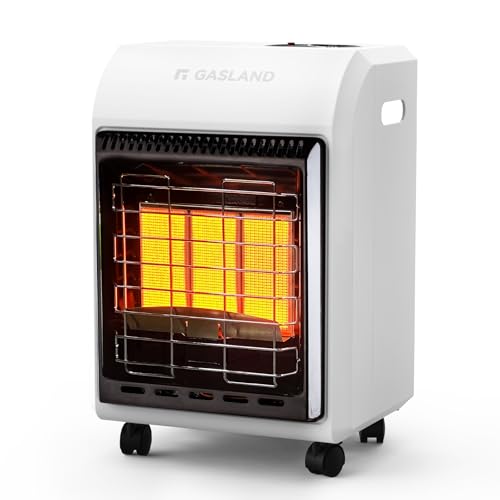
Similar to the BN variant, the MHA18W provides 18,000 BTU for spaces up to 450 sq. ft. It emphasizes safety with Tip-Over and Low Oxygen Shut-off and offers a mobile, space-saving design with wheels and an integrated carrying handle. The cabinet conceals the tank, improving aesthetics and mobility. No electrical power is required, which reduces electricity bills and ensures continued warmth during outages in ventilated areas.
Key considerations: ensure the space allows safe operation of a propane unit, check clearances around vents, and plan for vented use rather than enclosed rooms. This model is well-suited for garages, workshops, and job sites where mobility matters.
Mr. Heater 20,000 BTU Dual Fuel Radiant Heater

This dual-fuel unit offers 20,000 BTU and supports both propane and natural gas, expanding fuel flexibility. It includes low-oxygen detection to enhance safety in poorly ventilated spaces and a thermostatic control for precise temperature management. A battery-operated electronic spark ignition provides reliable start-up where power may be limited. The dual-fuel capability is advantageous in scenarios where natural gas is readily available but propane provides portability for temporary spaces.
Key considerations: verify gas availability and installation requirements for your space, and evaluate whether a portable or fixed configuration better matches your layout. This heater is a strong option for mixed-fuel environments or spaces without consistent electrical power.
Mr. Heater 30,000 BTU Wall Radiant Propane Heater

This 30,000 BTU propane radiant heater is designed for fixed installation, delivering strong, sun-like warmth to large areas such as sunrooms, additions, or cabins. Infrared technology heats objects and people directly, offering efficient warmth with broader coverage, up to 1,000 square feet. The unit emphasizes fuel efficiency, consuming roughly 1.389 pounds of propane per hour, and requires a minimum 20-pound LP cylinder for optimal performance. It is ideal where a permanent heat source is preferred.
Key considerations: ensure structural mounting suitability, verify venting and clearance requirements, and plan for propane fuel logistics in larger spaces. Suitable for spaces needing steady, zoned heat with minimal electrical reliance.
Bluegrass Living B20TNIR-BB Ventless Natural Gas Infrared Heater

The Bluegrass Living B20TNIR-BB is a ventless infrared space heater rated at 20,000 BTU, designed to heat up to 950 square feet. It includes a thermostat for Low/Med/High control, making it versatile for living rooms, offices, or larger work areas. The design supports wall mounting or base feet for floor placement, offering flexibility in installation. The infrared approach warms people and objects directly, creating a comfortable environment with efficient heat distribution.
Key considerations: ventless operation requires careful space planning to ensure proper air quality and clearance; confirm local code compliance for ventless appliances, and consider ambient temperature needs when selecting BTU capacity.
Buying Guide: Key Purchase Considerations
- Space and layout: Calculate square footage to match the heater’s heating capacity. Larger spaces benefit from higher BTU models or wall-mounted infrared heaters.
- Fuel type and availability: Propane is common for portability; natural gas suits fixed installations. Consider cylinder size, fuel cost, and delivery logistics.
- Ventilation and safety: Most gas radiant heaters require adequate ventilation. Look for safety features such as tip-over shut-off, oxygen depletion sensors, and low-oxygen shut-offs for safer operation in enclosed or semi-enclosed spaces.
- Electrical independence: If power outages are a concern, prioritize models that operate without electricity or offer dual-fuel options with reliable ignition systems.
- Heat distribution: Infrared heaters warm objects and people directly, which can feel different than convection models. Consider whether you want wall mounting or portable units for flexible heat zones.
- Installation and maintenance: Fixed-wall units may require professional installation and venting considerations, while portable models emphasize portability, maneuverability, and storage of tanks.
- Operational costs: Compare fuel efficiency, runtime per cycle, and the practicality of refueling during extended use or outdoor conditions.
- Climate and usage scenarios: For garages, workshops, and outdoor spaces, balance heat output with wind exposure and sheltering to maximize effectiveness.