When pipes risk freezing, a reliable heat wrap or heat tape is essential. This guide highlights five top options for American homes, clarifying who each product is best for and why. Ideal buyers include homeowners in freezing climates, DIY enthusiasts, and those needing quick, low-effort freeze protection for metal or plastic pipes.
The following quick-reference table lists the chosen products and their key strengths to help you compare at a glance.
| Product | Best For | Why It Stands Out |
|---|---|---|
| Frost King HC6A Automatic Electric Heat Kit | Budget-friendly basic protection | Simple 6 ft cable, keeps water flowing to -40°F |
| MAXKOSKO 6ft Self-Regulating Heat Tape | Energy-efficient, flexible installations | Self-regulating, thermostat, versatile installation options |
| 3rd Product 50FT Pipe Heating Cable (B0BK23HW69) | Heavy-duty, long runs | Industrial-grade construction, wide coverage |
| 4″ x 50′ Exhaust Wrap (B0F7JGPF5M) | High-heat applications beyond pipes | Basalt fiber for exhaust/heat shielding |
| 4th Product 100FT Roof And Gutter Kit | Combined roof/de-icing and pipe protection | Self-regulating, long length for gutters and pipes |
Frost King HC6A Automatic Heat Kit Heating Cables

Features: 6 ft length, 120V, 7W/ft. Keeps water flowing down to -40°F, suitable for metal and plastic water pipes. This kit is a straightforward, ready-to-install option aimed at homeowners needing a reliable, budget-friendly solution for short pipe runs. Best for: small-scale protection, immediate use, and areas with limited space. Limitation: longer runs or high-heat environments may require additional length or supplemental protection.
MAXKOSKO 6ft Self Regulating Heat Tape
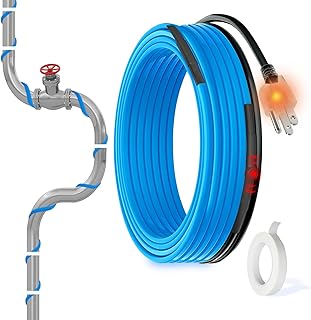
Features: 5W/ft, 120V, self-regulating heat tape with thermostat, designed to keep water flowing at -40°F. Includes a 3 ft power cord, with options to order longer lengths for custom runs (e.g., 30 ft cable plus 3 ft cord total 33 ft). Best for: installations requiring energy-efficient, automatic warmth that adjusts to temperature. Better for: longer pipe runs and varied layouts. Caution: self-regulating cables still need proper clearance and mounting to avoid overheating in tight bends.
Industrial-Grade Pipe Heating Cable (50–200 ft variants)
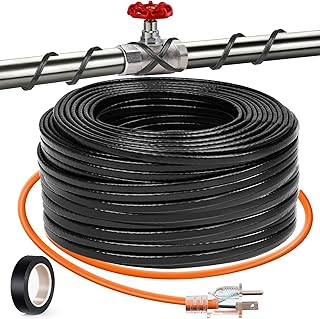
Features: 5W/ft, -40°F freeze protection for metal and plastic pipes, aluminum shield, TPE jacket with UV and chemical resistance, IP67 rating. Includes a 5 ft grounded plug with indicator light. Best for: exposed or coastal environments needing robust protection and long service life. Better for: long runs and outdoors where moisture and sunlight are concerns. Caution: do not use on fuel lines or gutters where water exposure cannot be controlled.
<a href="https://www.amazon.com/sspa/click?ie=UTF8&spc=MTo4NDQwMDc2NjM1NjU1OTYzOjE3ODg5MjM5OTg6c3Bfc2VhcmNoX3RoZW1hdGljOjMwMTMwNTMzMDcyNjcwMjo6MDo6&url=%2FTitanium-Basalt-Fiber-Exhaust-Self-Locking%2Fdp%2FB0F7JGPF5M%2Fref%3Dsxin_15_pa_sp_search_thematic_sspa%3Fcontent-id%3Damzn1.sym.f3ef5b6e-928d-46a7-b777-dc583fd8199d%253Aamzn1.sym.f3ef5b6e-928d-46a7-b777-dc583fd8199d%26cv_ct_cx%3Dheat%2Bwrap%2Bfor%2Bpipes%26keywords%3Dheat%2Bwrap%2Bfor%2Bpipes%26pd_rd_i%3DB0F7JGPF5M%26pd_rd_r%3D12433199-d103-4839-8a0a-22a71018821d%26pd_rd_w%3DlWUB2%26pd_rd_wg%3DoRlFv%26pf_rd_p%3Df3ef5b6e-928d-46a7-b777-dc583fd8199d%26pf_rd_r%3DMCW6Y25CBQEVH9GHP5E3%26qid%3D1788923998%26sbo%3DRZvfv%252F%252FHxDF%252BO5021pAnSA%253D%253D%26sr%3D1-1-6024b2a3-78e4-4fed-8fed-e1613be3bcce-spons%26aref%3D1L3x7mgozC?tag=desurf-20
Note: This product is an exhaust wrap and not a primary pipe freeze protection option. It offers high-temperature insulation for headers and manifolds and can be used in conjunction with dedicated pipe heat tape in mixed systems. Best for: heat management in engines and exhaust paths, not a standalone domestic water pipe solution. Limitation: not designed solely for cold-weather pipe freeze prevention.
Buying Guide
What kind of heat wrap or heat tape do I need?
For residential water pipes, choose a self-regulating heat tape or a simple fixed-output heat cable. Self-regulating options adjust power based on temperature, reducing energy use and risk of overheating. Fixed-output cables offer consistent warmth, useful for shorter, straightforward runs.
What pipe materials and lengths matter?
Most cables work with metal and plastic pipes, including copper, PVC, and PEX. Measure the total length of exposed pipe and factor in bends, corners, and any corners where the cable may not lay flat. Longer runs may require multiple heat sections or a longer continuous length.
Where should the heat wrap be installed?
Apply heat tape along the exterior of the pipe, following the manufacturer’s instructions for spacing and overlapping. Avoid covering valves, joints, or areas prone to moisture buildup where insulation could trap humidity. Mounting should be secure but not overly tight, allowing some flexibility for expansion and contraction.
What safety considerations are important?
Ensure cables have a grounded plug and a proper power cord length that keeps the thermostat or controller within reach. Do not use heat tape on fuel lines or anywhere water drainage is uncertain. Keep cables away from flammable materials and ensure outdoor installations comply with local electrical codes.
Should I choose a roof or gutter kit alongside pipe protection?
If you live in regions with ice dam risk, a roof de-icing kit can complement pipe protection. Self-regulating options designed for roofs often include longer lengths and mounting hardware suited for gutters, helping prevent ice buildup that can stress exterior piping.
Energy use and reliability considerations
Self-regulating tapes typically consume less energy because they respond to ambient temperature. For long pipe runs or complex layouts, a kit with a longer length and a thermostat can simplify installation and reduce wasted heat.
Installation tips for best results
- Plan the layout to minimize overlaps and gaps where cold air could enter.
- Test the system before sealing insulation to verify warmth along the entire length.
- Keep the thermostat or controller easily accessible for adjustments during harsh weather.
FAQ
- What is the typical temperature range for these heat wraps? Most units protect pipes down to about -40°F, depending on the model.
- Can I install heat tape on plastic pipes? Yes, many tapes are rated for plastic pipes, but verify compatibility with your specific material.
- Do heat wraps require professional installation? Basic setups can be DIY, but consult an electrician for complex or outdoor installations.
- How long should a heat cable be relative to pipe length? Plan for the full exposure length plus a few extra inches for secure mounting and ends.
- Are there safety certifications I should look for? Look for products with built-in thermostats, grounding, and weather-resistant jackets for outdoor use.
- Can heat tape be used on gutters? Some kits are designed for gutters, but do not use pipe heating cables on fuel lines or areas with standing water.