When you want to prevent burst pipes and keep water flowing in freezing weather, a pipe heating cable is the right tool. This guide highlights five reliable options and explains who each is best for. The selections emphasize ease of use, durability, and effective freeze protection for both metal and plastic pipes. Read on to compare features, ideal applications, and practical cautions to help you choose with confidence.
| Product | Pipe Type | Best For | Key Benefit |
|---|---|---|---|
| Frost King HC3A | Metal & Plastic Pipes | Small, inline protection | Simple 3-foot solution |
| Frost King HC6A | Metal & Plastic Pipes | Longer runs | Extra length for extended coverage |
| 50FT Pipe Heating Cable (B0BK23HW69) | Metal & Plastic Pipes | Whole-pipe protection | Industrial-grade construction |
| MAXKOSKO 6ft Self-Regulating | Metal & Plastic Pipes | Economy with smart control | Self-regulating, energy-saving |
| Cupohus 6FT With Thermostat | Metal & Plastic Pipes | Controlled heating | Thermostat-controlled cycling |
Frost King HC3A Automatic Heat Kit, 3 Feet

Best for compact spaces or short pipe runs, the Frost King HC3A provides 3 feet of 120V heat at 7W/ft. It protects water flow down to -40°F and works on both metal and plastic pipes. This model is ideal for small basements, crawl spaces, or under sinks where space is limited.
Who it’s best for: homeowners needing a quick, affordable fix for short pipes. Why selected: lightweight, straightforward installation. Caution: not suited for long pipe sections without adding additional length coverage.
Frost King HC6A Automatic Heat Kit, 6 Feet

This option extends coverage to 6 feet, maintaining water flow down to -40°F for both metal and plastic pipes. It’s better for longer runs or areas with more exposed piping where a longer cable reduces gaps in protection. The setup remains simple for a DIY installation.
Who it’s best for: homeowners protecting longer sections of pipe or uniform coverage along a run. Why selected: reliable brand, straightforward wiring. Caution: ensure the entire length is properly secured to prevent snagging or kinking observed in tight spaces.
50FT Pipe Heating Cable with Shielded Build
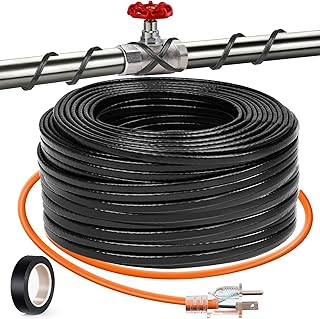
Designed for larger applications, this 50-foot cable offers robust protection for water-filled pipes. It uses an aluminum shield and a TPE jacket for moisture, chemical, and UV resistance, plus a 5W/ft output to keep pipes above freezing without excessive energy use.
Who it’s best for: properties with longer or exposed pipe runs that require industrial-grade construction. Why selected: durable shielding and full-length coverage. Caution: the data warns against using on fuel lines or gutters where overheating could occur, so install away from heat-sensitive areas.
MAXKOSKO 6ft Self-Regulating Heat Tape
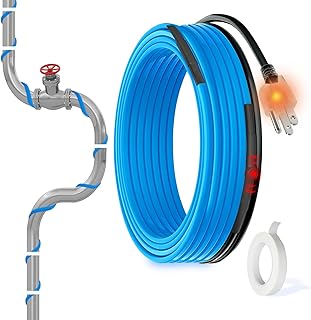
MAXKOSKO’s 6-foot kit uses self-regulating technology to prevent overheating while maintaining protection down to -40°F. It’s best for energy-conscious buyers who want reliable performance in moderate-length piping runs. A 3-foot power cord provides flexibility in placement of the thermostat.
Who it’s best for: budget-minded households seeking automatic regulation and straightforward installation. Why selected: energy-saving design and self-regulation. Caution: effectiveness depends on proper mounting and full contact with the pipe; gaps can reduce efficiency.
Cupohus 6FT Pipe Heating Cable With Thermostat

Cupohus combines a 6-foot heating cable with a thermostat for controlled cycling between heating and resting. This setup is well-suited for outdoor pipes or locations where consistent, moderate heat is desirable. It aims to keep water flowing even during severe cold spells.
Who it’s best for: users needing thermostat-managed, longer-run protection. Why selected: explicit thermostat control and safety features. Caution: ensure the external power outlet is protected by a GFCI to prevent shocks in damp environments.
Buying Guide
What to consider when choosing pipe heating tape
- Length and coverage: match the cable length to the pipe run to avoid gaps in protection.
- Voltage and wattage: most common options are 120V; higher wattage provides faster heat but uses more energy.
- Self-regulating vs fixed-output: self-regulating cables adjust heat output to the pipe temperature, reducing overheat risk.
- Casing and durability: look for UV, chemical, and moisture resistance if exposed to outdoor or harsh environments.
- Safety: ensure proper grounding and use GFCI outlets where required to prevent electrical shock.
- Installation constraints: some tapes work better on metal pipes, others on plastic; confirm compatibility.
- Cautions and limitations: avoid fuel lines or gutters unless specified; improper placement can cause overheating or electrical issues.
FAQ
- Can pipe heating tape be used on outdoor exposed pipes?
Yes, but choose models with outdoor-grade jackets and moisture resistance. - What is the typical temperature protection range?
Most tapes protect down to -40°F, depending on model and pipe material. - Do I need a thermostat or can I use a simple heating cable?
A thermostat can improve energy efficiency and prevent overheating in long runs. - Is self-regulating tape safer for DIY installations?
Generally yes, as it lowers the risk of hot spots on the pipe surface. - What maintenance is required after winter?
Inspect cables for wear, ensure connections remain secure, and store cables properly when not in use.