Answering the need for compact, under-cabinet warmth, these kickspace heaters deliver focused heat to small kitchens, bathrooms, stairwells, and vanity areas. Best for homes with limited floor space, renters seeking easy installs, and anyone wanting quick warm air at floor level. This guide highlights five reliable options, with clear pros, potential limitations, and who each heater suits best. The table below compares the key details at a glance.
| Product | Max BTU / Heat Area | Power Type | Best For |
|---|---|---|---|
| Twin-Flo III K84 Hydronic Kickspace Heater (Morris) | 8,400 BTU | Hydronic (hot water) | Small kitchens and baths with existing hot-water system |
| Beacon Morris Hydronic Kickspace Heater (K84-1) | 10,360 BTU | Hydronic | Medium spaces; US-made reliability |
| Twin-Flo III K42 4,200 BTU Kick Space (Morris) | 4,200 BTU | Hydronic | Compact spaces; low-output needs |
| Upgraded 112 Electric Kickspace Wall Heater (zixixvan Store) | 1,500W (approx. 5,100 BTU) | Electrical | Under-cabinet installs; versatile voltage |
| Cadet Electric Toe Kick Heater 1000W | Up to ~3,412 BTU | Electrical | Under cabinets; quiet, small-room heat |
Twin-Flo III K84 Hydronic Kickspace Heater

The Twin-Flo III K84 is a hydronic kickspace heater delivering up to 8,400 BTU. Best for homes with an operating hot-water loop, it provides steady warmth along the toe-kick area. This model fits tight under counters and is ideal for kitchens or bathrooms where space is at a premium. A key limitation is reliance on a compatible hydronic system to deliver heat, so it’s not suitable for homes without radiant water heating.
Beacon Morris Hydronic Kickspace Heater (K84-1)

This hydronic unit is listed with a max around 10,360 BTU, suitable for moderately larger small spaces. It’s a solid choice for American homes seeking durable American-made components. The feature note indicates it’s made in the United States, which can be a deciding factor for buyers prioritizing domestic production. Limitation to consider: hydronic systems require compatible plumbing and boiler setup.
Twin-Flo III K42 4,200 BTU Kick Space Heater

The K42 model offers 4,200 BTU and is noted for value-oriented pricing with effective hot-water kick-space heating. It is best for smaller spaces where moderate warmth suffices. Best for households that want a hydronic solution without higher BTU output, and who already have a compatible hot-water loop. A potential limitation is its lower heating capacity compared with larger hydronic units.
Upgraded 112 Electric Kickspace Heater

This electric model provides 1500W of heat and supports 120V or 240V configurations, making it versatile for different wiring standards. It’s designed for concealed installation under cabinet toe kicks and vanity bases, ideal for kitchens, bathrooms, or stairwells. Best for spaces where electrical heat is preferred and installation flexibility matters. A caution: verify 240V compatibility and clearances before purchase.
Cadet Electric Toe Kick Heater 1000W
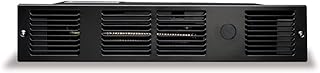
The Cadet toe-kick heater runs on 1000W at 120V, making it a compact yet capable option. It suits under-cabinet installations in kitchens or baths and can provide up to about 3,412 BTU to nearby toe-kick zones. Choose this if you need a quiet, wall-placed electric unit with reliable performance in small rooms. Limitation: 1000W may be insufficient for larger spaces or very drafty areas.
Buying Guide: Key Considerations For Choosing A Kickspace Heater
What heat source fits your home? Hydronic units require a boiler or hot-water loop, while electric models simply plug into standard circuits. Consider installation space: a cabinet toe-kick needs a slim unit with appropriate depth. How much heat do you need? Larger BTU ratings cover more square feet but may require more power or more robust electrical/plumbing systems. Do you want a domestic-made option? Some models emphasize American manufacturing, which can influence durability and lead times. Vented or ventless operation isn’t typically a concern with these compact units, but check room ventilation if you’re heating small, enclosed spaces.
Practical questions to consider
- Is my space better served by hydronic or electric heat?
- Do I have a compatible boiler or water loop for a hydronic unit?
- What is the required installation depth under the cabinet toe-kick?
- Will I need 120V or 240V electrical supply for the electric model?
- How important is noise level in a quiet kitchen or bathroom?
Comparison at a glance
- Best for hydronic systems: Twin-Flo III K84 or Beacon Morris K84-1 for higher BTU needs.
- Best compact electric option: Upgraded 112 Electric Kickspace Heater for flexibility with voltage.
- Best value hydronic option for small spaces: Twin-Flo III K42 4,200 BTU.
- Best electric option under cabinets for small rooms: Cadet Electric Toe Kick Heater with 1000W.
FAQ
- Q: Can I install these heaters myself?
- A: Installation difficulty varies by model; consult a professional for hydronic units and electrical wiring for electric units.
- Q: Are kickspace heaters safe under cabinets?
- A: Yes, many models are designed for under-cabinet installation, but ensure proper clearance and venting where applicable.
- Q: Do kickspace heaters heat an entire room?
- A: They primarily warm the toe-kick area and adjacent floor level; use them to supplement room heating in small spaces.
- Q: Which is quieter, hydronic or electric models?
- A: Electric models typically run quieter than some hydronic systems, depending on blower design.
- Q: Do these units require maintenance?
- A: Hydronic units require boiler system maintenance, while electric units need standard electrical checks and blower cleaning.