When it comes to comfortable workshops, garages, and warehouses, hydronic shop heaters offer reliable warmth by using a building’s hot water system or a boiler as the heat source. The following selections highlight best-in-class hydronic units and practical alternatives for spaces that demand steady, controllable heat. This guide compares key features, installation notes, and energy considerations to help you pick a solution that fits your space and energy setup.
Summary of Selected Products
- Alecoil Hydronic Hot Water Hanging Unit Heater (Blue) — 100,000 BTU — Remote Temperature Control
- Alecoil Hydronic Hot Water Hanging Unit Heater (Black) — 100,000 BTU — Remote Temperature Control
- American Royal Hydronic 50,000 BTU Hanging Unit Heater — Adjustable Fan Speed
- TEMPWARE Electric Garage Heater — 7,500 W, Digital, 12-Hour Timer (Alternative for non-hydronic setups)
- TURBRO 15,000 W Electric Garage Heater — WiFi Enabled, 12-Hour Timer (Alternative for non-hydronic setups)
Alecoil Hydronic 100,000 BTU Blue HHA100-Pro

- Brand: Alecoil
- Type: Hydronic hot water hanging unit heater with remote temperature control
- Overview: Uses a building’s hot water source to provide efficient, whisper-quiet operation with remote temperature control for flexible comfort in garages, workshops, and outdoor setups.
- Remote control: Bluetooth connection with a range up to 33 feet (10 meters); requires pre-installed power cable (remote 120-240V, 50/60Hz, 20W)
Alecoil Hydronic 100,000 BTU Black HHA100-Pro

- Brand: Alecoil
- Type: Hydronic hot water hanging unit heater with remote temperature control
- Overview: Black variant of the same 100,000 BTU water-to-air heater, designed for whisper-quiet operation and energy-efficient performance using warm water from a boiler or outdoor wood boiler.
- Remote control: Bluetooth connection; installation notes mirror blue variant (range up to 33 ft; pre-installed power cable required).
American Royal Hydronic 50,000 BTU Unit Heater

- Brand: American Royal
- Type: Hydronic indoor water-hanging heater with adjustable fan speed
- Overview: Hydronic heat exchange that supports efficient space heating for garages and workshops; suitable for integration with wood boiler systems.
- Notes: Includes a two-speed fan configuration for versatile climate control in larger spaces.
TEMPWARE 7500-Watt Electric Garage Heater
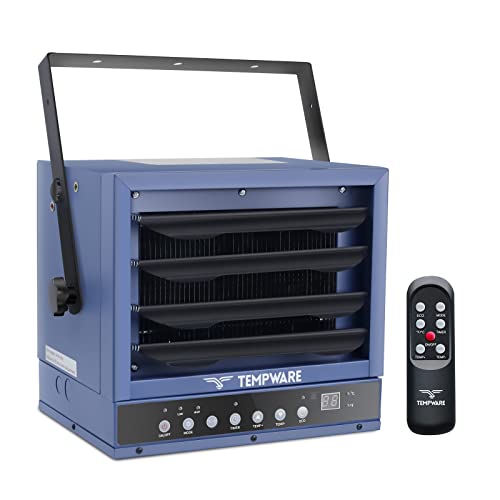
- Brand: TEMPWARE
- Type: Electric garage heater with ECO mode and 12-hour timer
- Overview: Not hydronic, but provides a practical alternative for spaces where hydronic installation is not feasible. Features adjustable angle, up to 25,590 BTU equivalent heating capacity, and thermostat control.
TURBRO 15,000W Electric Garage Heater

- Brand: TURBRO
- Type: Electric, WiFi-enabled shop heater with remote and thermostat
- Overview: High-powered electric option for larger workshops, with smart features, overheat protection, and a 12-hour timer to manage energy use in spaces where gas or hydronic systems are not present.
Buying Guide
Key considerations when choosing a hydronic shop heater or a practical heating alternative:
-
<li Heat source compatibility: Hydronic heaters rely on a boiler or hot water supply. Confirm your system can deliver sustained, clean hot water at the needed temperature and volume for your space.
<li BTU and space size: Match the heater’s BTU rating to the area’s square footage, insulation level, and climate. Heaters listed around 50,000–100,000 BTU serve medium to large shops; smaller spaces may suffice with lower ratings.
<li Installation and clearances: Hydronic units require appropriate mounting and plumbing integration with your boiler loop. Electric units demand proper electrical wiring and compliance with local codes; professional installation is often recommended.
<li Temperature control: Remote or wall-mounted controls enhance comfort and energy efficiency. Bluetooth or WiFi-enabled options offer convenient scheduling and monitoring from mobile devices.
<li Noise and comfort: Water-to-air hydronic systems are typically quieter than some air-forced electric units. Consider noise ratings if the space is used for sensitive tasks or customer-facing activities.
<li Energy efficiency and operation: ECO modes and timers help reduce energy consumption. In hydro systems, ensuring well-sealed ducts or direct-air distribution improves efficiency.
<li Safety features: Look for overheat protection, thermostat safety shutoffs, and proper venting requirements for gas or exhaust-powered units. Electric units should have robust thermal protection as well.
<li Maintenance needs: Hydronic systems require periodic checks of boiler water quality, pump operation, and valve integrity. Electric units mainly require filter or grille cleanliness and electrical inspections.
In closing, hydronic heaters like the Alecoil and American Royal options deliver strong, energy-conscious warmth for garages, shops, and warehouses when paired with a compatible hot water source. If a hydronic setup isn’t feasible, the electric options from TEMPWARE and TURBRO provide reliable alternatives that can still meet the heat demands of larger workspaces.