Staying warm while ice fishing or hunting in icy conditions requires a reliable heater built for portability, safety, and efficiency. The following five options are among the top picks for ice shanties, tents, and small shelters. They balance radiant warmth, ease of use, and safety features to help you stay comfortable without relying on electricity. Below you’ll find a concise buyer’s guide and product-specific details to help you compare at a glance.
| Product | Brand | BTU / Heating Area | Key Benefit |
|---|---|---|---|
| 9,000 BTU Portable Buddy Radiant Heater | Mr. Heater | 4,000–9,000 BTU/hr; heats up to ~225 sq ft | Indoor/outdoor versatility; strong radiant heat |
| MH4B Little Buddy 3,800 BTU | Mr. Heater | 3,800 BTU/hr; up to 95 sq ft | ODS safety and tip-over protection |
| Heat Hog 18,000 BTU Portable | Heat Hog | 18,000 BTU; up to 450 sq ft | Tiltable heat with wide coverage |
| Heat Storm HS-6000-GC | Heat Storm | 3,000–6,000 watts; 10,000–20,000 BTU equivalent | Ceiling/wall mount; Wi-Fi control |
| HEATHIVE Portable Propane Heater | HEATHIVE | Not specified (propane radiant) | Portable, simple ignition for outdoor use |
Note: This article focuses on propane and radiant heaters suitable for tent, shanty, and compact shelter environments. Always follow safety guidelines, ensure proper ventilation, and use products in accordance with their instructions.
Mr. Heater 9,000 BTU Portable Buddy Radiant Heater

This unit provides flexible radiant heat with selectable 4,000 or 9,000 BTU per hour outputs, making it suitable for a range of shelter sizes. It is designed and approved for indoor and outdoor use and can heat roughly 225 square feet in ideal conditions. The portability and dual-use capability make it a popular choice for ice shanties that require robust heat without complicated setup. Operators should ensure adequate ventilation and follow all safety guidelines when using propane heaters inside enclosed spaces.
Mr. Heater F215100 MH4B Little Buddy 3,800 BTU
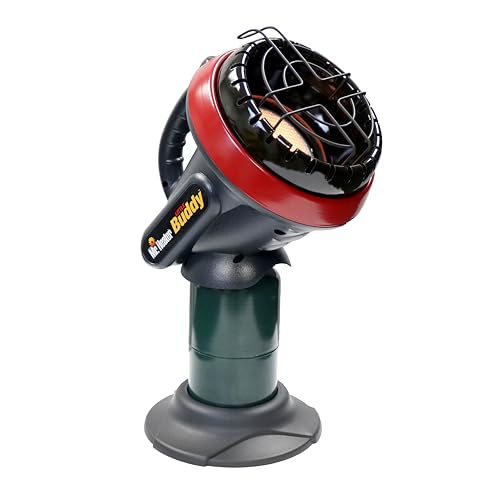
The Little Buddy offers compact warmth with 3,800 BTU per hour and coverage up to 95 square feet, making it ideal for small tents or snug shanties. It features an automatic low-oxygen shut-off system (ODS), a patented cross-thread protection system, and tip-over safety shut-off for safe indoor use in enclosed spaces. Run time on a 1-pound cylinder is approximately 5.6 hours at maximum BTU. The design prioritizes portability and safety for short-duration winter shelter use.
Heat Hog 18,000 BTU Portable Propane Radiant Heater

This high-output radiant heater is designed for rapid warmth across larger spaces such as garages, tents, or open shelter areas. With up to 18,000 BTU and the ability to heat up to 450 square feet, it offers strong performance for cold-weather work and outdoor activities. The tiltable design helps direct heat where needed, and it runs on propane without requiring electricity, adding flexibility for remote use. It is suitable for users who need substantial warmth in larger shelters or outdoor setups.
Heat Storm HS-6000-GC Heater

The HS-6000-GC is a versatile option offering 3,000 to 6,000 watts (10,000–20,000 BTU equivalent) with the flexibility of ceiling or wall mounting. This model is designed for larger workspaces such as garages or workshops and includes Wi-Fi connectivity for remote control via a smartphone. It delivers steady warmth and can be integrated into spaces where floor space is at a premium, which can be advantageous in certain shelter configurations where a free-standing heater is impractical.
HEATHIVE Portable Propane Heater

This compact propane radiant heater is designed for outdoor use and camping. It emphasizes quick warmth and portability, with one-push ignition for easy operation and a foldable base for quick setup. It is well-suited for camping, ice fishing, or other outdoor activities where a lightweight, reliable heat source is beneficial. As with all propane heaters used in shelters, ensure proper ventilation and adhere to safety instructions to mitigate risks of carbon monoxide buildup in enclosed spaces.
Buying Guide: Key Purchase Considerations
When selecting an ice shanty heater, consider these aspects to balance performance with safety and practicality:
- Heat output and space coverage: Match BTUs to the shelter size to avoid underheating or excessive energy use. Higher BTU models are better for larger shanties or tents, while smaller cabins benefit from compact units with regulated warmth.
- Fuel type and availability: Propane is common for outdoor heaters due to portability and independence from electricity. Check availability of cylinders or tanks and their weight for transport on ice or in the field.
- Safety features: Look for low oxygen shut-off (ODS), tip-over protection, and automatic shut-off for enclosed spaces. These features reduce risk in tents and shanties where proper ventilation might be limited.
- Ventilation and placement: Use heaters in well-ventilated areas. Keep units away from flammable materials, and position them to direct heat toward occupants rather than open areas.
- Portability and setup: A foldable base, light weight, and simple ignition help during cold-weather outings. Consider whether the shelter’s layout supports a freestanding heater or requires a wall-mount solution.
- Durability and weather resistance: Shelter environments can be harsh. Look for weather-resistant housings and robust construction to withstand snow, wind, and damp conditions.
- Runtime and fuel efficiency: Real-world run times depend on BTU output and cylinder size. Factor in how long you plan to stay in the shelter and how often you’ll need to refuel.
- Ease of maintenance: Simple cleaning and inspection routines reduce the risk of malfunction in cold conditions. Check for easy access to valves and safety components.
- Warranty and support: A solid warranty and responsive customer support help protect your investment when operating in remote winter environments.
- Noise level: Some heaters emit noticeable noise. If you’re using a shelter near a quiet area, consider models designed for quieter operation.
In summary, select a heater that aligns with your shelter size, safety needs, and travel plans. For small tents, compact units with ODS and tip-over protection are often ideal. For larger shanties or frequent use in remote locations, a higher BTU heater with robust build and propane flexibility can provide reliable, long-lasting warmth.