When replacing an aging water heater, the right choice balances capacity, space, and efficiency. This guide highlights five top options that fit typical American homes, from compact 18-gallon models to larger 40–50 gallon units, plus a practical sediment-removal tool to keep systems running smoothly. Suitable buyers: small households or apartments needing space-saving solutions; growing families needing more hot water; and DIYers aiming for easier replacements. The table below compares primary strengths to help you pick quickly.
| Product | Best For | Why It Stands Out |
|---|---|---|
| VEVOR Electric Water Heater, 18 Gallon | Small households; tight spaces | Large 18-gallon capacity with 1.6kW heating and adjustable temp; enamel coating for safety. |
| Rheem PROE50 M2 RH95 50-Gallon | 3–5 people; multi-bath homes | Ample hot water, space-efficient footprint, reliable Rheem quality. |
| GE Appliances 18 Gallon Versatile Lowboy | Compact setups; point-of-use needs | Lowboy design fits tight spaces; easy setup with standard connections. |
| GE GE40L08BSM 40 Gallon Lowboy | Families needing more first-hour hot water | High DOE rating; 63 gallons per hour first-hour rating; space-saving lowboy. |
| Sediment Gone™ Water Heater Sediment Removal Tool | Maintenance; longer heater life | DIY flushing tool to reduce sediment buildup and maintain efficiency. |
VEVOR 18-Gallon Electric Water Heater

Type: Electric, 18 gallons. Capacity supports family needs for dishes and laundry. Features a 1.6kW heating element for faster hot water at the tap, and an LED display with a rotary thermostat adjustable from 86°F to 167°F (30–75°C). The extended immersion element ensures continuous hot water delivery, while enamel coating adds safety and durability. Best for compact spaces or apartments where size matters. Caution: Higher power draw may impact electrical circuit load; confirm circuit capacity before installation.
Rheem PROE50 M2 RH95 50-Gallon Electric Water Heater

Type: Electric, 50 gallons. Designed for households of 3–5 people or homes with 3+ bathrooms, offering ample hot water while taking less wall space than some competitors. This model is known for consistent hot water and reliability, aligning with Rheem’s reputation in water heating. Best for upgrading an older big-capacity unit in a medium-to-large home. Caution: Heavier unit; may require professional installation and a suitable electrical setup.
GE 18 Gallon Versatile Lowboy Electric Water Heater
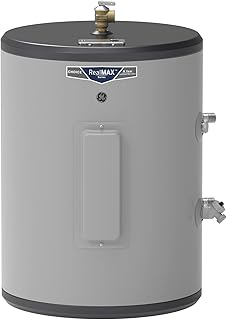
Type: Electric, 18 gallons. The lowboy design helps maximize vertical space, making it suitable for tight areas. Best for small households or point-of-use needs, with easy setup using standard connections. Provides a practical replacement for older compact heaters without sacrificing flow. Caution: 18-gallon capacity may run short for households with high simultaneous hot water demand.
GE GE40L08BSM 40 Gallon Lowboy Electric Water Heater

Type: Electric, 40 gallons. Delivers up to 63 gallons in the first hour, per DOE First Hour Rating, suitable for households of 2–4 people. The lowboy form factor fits limited spaces while providing substantial hot water for showers and chores. Best for mid-sized homes seeking higher initial hot water output. Caution: Larger footprint than 18-gallon models; requires adequate space for installation and service access.
Sediment Gone™ Water Heater Sediment Removal Tool

Type: Maintenance tool. This device threads onto the drain valve and connects to a standard garden hose to flush and break up sediment during draining. Benefits include improved heating efficiency, steadier water flow, reduced valve blockages, and extended heater life. Best for DIY maintenance and long-term performance. Caution: Not a replacement for regular professional service; use as part of a scheduled flushing routine.
Buying Guide
What size do you need?
Choose based on household size and peak hot water demand. 18–50 gallons cover most apartments to medium homes. For multiple bathrooms or frequent use, a 40–50 gallon model often reduces wait times.
Where will it fit?
Lowboy or compact designs save space in tight basements or garages. Measure vertical and horizontal clearance before purchasing to ensure a proper fit and service access.
Electric vs. other energy sources
Electric tanks are common for replacement in many homes, but gas or hybrid options may offer different operating costs and install requirements. Verify electrical capacity and panel compatibility for electric models.
Installation considerations
Check the existing connections: inlet/outlet sizes, venting needs (for gas), and expansion tank requirements. Some models are easier to replace edge-to-edge with standard connections; others may require professional plumbing or electrical work.
Maintenance and lifespan
Regular flushing helps maintain efficiency and prolongs life. Consider a sediment removal tool as part of a maintenance routine to minimize sediment-related issues, especially in hard water areas.
FAQ
- Q: What is the typical replacement timeline for a residential water heater?
- A: Most electric water heaters last 10–15 years with proper maintenance; consider replacement if frequent leaks or frequent temperature fluctuations occur.
- Q: Can I replace an old water heater without upgrading electrical service?
- A: Some models require updated circuit capacity; consult a licensed electrician to verify compatibility and safety before installation.
- Q: Is a lowboy model suitable for larger families?
- A: Lowboy models are space-efficient but may offer less total capacity; for larger families, a larger diameter or higher gallon unit may be preferable.
- Q: How does sediment buildup affect hot water performance?
- A: Sediment reduces heating efficiency and flow; regular flushing helps maintain performance and extends equipment life.
- Q: Is a separate sediment removal tool worth it for every home?
- A: It can help maintenance routines, especially in hard water areas, by simplifying flushes and reducing clog risks.