Choosing the right outdoor pond heater can help maintain a safe water layer for fish and aquatic life during freezing temperatures. This guide highlights five reliable options, comparing power, safety features, and ease of use to help hobbyists and pond managers keep water open where needed. Each product below is designed to prevent overly thick ice and provide a breathing hole for oxygen exchange without warming the entire pond.
| Product | Brand | Power (W) | Key Feature |
|---|---|---|---|
| Laguna PowerHeat 315 | Laguna | 315 | LED indicator and thermostat protection |
| Farm Innovators 1250W | Farm Innovators, Inc. | 1250 | Floating, cast aluminum; thermostatic control |
| TURBRO PD400A | TURBRO | 400 | UL/CFI protections; long cord; stainless steel look |
| tenlox 1000W | tenlox | 1000 | Thermostatic auto ON/OFF; LED indicator |
| UFRYO 500W | UFRYO | 500 | Thermostatically controlled; rust-proof design |
Laguna PowerHeat 315-Watt Floating Pond Heater

The Laguna PowerHeat 315-Watt unit is designed for outdoor ponds with temperatures dipping to 20°F. It floats securely on the water surface and includes a highly visible LED pilot light to show when the unit is active. An integrated thermostat helps shut off the de-icer if temperatures rise or internal components risk overheating, providing a simple, safety-focused solution for small to medium ponds.
Farm Innovators 1250-Watt Floating Pond De-Icer

Designed to keep a hole in the ice, the Farm Innovators 1250W floating de-icer uses cast aluminum construction for efficiency and durability. It floats on the pond surface and is thermostatically controlled to operate only when necessary, helping protect aquatic life by maintaining a breathable opening while conserving energy in challenging winter conditions.
TURBRO Pond De-icer 400 Watts

The TURBRO PD400A affords robust safety with IP68 water resistance, a UL-rated power cord, and GFCI leakage protection. Its SCR-based temperature management delivers a quick response with less wear over time, while a lengthy 32.8-foot cord provides flexible placement options for larger ponds or tricky layouts.
tenlox 1000W Pond Heater With Thermostat
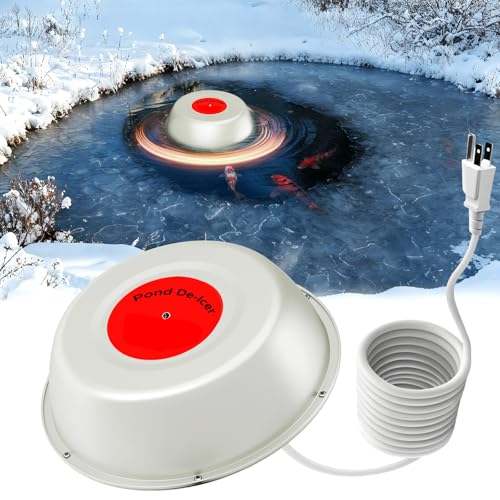
The tenlox 1000W pond heater provides smart thermostatic control with auto ON/OFF. It maintains a small ice-free zone for gas exchange while offering energy savings compared to non-thermostatic models. It’s suitable for 50-500 gallon ponds and emphasizes a safe, fish-friendly approach by avoiding full-pond heating.
UFRYO 500W Submersible Pond De-Icer
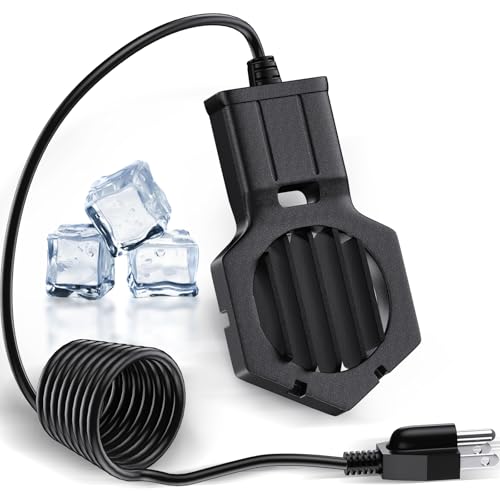
UFRYO’s 500W submersible de-icer uses a rust-proof aluminum housing with non-conductive insulation to keep water clean and safe. Thermostatic control activates only near freezing, helping to conserve energy while ensuring a breathable water layer for livestock or pond inhabitants throughout winter.
Buying Guide: Key Considerations And Comparisons
- Size and pond volume: Higher wattage models (1000W+) are better for larger ponds or colder climates, while lower wattage units suit small-to-medium ponds or milder winters. Match wattage to pond volume for effective yet efficient ice management.
- Thermostat and automation: Thermostatic control helps prevent unnecessary heating and saves energy. Look for models with automatic ON/OFF and temperature range that aligns with your climate and fish needs.
- Safety features: IP ratings, GFCI protection, and overheating safeguards reduce electrical risk around water. A visible LED indicator helps verify operation at a glance.
- Durability and materials: Cast aluminum and stainless steel casings offer corrosion resistance in harsh winter conditions. Rust-proof components help extend life in outdoor environments.
- Floating vs submersible design: Floating heaters create a small open area of water, ideal for gas exchange, while submersible units may be better for shallow, enclosed spaces. Consider pond depth and design when choosing a form factor.
- Cord length and placement: A longer power cord provides flexible placement, reducing the need for extension cords across the ice. Ensure cords are rated for outdoor, cold-weather use and are kept out of reach of wildlife.
- Fish and plant safety: Avoid overheating the entire pond. The goal is a breathable hole for oxygen exchange rather than full-pond heating, protecting koi, goldfish, plants, and beneficial bacteria.
- Installation and maintenance: Choose units with straightforward installation and easy access for routine checks. Regularly inspect cords, seals, and thermostats for reliability in freezing conditions.
- Energy efficiency: Thermostatic models generally use less energy by activating only as needed. Compare efficiency claims and expected operating costs in your climate.