Outdoor heating expands patio usability into cooler seasons. This article compares pellet-fired patio heaters with propane models, highlighting key differences in heat delivery, fuel availability, maintenance, and safety. Five carefully chosen products—one pellet heater and four propane options—illustrate practical choices for homes and small businesses.
Summary of Selected Products
- Rayzi Pellet Stove – Pellet patio heater for eco-friendly, smoky-free warmth.
- EAST OAK 50,000 BTU Gray – High-output propane heater with durable double-layer mesh.
- Amazon Basics 46,000 BTU – Large propane unit with wheels and water tank.
- Amazon Basics Slate Gray 46,000 BTU – Similar to the standard model with style variation.
- Cuisinart Perfect Position Propane Heater – 38,200 BTU with directional heat and built-in table.
Pellet vs Propane: How They Heat

Pellet heaters burn wood pellets, delivering steady warmth with a low smoke profile when using high-quality fuel. They use controlled combustion with multiple burn stages for efficiency, and some models feature glass viewing panels and automatic feed hoppers. Propane units produce rapid, high BTU heat via adjustable gas flow, typically with easier startup in cold weather and the convenience of readily available propane tanks. Both types can distribute heat across outdoor seating areas, though pellet models often require a dedicated fuel supply and occasional hopper maintenance, while propane units rely on tank replacements or refills and occasional regulator checks.
Rayzi 58 Inch Pellet Stove
The Rayzi pellet heater combines an outdoor-friendly design with a visually striking flame and a tall, 58-inch profile. It emphasizes a clean-burning, triple-burn technology and a large hopper capacity suitable for extended use. The device highlights a thickened base, durable materials, and a wind-stable conical design that adds both aesthetics and practical stability. Pellet heat is generally more economical for longer gatherings, as pellets can run longer per fuel unit, though operators must manage pellet loading and ash disposal. This model targets extended outdoor warmth with a focus on ambiance and efficiency.
EAST OAK 50,000 BTU Gray Patio Heater
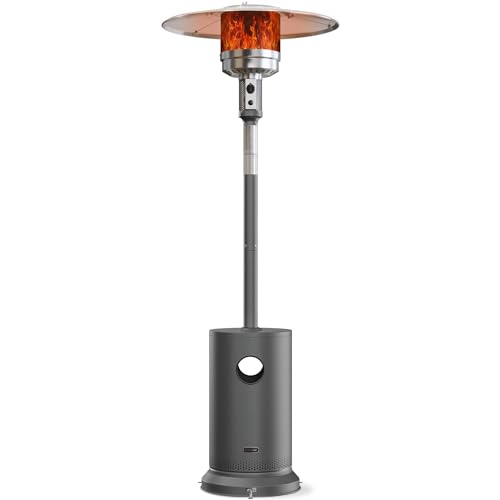
Designed for outdoor and commercial use, this EAST OAK model delivers 50,000 BTU and heats a substantial area with a central heating position. The double-layer 304 stainless steel burner mesh increases durability and longevity, while wheels make relocation simple. ETL-certified, it suits patios, balconies, and storefronts. For propane users needing robust, continuous warmth for larger gatherings, this unit provides a straightforward, high-heat option with contemporary cylindrical aesthetics.
Amazon Basics 46,000 BTU Outdoor Propane Heater (Havana Bronze)

With 46,000 BTUs and heat coverage up to an 18-foot diameter, this propane heater is designed for commercial and residential use. A one-touch ignition kicks off warmth quickly, and wheels assist with positioning. The unit offers adjustable heat control via a knob, balancing energy use and comfort for larger outdoor spaces or commercial patios. The combination of size, mobility, and power makes it a pragmatic choice for busy outdoor environments requiring dependable warmth.
Amazon Basics 46,000 BTU Slate Gray

The Slate Gray variant mirrors the Havana Bronze model in heat output and mobility, offering the same 46,000 BTU capacity and up to 9-foot radius. Features include a one-touch ignition, wheels for easy movement, and adjustable temperature control. This option provides a versatile aesthetic choice for patio settings while ensuring ample warmth for mid-sized gatherings or restaurant patios that require a consistent heat source throughout the evening.
Cuisinart Perfect Position Propane Patio Heater

Featuring 38,200 BTUs, the Cuisinart model emphasizes directional heating with a swivel arm, a cone-shaped heat shield, and a built-in drink table. Its sprinkler-like heat distribution allows users to focus warmth where guests gather most. The table element adds convenience for beverages and small items, combining practical design with steady outdoor warmth. Propane control supports comfortable outdoor dining, chilling, and socializing on breezy nights.
Buying Guide
- Heat output and coverage: Propane heaters commonly range from 38,000 to 46,000 BTU, covering 9–18 feet. Pellet heaters vary by model but can deliver efficient, longer-burning warmth with lower fuel costs per hour, though they require pellet supply and hopper maintenance.
- Fuel availability and maintenance: Propane tanks are widely available, with easy swaps. Pellets require storage and periodic hopper refills, plus ash and pellet maintenance for optimal burn quality.
- Fuel cost and sustainability: Pellets can be economical for extended use and often come from renewable sources; propane prices can fluctuate and affect ongoing costs, especially for large-area heating.
- Portability and installation: Look for wheels and lightweight builds for frequent repositioning. Some pellet models are heavier but designed for semi-permanent setups; propane units often emphasize quick setup and broad deployment.
- Safety features: Tilt switches, burn guards, and safety shutoffs are important. Pellet models may have automatic ignition and controlled feed, while propane units rely on regulators and flame guards to prevent accidents.
- Environment and aesthetics: Pellet heaters provide a visible flame with a rustic ambiance, while propane units emphasize clean lines and strong heat delivery for modern spaces.
- Warranty and certifications: Check ETL/CSA certifications for outdoor use, and review warranty terms for components like burners, burners mesh, and hoppers.
When choosing between pellet and propane patio heaters, consider how often you host outdoors, the available fuel sources, and the importance of ambiance versus quick warmth. Pellet heaters excel in longer sessions with steady heat and a fuel-efficient profile, whereas propane units offer rapid heat for immediate warmth, portability, and straightforward operation. The selected products illustrate common configurations: a pellet option (Rayzi) for ambiance and efficiency, and propane models (EAST OAK and Amazon Basics variations, plus Cuisinart) for maximal warmth, mobility, and quick deployment.