Propane baseboard heaters offer reliable, blast-free warmth for spaces where electrical options are limited or where heavy-duty heating is needed. This guide highlights five top propane-based units that balance efficiency, safety, and portability, helping you assess which model best fits your home, workshop, or job site. Each option prioritizes steady heat delivery, safe operation, and practical installation features to maximize comfort with minimal effort.
| Product | |
|---|---|
| ProCom ML100TBA-B Ventless Blue Flame | 10,000 BTU; up to ~500 sq. ft. |
| Gasland MHA18BN Propane Radiant Heater | 18,000 BTU; up to ~450 sq. ft. |
| ProCom ML300TBA-B Ventless Blue Flame | 28,000 BTU; up to ~1,400 sq. ft. |
| Habitio 125,000 BTU Forced Air | 75,000–125,000 BTU/h; up to 3,125 sq. ft. |
| Avenger FBDTP30 Infra-Red Outdoor Heater | 30,000 BTU |
The following selections cover compact units for small rooms, larger home areas, and rugged outdoor or job-site heating. Each product is evaluated for heating efficiency, safety features, portability, and ease of installation. This balance helps you choose a propane heater that best matches your space and climate concerns.
ProCom ML100TBA-B Ventless Blue Flame Heater

This 10,000 BTU propane heater heats up to 500 square feet, making it suitable for offices, bedrooms, and living rooms. It operates as a ventless blue flame unit with thermostat control offering High, Medium, and Low settings to regulate warmth. A slim, modern profile helps it blend into various interiors, and it can be wall-mounted using included hardware or used on the floor with base feet. The unit emphasizes heat transfer efficiency and a compact footprint for flexible placement.
Gasland MHA18BN Propane Radiant Heater

Designed for garages, workshops, and construction sites, this 18,000 BTU radiant heater heats up to roughly 450 square feet. It features a tip-over and low-oxygen shut-off for safety, and operates without electricity—perfect for areas prone to outages. The portable cabinet design includes a regulator hose, and rolling wheels with a carry handle aid mobility, enabling quick relocation between work zones while maintaining warmth in ventilated spaces.
ProCom ML300TBA-B Ventless Blue Flame Heater

This 28,000 BTU unit heats up to 1,400 square feet, making it suitable for larger living spaces or business settings. Like the smaller model, it features thermostat control with high, medium, and low settings and has a slim modern profile. It can be wall-mounted or placed on the floor with included base feet, offering placement flexibility for rooms that demand more robust heat with controlled, steady output.
Habitio 125,000 BTU Forced Air Propane Heater
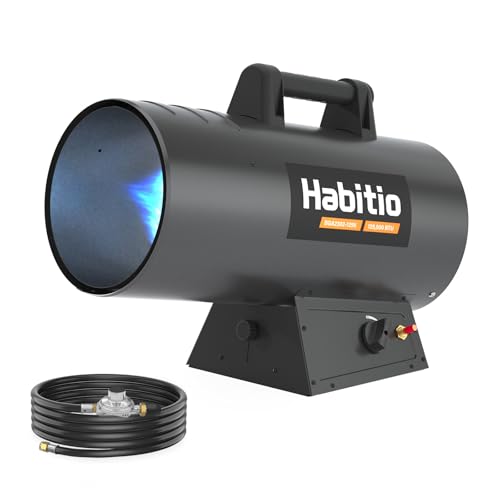
Elite-grade heating for large sites, this portable torpedo heater delivers 75,000 to 125,000 BTU per hour and can heat up to 3,125 square feet. It includes a 10-foot hose with regulator and CSA certification, making it a strong choice for job sites, garages, and construction spaces that require rapid, effective warmth. The unit is designed for quick startup and heat delivery, with safety features to help prevent overheating and fuel-related hazards in demanding environments.
Avenger FBDTP30 Infra-Red Outdoor Heater

Outdoor-focused, this 30,000 BTU infrared heater is designed to work with propane tanks for patios and camping areas. It features three heat settings (low, medium, high) and a safety control valve that shuts off gas flow if the flame goes out. The match-light ignition and safety tip switch provide simple, electricity-free operation, while its dual burner design allows for directional warmth. It’s ideal for extended outdoor comfort with a rugged, portable build.
Buying Guide: Key Considerations When Purchasing a Propane Baseboard or Related Heater
- Heat coverage: Match BTU output to the intended space. Smaller rooms typically need 10,000–20,000 BTU, while larger rooms or garages may require 28,000 BTU or more.
- Ventilation and safety: Ventless units save installation effort but require adequate ventilation. Look for tip-over switches, low-oxygen shut-off, and automatic shutoffs for propane-based models.
- Portability vs. installation: Wall-mountable units save floor space, while portable torpedo and radiant models offer flexibility across rooms or job sites. Consider wheeled designs for frequent relocation.
- Fuel source and availability: Propane tanks (LP) are widely available; check for easy regulator hose integration and standard connection sizes to ensure compatibility with existing tanks or propane supply.
- Heat type: Radiant infrared, blue flame, and forced-air propane heaters provide different comfort profiles. Radiant heaters warm objects and people directly, while blue flame units tend to provide faster ambient warmth.
- Energy independence: Some units operate without electricity, which can be advantageous during power outages, but verify if they meet local safety standards and environmental regulations.
- Durability and certification: For job sites and outdoor use, CSA or other safety certifications offer added assurance on performance and safety under tough conditions.
- Installation considerations: For wall-mountable models, ensure proper mounting hardware and wall support. For portable units, consider fuel hose length, oxygen safety, and stable placement on surfaces.
When evaluating options, compare maximum BTU, heating area, safety features, and whether the heater is designed for indoor or outdoor use. Balance heat needs with space layout, ventilation, and power or fuel accessibility to choose the most reliable propane-based heating solution for your environment.