Radiant heaters for basements deliver fast, direct warmth to people and objects, helping keep chilly spaces comfortable without competing with whole-room HVAC. This guide highlights five reliable options and clarifies who each is best for. Ideal buyers include: homeowners upgrading a cold basement workspace, renters seeking portable heat, and anyone needing safer, radiant warmth in damp or unfinished spaces.
Summary of top picks
| Product | Best For | Key Benefit | Notes |
|---|---|---|---|
| De’Longhi EW7707CM | Small to medium basements, office spaces | Efficient ComfortTemp control | Oil-filled design with surface-safe exterior |
| DREO Oil Filled Radiator Heater | Quiet, energy-conscious basements | 7 safety features and eco mode | Digital thermostat and remote control |
| Dr Infrared Heater DR-968 | Large basements and open layouts | Infrared quartz + PTC for robust heat | Auto energy-saving and timer |
| Sundate 1500W Infrared Patio Heater | Well-insulated basements or outdoor spaces | Direct radiant heat for people and objects | WiFi app, 9 heat levels, wall/ceiling mount |
| De’Longhi Dragon Digital TRD40615E | Smart-baseline heating with programmable controls | High radiant surface area for quick warmth | LED timer and digital controls |
De’Longhi EW7707CM Oil Filled Radiator
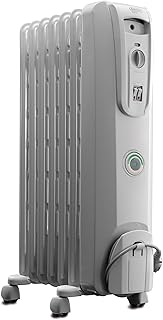
Best for compact basements or bedrooms where space is at a premium. This oil-filled heater uses a ComfortTemp feature to automatically maintain a stable temperature and efficiency up to 20% higher than standard settings. The exclusive thermal slot design directs heat into the room while keeping exterior surfaces cooler to the touch. It is quiet and suitable for rooms where noise needs to be minimized. Caution: longer warmup times are typical with oil-filled radiators, which may delay immediate heat in very cold spaces.
DREO Oil Filled Radiator Heater

Better for quiet, living spaces that benefit from steady warmth and safety features. DREO offers 360° heat distribution and triple overheat protection, with 7-layer safety checks and a 24-hour timer. The ECO mode helps maintain a comfortable setpoint with minimized energy use. Best for bedrooms or home offices that require consistent, low-noise operation. Limitation: heat distribution is broadly even, but heat up and cool down may be gradual compared with infrared units.
Dr Infrared Heater DR-968

Choose this for larger basements or open-concept spaces. The DR-968 uses a dual heating system—infrared quartz tube plus PTC—to deliver significant warmth quickly. It includes an automatic timer and multiple safety features (tip-over and overheat protection). The 39 dB blower keeps noise at a minimum for a quiet workspace. A caution: infrared heat can feel intense at close range; ensure proper placement away from walls and furnishings.
Sundate 1500W Infrared Patio Heater

Best for basements with outdoor-adjacent living or well-insulated spaces where radiant heat is favored. This carbon fiber infrared heater is designed to deliver warmth directly to people and objects, not just the air. It supports WiFi app control and a 24-hour timer, with 9 heat levels. Mounting flexibility (wall, hanging, or ceiling) helps save floor space. Caution: designed for indoor-outdoor use; ensure appropriate mounting and clearance in enclosed basements to avoid overheating nearby objects.
De’Longhi Dragon Digital TRD40615E

Best for smart-baseline basements that benefit from programmable control. The Dragon Digital offers a large radiant surface area to transfer heat efficiently, alongside a digital LED display for precise scheduling. Its 24-hour timer supports automated heating patterns, which helps reduce energy use when the space is unoccupied. Limitation: higher upfront cost may be a consideration compared with basic models.
Buying Guide: Practical Considerations for Basement Radiant Heat
- Space and layout: How large is the basement area, and is heat distributed evenly or focused on a work zone? Oil-filled units excel in steady, even warmth, while infrared models warm people directly in a specific location.
- Heat delivery method: Do you prefer radiant heat to target occupants or whole-room convection for general space heating? Infrared heaters are effective for quick warmth in zones, while oil-filled radiators provide ongoing, uniform heat.
- Safety features: Look for overheat protection, tip-over switches, and cool-touch surfaces for basements that may have children or pets. A stable mounting option is valuable for wall- or ceiling-mounted units.
- Controls and programmability: Digital thermostats, ECO modes, and timers reduce energy use and maintain comfort without manual adjustments.
- Noise level: If the basement doubles as a living or work space, select units with quiet operation to avoid distraction.
- Power requirements: Confirm available electrical outlets and circuit capacity. Heavy 1500W units may require dedicated circuits or careful use to avoid tripping breakers.
- Installation considerations: Floor-standing models are portable but require floor space; wall- or ceiling-mounted infrared heaters save space but require proper mounting and clearance.
Frequently Asked Questions
- What is the fastest way to heat a basement with a radiant heater?
Infrared heaters warm occupants and objects directly, providing faster perceived warmth for immediate comfort compared with air-based radiators. - Are oil-filled radiators safe for basements?
Yes, oil-filled radiators are generally safe, with cool exteriors and stable heat output, though they heat more slowly and bulkier units can take longer to reach full warmth. - Can radiant heaters help with damp basement air?
Radiant heaters do not dehumidify; they improve comfort by warming surfaces and people, but dehumidification may require a separate system. - Which heater is best for a large basement?
Large spaces benefit from higher BTU-capacity units or infrared heaters with powerful output and a layout that directs heat toward occupied zones. - Is automatic temperature control worth it?
Yes. Eco modes and programmable thermostats reduce energy use by maintaining a set temperature with minimal manual adjustments. - Do I need professional installation for any of these heaters?
Most oil-filled and portable infrared heaters do not require professional installation, but wall- or ceiling-mounted units should be installed following manufacturer instructions for safety.